Best Biodegradable Trash Bags for a Greener Home
We may earn a commission for purchases made using our links. Please see our disclosure to learn more.
Trash bags are one item easy to forget when you’re making changes to be more sustainable at home. Still, they’re used by nearly every household multiple times per week, and traditional plastic liners can persist in the environment for decades. Biodegradable trash bags are a potential option, particularly if you are collecting food scraps or can bring the bag to a composting program. But just because a bag has a green label doesn’t mean it’s the same. Some need the regulated heat of a commercial system, and others can be decomposing in a properly managed home compost pile. So how do you find a bag that performs well without getting taken in by misleading green claims? We’ll break down the meaning of the labels, which features are important and which one (or two) you should get.
What Are Biodegradable Trash Bags?
Biodegradable bags are made of substances that microbes can eventually decompose. These organisms break down the material into other, smaller molecules within a certain range of environmental conditions.
The key word here is “appropriate conditions.” Heat, oxygen, moisture, and microbial presence affect the rate of degradation of a bag. A bag can break down in a commercial composting operation and be almost invisible in landfill.
That is why saying that something is “biodegradable” simply doesn’t cut it for me. It doesn’t always say where the bag will disintegrate, or how long disintegration will take.
For added certainty, seek out specific compostability certifications as opposed to statements such as green, earth-friendly, or degradable.
Biodegradable vs. Compostable Trash Bags
Although these terms sound similar, they have different meanings.
A biodegradable bag should break down through natural biological activity. However, the manufacturer may not provide a specific timeframe or explain the exact conditions required.
A compostable liner is made to decompose in a particular composting environment. Under the right conditions, microbes gradually convert it into natural components without leaving unsafe material in the finished compost.
According to the US Environmental Protection Agency, compostable plastics belong to the wider biodegradable category, although many biodegradable plastics do not qualify as compostable.
You may also see separate labels for industrial and home composting. Industrially compostable bags need the higher temperatures found in commercial facilities. Home-compostable bags are designed for the milder conditions of a backyard compost pile, although results can still depend on how well you manage the pile.
Do Biodegradable Trash Bags Offer Environmental Benefits?
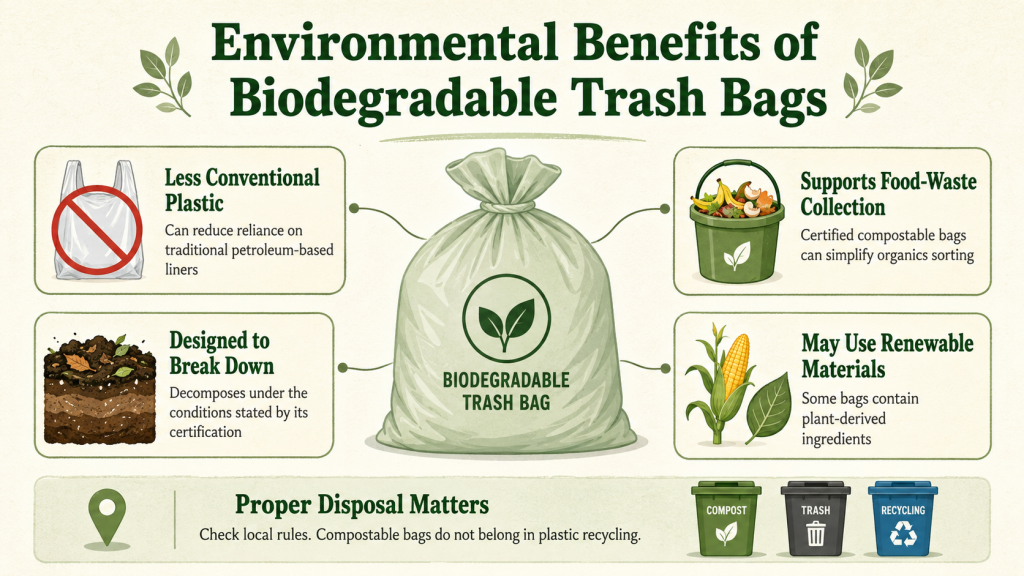
They can be, but only when you use and dispose of them correctly.
Compostable bags are particularly useful for collecting food scraps. They can make a kitchen compost pail easier to clean and help move organic waste from your home to an approved composting facility.
Research into biodegradable and compostable alternatives to conventional plastics shows that controlled composting can turn suitable materials into useful soil amendments. This process works best in a warm, moist, oxygen-rich environment.
A landfill does not offer those same conditions. If you place a compostable liner in a regular garbage bin, it may not break down as quickly as expected. It may also produce methane if it decomposes in an oxygen-poor setting.
Keep these liners out of regular plastic recycling, as their materials can interfere with the recycling process. Compostable materials behave differently from standard plastics and may interfere with recycling.
The best approach is simple: check the rules of your local composting service before buying. If your area accepts certified compostable liners, they can be a practical addition to your waste-reduction routine.
For more ideas, explore these useful compostable items for everyday living. You can also compare additional compostable trash bags for different household needs.
What to Look for When Choosing Trash Bags
A greener material is important, but the bag also needs to fit your bin and handle your household waste.
Check the certification
Look for labels such as BPI Certified, ASTM D6400, CMA Approved, or OK compost. These standards give you more information than an unsupported biodegradable claim.
The Biodegradable Products Institute certification program verifies that compostable products meet recognized ASTM standards. It also evaluates factors such as regulated metals and fluorine.
Before buying, find out whether the certification covers backyard composting, commercial processing, or both. Your local facility may also have its own list of accepted products.
Choose the correct size
A liner that is too small will slip into the bin or tear around the rim. One that is much too large wastes material and may be harder to secure.
Small two- to four-gallon bags suit countertop compost pails and bathroom bins. Standard 13-gallon liners fit most tall kitchen cans.
Consider strength and thickness
Compostable films sometimes feel thinner or softer than conventional plastic. A strong seam and suitable thickness can reduce leaks, especially when you collect damp food scraps.
Even a sturdy compostable bag can tear when filled with sharp packaging or heavy waste. Avoid packing it too tightly.
Think about convenience
Drawstrings and handles make full bags easier to close and carry. Open-top bags often cost less and work well for lightweight food scraps, but you must leave enough material at the top to tie them.
Five Recommended Biodegradable Trash Bags
1. UNNI 13-Gallon Compostable Bags
The UNNI 13-Gallon Compostable Bags are a strong all-around choice for tall kitchen bins. Each bag measures 0.9 mil thick, providing a good balance between flexibility and durability.
Independent testing has earned these bags recognition from BPI, CMA, and OK compost HOME, along with compliance with ASTM D6400. That range of certifications makes the product easier to evaluate than bags with general green claims.
The 100-count package suits households that regularly collect food waste. However, the bags do not have drawstrings. Leave some space at the top so you can tie the bag without stretching it.
Best for: Tall kitchen bins and larger food-waste containers.
2. BioBag 3-Gallon Food Scrap Bags
The BioBag 3-Gallon Food Scrap Bags are designed for countertop compost pails. Their compact size makes them convenient for collecting fruit peels, vegetable trimmings, coffee grounds, and other accepted kitchen scraps.
BPI has certified these liners after evaluating them against the ASTM D6400 compostability criteria. The material allows some moisture to escape, which can help reduce liquid buildup inside your compost container.
However, these bags should not hold wet scraps for too long. Empty your pail every few days to reduce odors and prevent the liner from weakening.
Best for: Countertop compost pails and frequent food-scrap disposal.
3. Emily’s Choice Code Q Biodegradable Trash Bags
Emily’s Choice Code Q Biodegradable Trash Bags are designed to fit Simplehuman Code Q bins and other cans with a 13- to 17-gallon capacity. Each box contains 50 unscented liners.
At 1.2 mil thick, these heavy-duty bags can handle heavier household garbage and resist everyday punctures. Their easy-tie tops also help you close and lift a full bag without struggling with a drawstring.
The bags use D2W technology and have undergone testing under ASTM D6954, which covers plastics that degrade through oxidation followed by biological activity. However, they are not certified compostable, so keep them out of home compost piles and municipal organics bins.
Best for: Simplehuman Code Q bins and households needing thicker liners.
4. Repurpose 3-Gallon Food Scrap Bags
The Repurpose 3-Gallon Food Scrap Bags offer a manageable starting point if you have never used compostable liners. The 25-count box lets you try them without buying a large supply.
These plant-based bags carry BPI certification and fit many countertop pails, bathroom bins, and small office wastebaskets.
They work best when changed regularly. Do not leave wet scraps sitting inside for a full week, as moisture and heat may weaken the material.
Best for: Small bins and first-time buyers.
5. SUPERBIO 13-Gallon Compostable Kitchen Bags
The SUPERBIO 13-Gallon Compostable Bags feature built-in handles, making them easy to lift, tie, and carry. The handled opening can also help keep the liner in place around the rim of some kitchen bins.
The product holds certifications from BPI and OK compost and has also been evaluated according to ASTM D6400. Their larger capacity works well for families or anyone who produces more food scraps.
As always, confirm that your local composting facility accepts handled compostable liners. Acceptance rules can vary even when a product carries a trusted certification.
Best for: Larger households that prefer handled bags.
Tips for Using Compostable Trash Bags
Store the unused rolls in a cool, dry cupboard. Heat, sunlight, and moisture may cause the material to weaken while it sits in storage.
Let cooked food cool before placing it in the bag, and drain excess liquid from scraps whenever possible. You can also place a sheet of newspaper or plain cardboard at the bottom of the bin to absorb moisture.
Avoid overfilling the liner. Compostable bags often perform well with ordinary food scraps, but heavy or sharp objects can stretch the film and damage the seams.
Finally, empty the bin regularly. Smaller bags usually work better than oversized liners because frequent changes reduce odors, leaks, and unnecessary material use.
Conclusion
Biodegradable bags for garbage can certainly assist in cutting down on your plastic use, but the label is only half the story. The best is a certified bag that fits your bin, processes your waste and can be accepted by your local composting program.
UNNI is a great choice for regular kitchen bins, on the other hand BioBag and Repurpose is very good in small compost bins. Drawstrings are available with HoldOn, and handles easy-to-tie SUPERBIO.
Whatever the product you have selected, please use it thoughtfully. Control moisture in the waste, do not overpack the bag, and heat it in the appropriate waste stream. These little tricks should help you to more effectively transition to greener garbage bags.
FAQs
Do biodegradable trash bags break down in landfills?
Not necessarily. Landfills may lack the oxygen, moisture, and heat needed for effective decomposition. Compostable bags work best when sent to a suitable composting system.
Are compostable liners suitable for a home compost bin?
Only place them in your pile if the packaging specifically says home compostable. Industrially compostable bags require conditions that most backyard piles cannot provide.
Can I recycle biodegradable trash bags?
No. Do not place biodegradable or compostable bags in a standard plastic recycling bin. They can contaminate recyclable plastic and reduce the quality of the finished material.
Are all plant-based trash bags plastic-free?
No. Some contain a mixture of plant-derived and biodegradable synthetic materials. Check the product description and independent certifications rather than relying on the plant-based label alone.
How quickly do compostable bags break down?
The timeframe depends on temperature, moisture, oxygen, material thickness, and the composting method. Commercial facilities usually process certified bags more reliably than home compost piles.