Top 10 Compostable Trash Bags
We may earn a commission for purchases made using our links. Please see our disclosure to learn more.
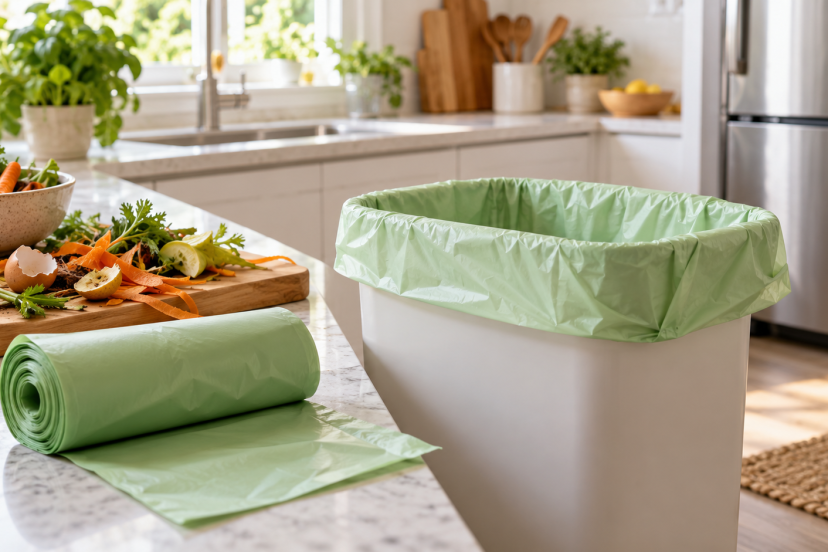
Switching from ordinary plastic liners sounds simple until you start shopping. Some compostable trash bags fit small food-scrap bins, while others fit full-size kitchen cans, and each option works best with certain composting systems. We compared 10 practical choices ranging from compact countertop liners to 13-gallon kitchen bags. The goal is simple: help you find a bag that fits your bin, handles everyday waste without becoming a leaky mess, and matches the way you actually dispose of organic waste.
Our Top Picks
| Product | Best For | Key Feature | Rating |
| Forid Compostable Trash Bags | Everyday kitchen use | 13-gallon, 80-count pack | ★★★★⯪ |
| UNNI 2.6 Gallon Compostable Bags | Small kitchen bins | Extra-thick 0.71-mil material | ★★★★⯪ |
| HECTOLIFE 13 Gallon Compostable Trash Bags | Large households | 100-count kitchen pack | ★★★★☆ |
| YORJA Tie Handle Compost Bags | Easy carrying | Built-in tie handles | ★★★★⯪ |
| SUPERBIO Compostable Food Scrap Bags | Countertop compost bins | Compact size with handles | ★★★★⯪ |
| Compostic 13 Gallon Compostable Trash Bags | Home composting | Plant-based, home-compostable design | ★★★★☆ |
| UNNI 13 Gallon Compostable Bags | Tall kitchen bins | Extra-thick 0.9-mil construction | ★★★★☆ |
| ANECO 2.6 Gallon Compostable Waste Bags | Food scraps | Compact 2.6-gallon size | ★★★★⯪ |
| Cleanomic 13 Gallon Compostable Waste Bags | Drawstring convenience | Tall-kitchen drawstring design | ★★★★⯪ |
| BioBag 3 Gallon Compostable Food Scrap Bags | Compost pails | BPI-certified food-scrap liners | ★★★★⯪ |
Top 10 Compostable Trash Bags
1. Forid Compostable Trash Bags 13 Gallon

Forid’s 13-gallon bags are a sensible all-around choice for households that want something close to the size and convenience of an ordinary tall-kitchen liner. The 80-count pack gives you enough bags for regular use without committing to a huge bulk case.
Key features: 13-gallon capacity, 80-count pack, unscented design, kitchen-bin sizing.
Best for: Households replacing conventional tall-kitchen trash bags.
Pros: Generous pack size; familiar kitchen-bin capacity; unscented; useful for everyday waste.
Cons: Compostable film still needs more careful handling around sharp or excessively heavy trash.
Why we recommend it: It offers a straightforward transition for people who want a standard-size compostable kitchen bag without changing bins.
2. UNNI 2.6 Gallon Compostable Bags

These smaller UNNI bags work much better for food scraps than for a full-size kitchen can. Each bag holds roughly 2.6 gallons, and its 0.71-mil material works well in countertop compost containers, bathroom bins, and other compact wastebaskets.
Key features: 2.6-gallon capacity, 100-count roll, 0.71-mil thickness, compact dimensions.
Best for: Small compost pails and lightweight household waste.
Pros: Convenient size; large supply; fits many small bins; easy to store.
Cons: Too small for standard kitchen trash cans; not intended for bulky household garbage.
Why we recommend it: The compact dimensions make it easier to empty food scraps frequently instead of leaving damp organic waste sitting for days.
3. HECTOLIFE 13 Gallon Compostable Trash Bags

HECTOLIFE offers a 13-gallon option for shoppers who need something substantial enough for a tall kitchen bin. The 100-count package also makes sense for larger households that go through liners quickly.
Key features: 13-gallon capacity, 100-count pack, large kitchen-bin format, compostable construction.
Best for: Busy kitchens and households buying liners in larger quantities.
Pros: Large pack; practical full-size capacity; fewer reorders; suitable for regular kitchen use.
Cons: Large compostable bags can become stressed if overloaded with heavy or sharp waste.
Why we recommend it: It combines the convenience of a standard kitchen size with a bulk quantity that works well for frequent use.
4. YORJA 1.6 Gallon Tie Handle Compost Trash Bags

YORJA takes a different approach by adding tie handles to a small 1.6-gallon bag. That may sound like a minor detail, but handles are surprisingly useful when you’re carrying food scraps from a countertop bin without wanting to wrestle with the top of the liner.
The bags are designed around recognized compostability standards including ASTM D6400 and EN 13432.
Key features: 1.6-gallon size, 120 bags, integrated tie handles, compact food-waste format.
Best for: Small countertop bins and anyone who prefers handled liners.
Pros: Easy to tie; large bag count; convenient for frequent changes; compact.
Cons: Limited capacity makes them unsuitable for larger trash cans.
Why we recommend it: The handles make small bags easier to close and carry, particularly when you’re dealing with messy kitchen scraps.
5. SUPERBIO 1.6 Gallon Compostable Food Scrap Bags

SUPERBIO is another compact choice, but its dimensions and handle-tie design make it especially suited to countertop food-waste containers. Each bag has a 1.6-gallon capacity and measures about 0.63 mil thick.
Key features: 1.6-gallon capacity, 50 bags per roll, handle ties, food-scrap sizing.
Best for: Countertop compost bins that get emptied regularly.
Pros: Handles simplify carrying; convenient small size; easy to tie; good for frequent disposal.
Cons: Small capacity; wet scraps should not be left sitting unnecessarily long.
Why we recommend it: This is a practical choice for households that empty their compost pail every few days rather than letting scraps accumulate.
6. Compostic 13 Gallon Compostable Trash Bags

Compostic’s tall-kitchen bags are aimed at shoppers who want a full-size liner with a strong emphasis on compostability. The 50-count starter pack is plant-based, unscented, and designed for a standard 13-gallon kitchen can.
Key features: 13-gallon size, 50-count pack, plant-based material, unscented design.
Best for: Full-size kitchen bins and households prioritizing compostable materials.
Pros: Familiar kitchen size; unscented; plant-based material; suitable for larger loads.
Cons: Smaller pack than some competing 13-gallon options.
Why we recommend it: It gives shoppers a full-size alternative without forcing them to switch to a smaller compost-pail setup.
7. UNNI 13 Gallon Compostable Bags

UNNI’s larger 13-gallon version is made for households that need more capacity than its small food-scrap liners provide. At 0.9 mil thick, these bags are designed to offer a useful balance between flexibility and everyday durability.
Key features: 13-gallon capacity, 50-count pack, 0.9-mil thickness, tall-kitchen sizing.
Best for: Standard kitchen cans and heavier food-waste loads.
Pros: Thicker construction; good kitchen capacity; simple open-top design; established compostable-bag brand.
Cons: No drawstring; you need to leave enough material at the top for tying.
Why we recommend it: It’s one of the better choices when strength matters more than built-in drawstrings or handles.
8. ANECO 2.6 Gallon Compostable Waste Bags

ANECO’s 2.6-gallon liners sit in the sweet spot between tiny countertop bags and full-size kitchen liners. They work nicely for food-waste containers, bathroom bins, and smaller office wastebaskets.
Key features: 2.6-gallon capacity, compact waste-bin size, compostable construction, food-waste use.
Best for: Small kitchen, bathroom, and countertop bins.
Pros: Versatile size; convenient for food scraps; works in several small-bin applications.
Cons: Not suitable for standard tall-kitchen cans or bulky rubbish.
Why we recommend it: The size is versatile enough to work beyond the compost pail, which makes the bags useful throughout the home.
9. Cleanomic 13 Gallon Compostable Waste Bags

Cleanomic stands out because it adds a drawstring to the familiar 13-gallon kitchen format. That makes sealing, lifting, and carrying a filled bag considerably easier than dealing with a plain open-top liner.
Key features: 13-gallon capacity, 25-count pack, drawstring closure, tall-kitchen design.
Best for: Anyone who doesn’t want to give up drawstring convenience.
Pros: Easy closure; standard kitchen size; cleaner transport; convenient everyday design.
Cons: Only 25 bags per pack; drawstring models may cost more per liner.
Why we recommend it: For shoppers used to conventional drawstring trash bags, this design requires much less adjustment.
10. BioBag 3 Gallon Compostable Food Scrap Bags
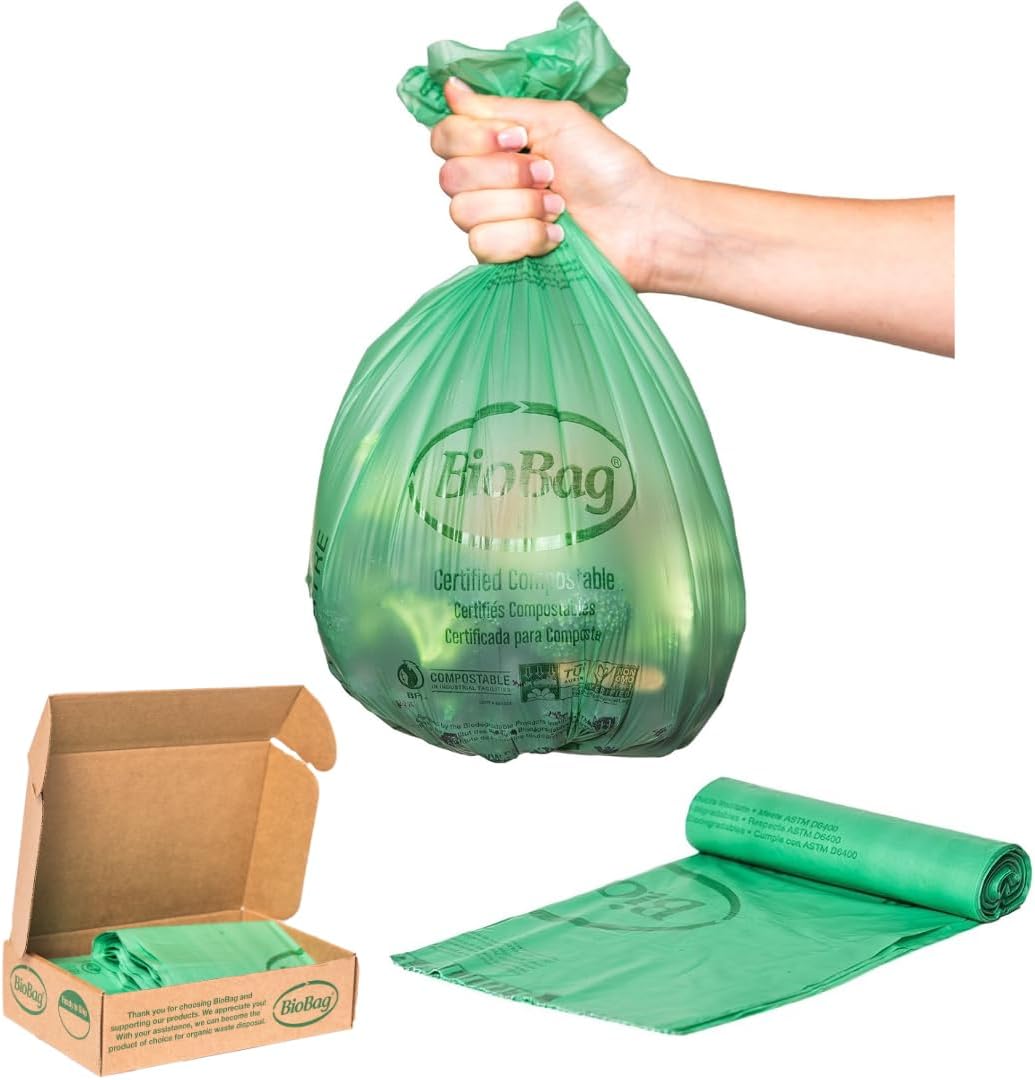
BioBag’s 3-gallon liners are designed specifically around food-scrap collection rather than general household garbage. The 100-count package fits many kitchen compost pails, and the product carries BPI certification for ASTM D6400 compostability standards.
Key features: 3-gallon capacity, 100-count pack, BPI certification, designed for food-scrap bins.
Best for: Dedicated kitchen compost pails.
Pros: Purpose-built for food waste; generous quantity; established compost-bag brand; practical pail size.
Cons: Not meant for large kitchen cans; moist food waste should still be emptied regularly.
Why we recommend it: It’s a focused choice for people who compost food scraps and want a liner specifically designed for that job.
Final Thoughts
The best compostable trash bags aren’t necessarily the biggest or thickest ones. They are the bags that fit your bin, handle the waste you’re putting inside, and match the disposal options available where you live. Small liners from BioBag, UNNI, SUPERBIO, and YORJA make sense for food scraps, while Forid, Compostic, Cleanomic, and UNNI’s 13-gallon version are better suited to full-size kitchen cans. Before choosing, it is also worth understanding the difference between compostable and biodegradable products; this guide to biodegradable trash bags and proper disposal explains why the waste stream matters just as much as the bag itself.
FAQs
Are compostable trash bags actually compostable?
Certified compostable bags are designed to break down under specified composting conditions. However, that does not mean every bag can go into a backyard compost pile. Check whether the product is intended for home composting, commercial composting, or both.
Can compostable trash bags go in regular trash?
They can physically be used for regular trash, but a landfill generally does not provide the same heat, oxygen, moisture, and microbial conditions as a composting system. Their environmental advantage is greatest when they enter an appropriate organics or composting stream.
What is the difference between biodegradable and compostable trash bags?
“Biodegradable” is a broad term describing material that microorganisms can eventually break down. “Compostable” usually refers to material designed to decompose under defined composting conditions and, when certified, meet specific performance requirements.
What size compostable trash bag should I buy?
For countertop food-scrap containers, 1.6- to 3-gallon bags are usually the most practical. A standard tall kitchen trash can generally needs a 13-gallon liner. Always measure your bin if you’re unsure, since dimensions vary between brands.
How do I keep compostable trash bags from leaking?
Avoid pouring liquids directly into the bag, let hot food cool first, and empty damp food scraps frequently. A little paper or plain cardboard at the bottom of a compost pail can also absorb excess moisture. Avoid overfilling the bag or placing sharp objects against the film.