A Practical Guide to Home Rainwater Harvesting Systems
We may earn a commission for purchases made using our links. Please see our disclosure to learn more.
Have you ever watched rain pour off your roof and wondered how much of that water you could actually put to use? Instead of letting it all flow into storm drains, you could collect some for watering your garden, maintaining your landscape, or handling everyday outdoor tasks. Rainwater harvesting systems make this possible by capturing rainfall and storing it until you need it. Some setups are as simple as a barrel connected to a downspout, while others use larger tanks and filtration equipment. If you’re looking for a practical way to conserve water at home, this guide covers how these systems work, the different types available, and what to consider when choosing, installing, and maintaining one.
What Are Rainwater Harvesting Systems?
Rainwater harvesting systems collect rain from surfaces, usually rooftops, and store it in containers for later use.
Instead of allowing all the water to flow into drains, you redirect some of it into a rain barrel, storage tank, or underground cistern.
Most residential systems collect rooftop runoff through gutters and downspouts. The stored water can then supply outdoor activities that would otherwise require treated municipal water.
The type of equipment you choose will depend on how you plan to collect and use the rainwater. Some homeowners use a single barrel for watering flowers, while others install larger tanks to support extensive landscaping.
How Does a Home Rainwater Collection System Work?
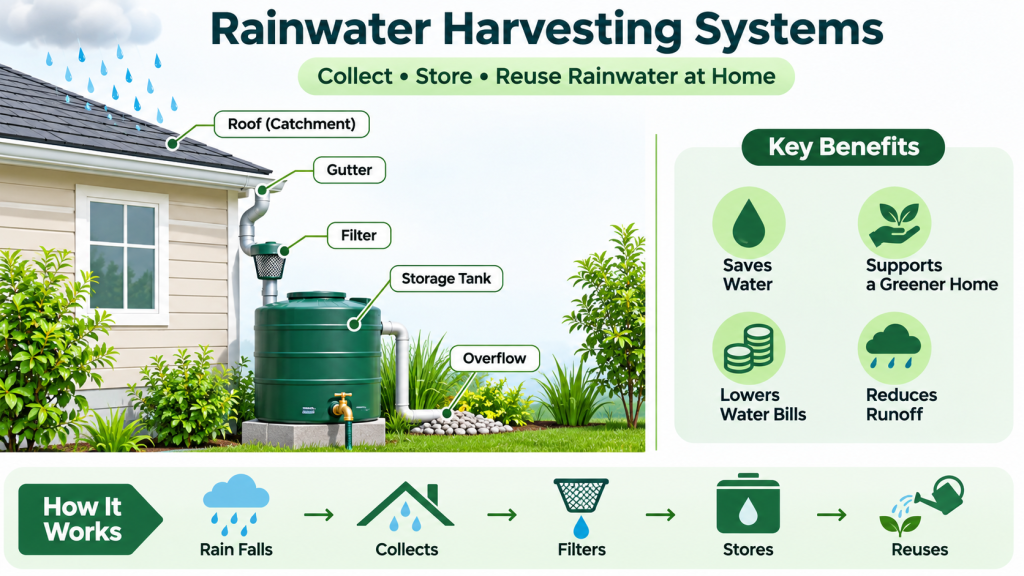
A typical rainwater collection system uses several connected components to capture, filter, store, and distribute water.
Basic rooftop collection: rainfall moves through gutters and screening into a covered storage tank, then leaves through a tap. An overflow outlet carries excess water away.
Essential Components
- Catchment surface: The roof collects rainfall and directs it toward the gutters.
- Gutters and downspouts: These channels move water from the roof into the collection system.
- Leaf screens and filters: Screens catch leaves and larger debris before they reach the tank.
- First-flush diverter: This device redirects the initial roof runoff, which may contain accumulated dirt and contaminants.
- Storage container: A covered barrel or tank holds water until needed.
- Outlet and overflow: A spigot releases stored water, while an overflow pipe manages excess rainfall.
Each component helps the system operate reliably. Without proper screening or overflow management, even a simple rain barrel can develop problems.
Types of Rainwater Harvesting Systems for Homes
Different collection methods suit different properties, budgets, and water requirements.
Rain Barrels
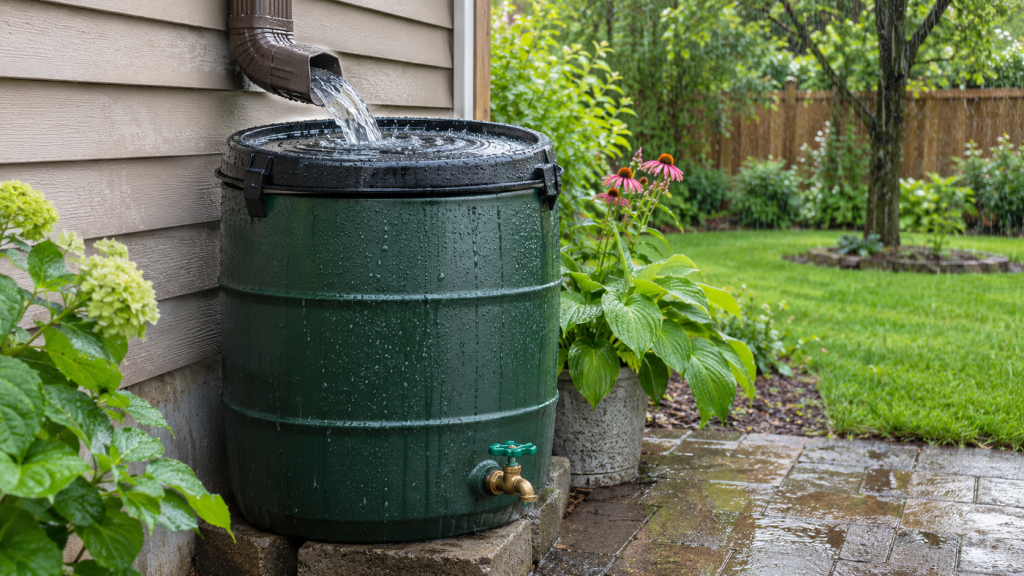
Rain barrels are among the easiest options for beginners. They typically connect to an existing downspout and hold enough water for small gardens or occasional outdoor use.
Many residential barrels have capacities around 50 gallons, although other sizes are available.
Above-Ground Storage Tanks
Larger above-ground tanks offer more capacity for households with extensive landscaping.
These containers usually require a prepared base, additional plumbing, and enough outdoor space for safe installation.
Underground Cisterns
Underground cisterns store larger quantities of water without occupying much visible yard space.
However, excavation, drainage planning, pumps, and professional installation can make them more expensive than above-ground alternatives.
Integrated Household Systems
Some homes connect harvested rainwater to toilets or other non-drinking-water plumbing.
These installations need appropriate filtration, backflow protection, and compliance with local plumbing regulations. They are more complex than a basic garden rain barrel.
Benefits of Collecting Rainwater at Home
Rainwater harvesting provides several environmental and practical advantages.
Reduced municipal water use: Stored rainfall can replace treated tap water for suitable outdoor tasks, helping conserve drinking-water supplies.
Potential savings: Households that pay for metered water may reduce their consumption costs. Actual savings depend on rainfall, water rates, storage capacity, and installation expenses.
Less stormwater runoff: Capturing a portion of rooftop rainfall can reduce the amount of water immediately entering nearby drains during storms.
Convenient garden watering: A rain barrel provides an accessible supply for ornamental plants and landscaping between rainfall events.
For additional ways to reduce household water consumption, explore these practical water conservation tips.
How to Choose the Right Rainwater Harvesting System
Before purchasing equipment, consider how much rain your roof receives and how you intend to use the water.
Estimate Your Collection Potential
In US measurements, one inch of rain falling on 1,000 square feet of roof produces approximately 623 gallons before collection losses.
You can estimate potential collection using:
Gallons collected ≈ Roof area (sq. ft.) × Rainfall (inches) × 0.623 × Collection efficiency
For example, a 500-square-foot roof section receiving one inch of rain could theoretically produce around 312 gallons.
Using an illustrative 80% collection efficiency reduces that estimate to approximately 249 gallons. Actual results vary with roof conditions, system design, and rainfall intensity.
Consider Space and Storage Capacity
Choose a container that fits securely near a suitable downspout without obstructing walkways.
A smaller barrel may satisfy occasional gardening needs, while larger landscapes may benefit from connected tanks.
Remember that water is heavy. A full 50-gallon barrel contains approximately 417 pounds of water, excluding the container itself.
How to Install a Simple Rainwater Harvesting System
You can assemble a basic garden collection system with a suitable rain barrel, downspout diverter, screening, and outlet fittings.
- Choose a location. Select a stable, level area near a downspout and your intended watering area.
- Prepare the base. Use a solid support designed to carry the weight of a full barrel.
- Install the diverter. Follow the manufacturer’s instructions and confirm compatibility with your downspout.
- Connect the barrel. Attach the collection hose and ensure the inlet is screened and securely covered.
- Arrange overflow drainage. Direct excess water away from your home’s foundation and neighboring property.
- Test the setup. Check the connections for leaks and verify that the overflow operates correctly.
Before installation, confirm local rainwater collection rules and any applicable building or plumbing requirements.
How to Use Harvested Rainwater Safely
Collected rainwater is not automatically suitable for drinking.
Rain can carry microorganisms and chemicals from the atmosphere, roofing materials, gutters, and storage containers.
The CDC’s rainwater collection safety guidance explains these risks and recommends testing and appropriate treatment for uses involving human contact or consumption.
CDC
For ordinary untreated rain barrels, focus on watering ornamental plants and other appropriate non-potable outdoor uses.
Avoid drinking the water, giving it to pets, or using it to wash produce. Exercise extra caution with edible crops, especially leafy vegetables, because roof runoff may contain harmful contaminants.
Maintenance Tips for Reliable Rainwater Collection
Regular upkeep keeps your system working efficiently and reduces contamination risks.
- Remove leaves and debris from gutters and inlet screens.
- Inspect lids and openings for gaps that allow mosquitoes inside.
- Check hoses, outlets, and overflow connections for leaks or blockages.
- Clean sediment from the container when necessary.
- Empty or winterize barrels before freezing weather where applicable.
The EPA’s rainwater harvesting guidance emphasizes debris control, routine maintenance, and mosquito prevention for residential collection systems.
Rainwater Harvesting Practices
A well-maintained setup is generally more useful than a larger system that receives little attention.
Recommended Products for Rainwater Harvesting
These five products cover common storage and water-diversion needs. Check dimensions, included fittings, and current availability before purchasing.
1. FCMP Outdoor Raincatcher 4000 – 50-Gallon Rain Barrel
The FCMP Outdoor Raincatcher 4000 features a flat-back design, water outlets, and a debris screen. Its 50-gallon capacity makes it suitable for homeowners who regularly water small gardens or landscaping.
2. RTS Home Accents – 50-Gallon Rain Barrel
This rain barrel provides substantial outdoor water storage and includes a brass spigot for convenient filling. Its flat-back shape helps it sit closer to exterior walls.
3. EarthMinded DIY Rain Barrel Diverter Kit
The EarthMinded kit helps convert a suitable container into a rain barrel. It includes a downspout diverter and outlet components designed for 3-by-4-inch rectangular downspouts.
4. Rain Harvesting First Flush with Catch-All Tee
This first-flush diverter helps prevent the initial, potentially dirtier roof runoff from entering your storage tank. It is designed for compatible 4-inch round downpipes and is useful for improving collection-system design.
5. RTS Home Accents ECO – 50-Gallon Rain Barrel
Made with recycled plastic, this rain barrel offers an alternative for homeowners interested in reducing demand for newly produced materials. Its flat-back design suits installation beside a suitable exterior wall.
Conclusion
Collecting rainwater is a practical way to make better use of a natural resource that often goes straight down the drain. You don’t need an elaborate setup to get started—a properly installed rain barrel may be enough to support your garden and reduce your use of treated tap water. What matters most is choosing a system that suits your available space, local rainfall, and everyday needs. With secure storage, proper overflow drainage, and regular maintenance, you can put collected rainwater to use safely for suitable outdoor tasks. Even a small collection system can help you build more water-conscious habits at home.
FAQs
1. Are rainwater harvesting systems legal?
Rainwater collection is permitted in many places, but rules vary by country, state, and municipality. Some locations regulate storage capacity, plumbing connections, or household uses. Before setting up your rainwater collection system, review the regulations that apply in your area.
2. How much does a home rainwater harvesting system cost?
Costs depend on container capacity, materials, and installation complexity. A basic rain barrel generally costs much less than a large cistern with pumps and plumbing. Include gutters, diverters, supports, and maintenance supplies when planning your budget.
3. Can collected rainwater be used for drinking?
Untreated roof runoff should not be considered safe to drink. Drinking-water systems require appropriate collection design, treatment, testing, and maintenance. Consult local health authorities before using harvested water for human consumption.
4. How long can rainwater stay in a storage tank?
Storage duration depends on water quality, temperature, tank design, and intended use. Covered, screened containers help limit contamination, but water should be used regularly and inspected for problems rather than stored indefinitely without maintenance.
5. What size rain barrel is best for a small home?
A 40- to 60-gallon barrel is a reasonable starting point for many small gardens. Choose a capacity based on available space, local rainfall, and how frequently you expect to use the collected water.