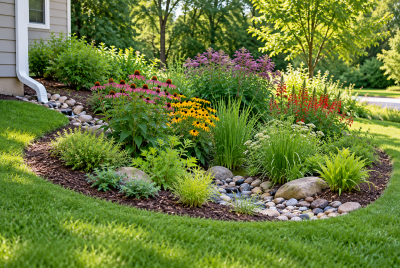
10 Sustainable Landscaping Ideas for a Greener Yard
We may earn a commission for purchases made using our links. Please see our disclosure to learn more.
A greener yard is not simply one with more plants. Sustainable landscaping is about designing an outdoor space that uses water wisely, supports healthier soil and wildlife, produces less waste, and requires fewer resource-intensive inputs over time.
You do not need to rebuild your entire yard to get there. Small changes—such as replacing a patch of thirsty lawn, improving irrigation, or capturing roof runoff—can make the landscape more resilient while often reducing routine maintenance.
1. Choose Native and Climate-Appropriate Plants
Start with plants that naturally fit your climate, soil, rainfall, and sunlight. Native and regionally appropriate species often need less intervention once established because they are better matched to local growing conditions.
EPA WaterSense recommends choosing low-water, drought-tolerant, or native plants suited to the site. Match each plant to its actual conditions rather than buying solely for appearance. A sun-loving plant placed in deep shade will still struggle, no matter how sustainable the label sounds.
2. Replace Part of the Lawn With Diverse Planting
A lawn can be useful for play, pets, and gathering, so sustainable landscaping does not require eliminating grass completely. Instead, look for sections that are rarely used and convert them into planting beds, native groundcovers, shrubs, or meadow-style areas.
This reduces the amount of space that may need frequent mowing, watering, and fertilizing. Curved beds around trees, fence lines, and awkward corners are often easy places to start.
3. Build Healthier Soil With Compost
Healthy soil acts like infrastructure for the whole yard. It supports roots, stores moisture, and helps plants tolerate stress.
Add finished compost where the soil needs more organic matter, especially in garden beds and around new plantings. Avoid assuming more is always better; soil type and existing nutrient levels still matter. Home composting also gives leaves, vegetable scraps, and other suitable organic material a useful second life instead of treating them as waste.
4. Keep Bare Soil Covered
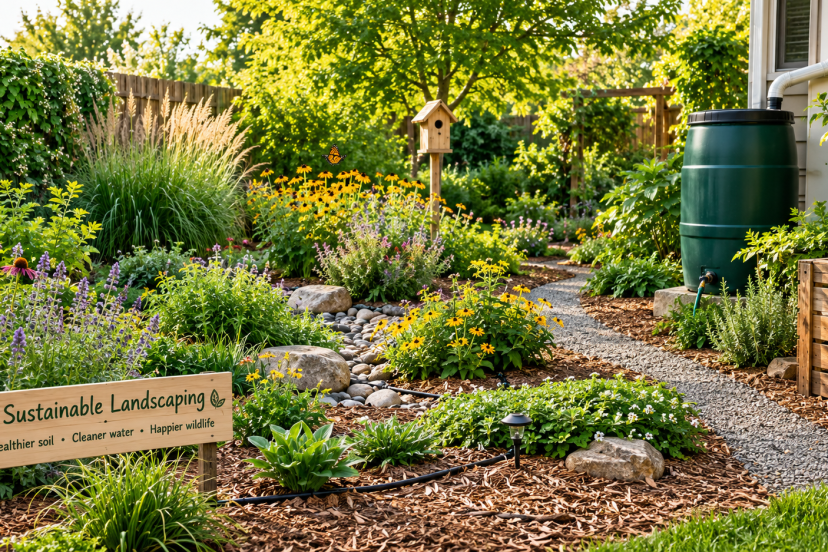
Mulch is one of the simplest tools for an eco-friendly yard.Using organic mulch such as wood chips, shredded leaves, or bark helps the soil hold moisture, keeps temperatures more stable, suppresses weeds, and slowly improves the soil as the material decomposes.
Keep mulch a few inches away from trunks and stems rather than piling it against plants. In informal areas, fallen leaves can also serve as seasonal ground cover instead of being automatically bagged and removed.
5. Add a Rain Garden
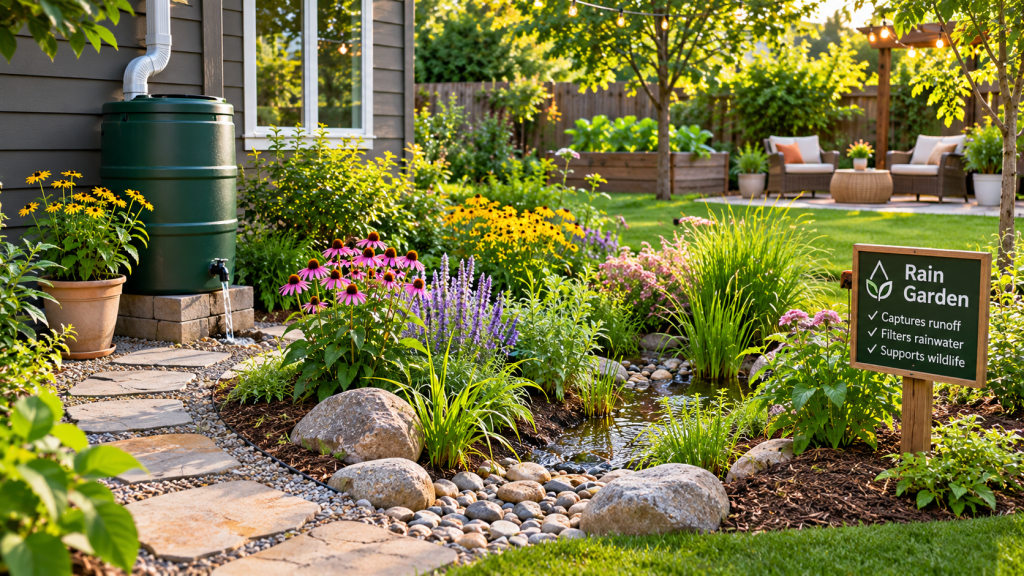
If water rushes off your roof, driveway, or sloped yard during storms, a rain garden can turn that runoff into a useful landscape feature. A rain garden is a shallow planted depression that temporarily holds stormwater and allows it to soak into the ground.
Placement and drainage matter, so do not simply dig a low spot beside the foundation. Plan the inlet, overflow route, soil conditions, and plant selection first. For a practical setup process, see this guide to building a rain garden at home.
6. Capture Rainwater for Later Use
A rain barrel connected to a suitable downspout can store roof runoff for later use on ornamental beds and other appropriate landscape areas. This reduces reliance on treated tap water for routine outdoor watering.
Use a screened inlet, secure the barrel, and provide safe overflow drainage away from the foundation. Local rules can vary, so check municipal or regional requirements before installing a rainwater-harvesting system.
7. Water the Root Zone More Efficiently
Spraying an entire bed is often unnecessary when the plants only need water at their roots. Drip irrigation or targeted emitters can apply water closer to where plants use it, while timers help prevent forgotten watering sessions.
Group plants with similar moisture needs together, a practice often called hydrozoning. That makes it easier to avoid giving drought-tolerant plants the same schedule as thirsty vegetables or newly planted shrubs. EPA WaterSense also recommends grouping plants according to water requirements when designing water-efficient landscapes.
8. Use Permeable Surfaces Where Practical
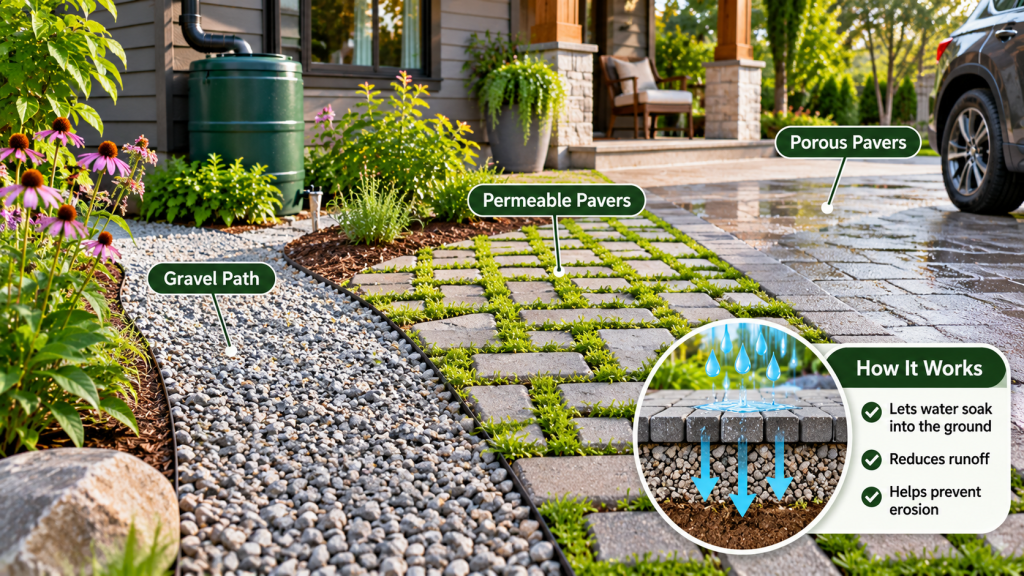
Large areas of solid concrete or other impervious paving send more rainwater toward drains and low points. For paths, patios, and lightly used areas, consider permeable pavers, gravel, spaced stepping stones, or other surfaces that allow more water to infiltrate.
The best choice depends on soil, slope, accessibility, and expected traffic. Permeability should be part of the design rather than an excuse for an unstable or poorly drained walkway. EPA landscaping guidance specifically identifies permeable surfaces as one option for greener stormwater management.
9. Create Habitat, Not Just Decoration
A sustainable yard can feed and shelter more than people. Use a mix of flowering plants, grasses, shrubs, and trees to provide different heights, bloom periods, and habitat types.
Choose plants that support locally important pollinators and other beneficial wildlife, and avoid invasive species. Leaving some seed heads standing after flowering can also provide food and structure through part of the year.
10. Reduce Chemical and Fuel-Heavy Maintenance
A greener landscape should not demand constant correction. Choose durable plants, tolerate a reasonable amount of natural variation, and use integrated pest management rather than reaching for broad treatments at the first sign of damage.
Manual tools and electric equipment can also reduce direct exhaust compared with gasoline-powered alternatives. Just as important, design the yard so it needs less trimming, mowing, and blowing in the first place.
Recommended Products for Sustainable Landscaping
Fiskars Traditional Bypass Pruning Shears
These compact bypass pruners are designed for stems and light branches, making them useful for selective pruning instead of relying on powered equipment for every small job. Model 91095935J has a cutting capacity of about 5/8 inch.
Dual-Chamber Tumbling Composter
This 37-gallon tumbler has two chambers, allowing one side to continue breaking down while fresh material goes into the other. It is a practical option for turning suitable kitchen and yard scraps into compost for beds and borders.
Drip Irrigation Gardener’s Kit
This kit includes tubing, emitters, fittings, stakes, and a faucet connection for targeted garden watering. It is designed for smaller garden and landscaped areas and helps direct water toward the root zone rather than broadly spraying the surface.
Smart Hose Faucet Timer With Wi-Fi Hub
The B-hyve hose timer allows scheduled and app-controlled watering from a standard hose connection. For gardeners who already irrigate with a hose or drip line, a timer can reduce accidental overwatering and make seasonal adjustments easier.
Outdoor RainCatcher Rain Barrel
This 50-gallon rain barrel includes a debris screen, hose connection, overflow components, and linking hardware. It provides a straightforward way to collect roof runoff for later landscape use where rainwater harvesting is permitted.
Proven Principles of Sustainable Landscaping
A more sustainable yard usually starts with working with your local conditions instead of fighting them. The EPA WaterSense landscaping guidance recommends paying attention to your climate, soil, sunlight, and how much water different plants actually need. Choosing plants that suit the space, improving the soil, and watering more efficiently can make your yard easier to maintain while cutting back on unnecessary water use.
Managing rainwater is another big part of sustainable landscaping. According to the EPA’s green infrastructure and rain garden guidance, rain gardens can catch runoff from roofs, driveways, and other hard surfaces before it rushes into storm drains. The water then has time to soak into the ground, which can help reduce runoff and filter some pollutants while creating another planted area in your yard.
Conclusion
Sustainable landscaping works best when the yard is designed around its actual conditions instead of forcing every space into the same lawn-and-sprinkler formula. Native plants, healthier soil, thoughtful irrigation, rain capture, permeable surfaces, and habitat-focused planting can make a yard more resilient while reducing unnecessary inputs. Start with one high-impact change: replace an unused patch of lawn, improve a watering zone, or redirect runoff into a properly planned rain garden. Once that piece works, build the rest of the landscape around it.
FAQs
What is sustainable landscaping?
Sustainable landscaping is the practice of designing and maintaining outdoor spaces to use water and materials efficiently, support soil and biodiversity, reduce pollution and waste, and fit local environmental conditions.
Is sustainable landscaping expensive?
It can be done at many budgets. Large hardscape or irrigation changes may cost more upfront, but smaller steps such as composting, mulching, reducing lawn area, and choosing well-adapted plants can be relatively affordable.
What plants are best for a sustainable yard?
Start with native or regionally appropriate species suited to your specific sun, soil, moisture, and climate conditions. Local extension services, native-plant organizations, and reputable nurseries can help identify appropriate choices.
Can I keep a lawn and still have a sustainable landscape?
Yes. Keep lawn where it serves a real purpose, then reduce or replace areas that receive little use. A smaller, intentionally placed lawn can coexist with native beds, shade trees, rain gardens, and other lower-input features.
What is the easiest sustainable landscaping project to start with?
Mulching an existing bed, planting a small area with climate-appropriate plants, or improving irrigation timing are manageable first projects. Choose the change that addresses your yard’s biggest current problem, such as runoff, high water use, bare soil, or excessive mowing.