
How To Build A Rain Garden In Your Home
We may earn a commission for purchases made using our links. Please see our disclosure to learn more.
After heavy rain, water often collects around driveways, lawns, and garden paths. Some of it eventually drains away, while the rest can carry soil, fertilizers, and other pollutants into nearby waterways.
A rain garden offers a practical way to manage that runoff while adding greenery to your yard. Instead of letting rainwater flow directly into storm drains, you can guide it into a shallow planted area where the soil gradually absorbs it.
Building one requires some planning, but you don’t need advanced landscaping skills. This guide explains how to choose a location, prepare the ground, select plants, and maintain a rain garden that works with your home’s natural drainage.
What Is a Rain Garden?
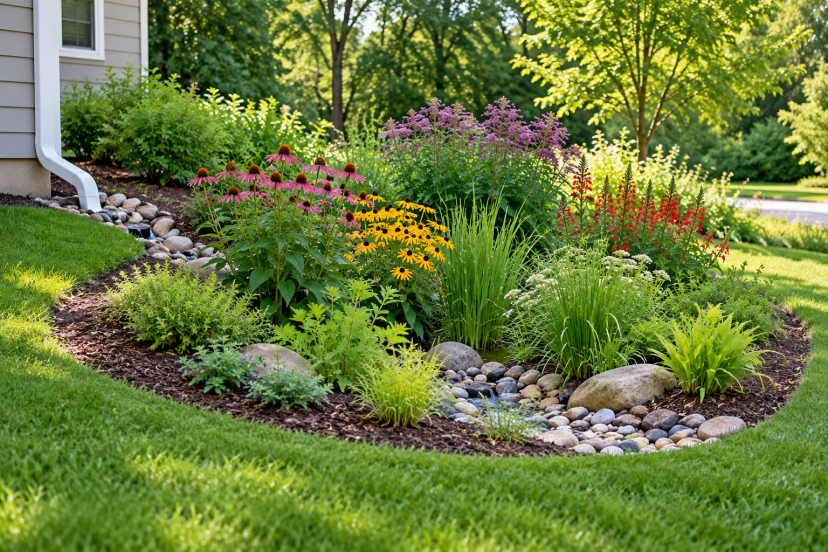
A rain garden is a shallow depression filled with plants that tolerate occasional flooding and dry conditions. It collects runoff from roofs, driveways, patios, and other surfaces.
Unlike a pond, it doesn’t hold water permanently. Rainwater gathers temporarily before soaking into the soil.
The plants and soil help slow runoff, trap sediment, and reduce the amount of polluted water reaching drainage systems.
According to Penn State Extension’s rain garden guidance, rain gardens can absorb approximately 30% more water than an equivalent area of conventional lawn.
Benefits of Building a Rain Garden
A well-designed rain garden provides several environmental and practical advantages.
Reduces Stormwater Runoff
During heavy rainfall, hard surfaces prevent water from soaking into the ground. A rain garden intercepts some of that runoff and gives it time to infiltrate.
This can reduce minor drainage problems and the amount of water entering storm drains.
Helps Improve Water Quality
Rainwater flowing across driveways and lawns can collect dirt, fertilizer, and other contaminants.
Rain garden soil and vegetation help capture some of these pollutants before the water reaches nearby streams.
Supports Local Wildlife
Native flowering plants can provide nectar, shelter, and habitat for butterflies, bees, and other beneficial insects.
A mixture of grasses, flowering perennials, and small shrubs also creates a more diverse garden environment.
Adds Natural Beauty
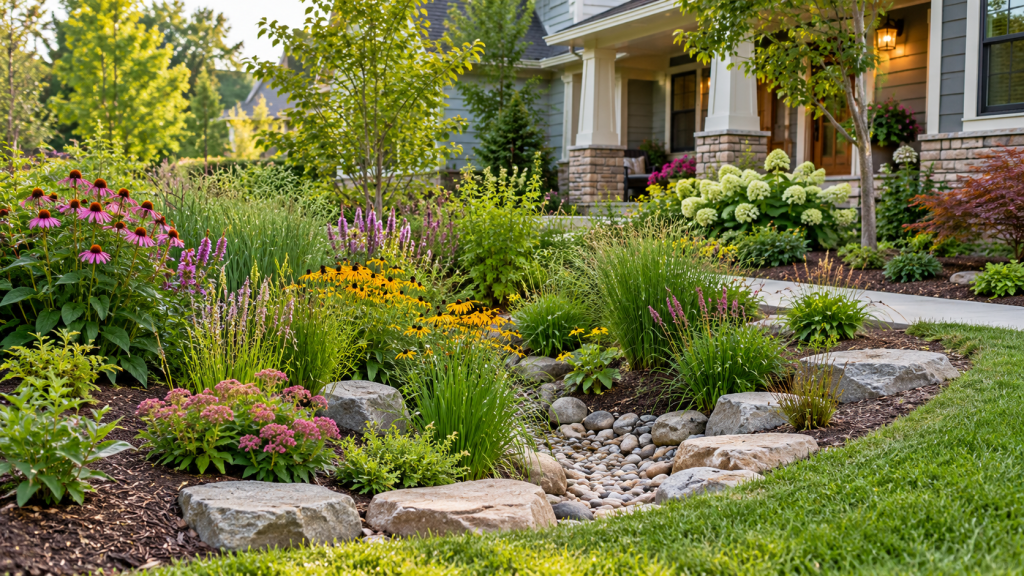
Rain gardens can become attractive landscaping features rather than purely functional drainage areas.
With thoughtful planting, you can enjoy seasonal flowers, interesting foliage, and a greener outdoor space.
How to Choose the Best Location for a Rain Garden
Location determines how effectively your garden handles runoff.
Look for an area that receives water from a downspout, driveway, or gently sloping lawn. The site should have enough space for water to spread out safely.
Consider these factors:
- Distance from buildings: Keep the garden at least 10 feet from your home’s foundation, or farther if local guidance requires.
- Soil drainage: Choose ground that absorbs water rather than staying waterlogged.
- Sunlight: Match the location’s sunlight exposure to your intended plants.
- Slope: Avoid steep slopes that may require structural reinforcement.
- Underground utilities: Check for buried cables, pipes, and other services before digging.
Avoid septic systems, wells, and areas with persistently high groundwater.
The University of Connecticut’s rain garden planning guide also recommends avoiding locations that remain consistently wet, since rain gardens need adequate drainage to function properly.
How to Build a Rain Garden: Step-by-Step Guide
Once you’ve selected a suitable location, you can begin preparing the garden.
Step 1: Test Your Soil Drainage
Dig a hole approximately 6–8 inches deep and fill it with water.
Allow the soil to absorb the water, then refill the hole and observe how quickly the water level drops.
If the water disappears within several hours, the location may be suitable. If water remains after 24 hours, investigate further or choose another site.
For a straightforward residential project, aim for a garden that drains within 24–48 hours.
Step 2: Determine the Garden’s Size
Your garden’s size depends on the amount of runoff entering it, the soil’s drainage rate, and the intended basin depth.
For preliminary planning, a rain garden may occupy around 10–20% of the hard surface draining into it, although site conditions can require a different size.
For example, if 500 square feet of roof drains toward the garden, an initial estimate might be 50–100 square feet.
Use a local rain garden sizing guide to confirm the dimensions before digging.
Step 3: Mark and Excavate the Area
Outline your garden with a rope or garden hose.
Oval, kidney-shaped, and gently curved designs often blend naturally into residential landscaping.
Remove grass and excavate a shallow basin, commonly around 4–8 inches deep, depending on drainage conditions and the design.
Keep the bottom reasonably level and create gently sloping sides.
Step 4: Prepare the Soil
Loosen compacted ground to encourage infiltration and root growth.
For suitable soils, work in finished compost where needed to improve structure. Heavy clay may require more extensive soil preparation or a professionally designed drainage system.
You can make useful soil amendments from household organic waste by following this beginner’s guide to composting.
Avoid adding excessive compost or fertilizer, which can contribute unnecessary nutrients to runoff.
Step 5: Create a Water Entry and Overflow Route
Guide runoff into the garden using a shallow, planted channel, a downspout extension, or another suitable drainage connection.
Add stones near the inlet if needed to reduce erosion.
An overflow route is equally important. It should direct excess water toward a safe drainage area, never back toward your foundation or neighboring property.
Step 6: Add Plants and Mulch
Arrange plants according to their tolerance for moisture.
Place moisture-tolerant species near the center, where water collects longest. Use plants that prefer slightly drier conditions around the edges.
After planting, add approximately 2–3 inches of coarse, untreated hardwood mulch, keeping it away from plant crowns.
Water the new plants thoroughly to help their roots establish.
Best Plants for a Rain Garden
Choose plants suited to your region’s climate, soil, and seasonal rainfall.
Native species generally offer strong ecological benefits because they support local insects and wildlife.
| Garden Zone | Plant Type | Examples |
| Center | Moisture-tolerant plants | Native sedges, rushes |
| Middle | Plants that tolerate wet and dry periods | Swamp milkweed, blue flag iris |
| Outer edge | Plants preferring better drainage | Black-eyed Susan, little bluestem |
These examples suit certain North American regions. Check which species are native and appropriate locally before planting.
For tropical climates, ask a local nursery about suitable native grasses, sedges, and flowering plants that tolerate occasional waterlogging.
Avoid invasive species, even if they grow well in wet soil.
Essential Tools for Your Rain Garden
These five tools can make building and maintaining your rain garden easier.
1. Fiskars Steel Digging Shovel – A durable shovel for removing grass, digging soil, and shaping the garden basin.
2. AMES Bow Rake – A sturdy rake for leveling soil, clearing debris, and preparing planting areas.
3. FLEX-Drain Downspout Extension – A flexible extension that directs roof runoff toward your rain garden.
4. Luster Leaf Rapitest Soil Test Kit – A simple kit for checking soil pH and nutrients before planting.
5. AcuRite Rain Gauge – An easy-to-use gauge for tracking rainfall and monitoring garden performance.
Conclusion
Building a rain garden gives your yard a useful way to handle rainfall while supporting plants and local wildlife. Start by identifying where runoff travels, testing your soil, and choosing a location away from foundations. Once you’ve prepared the basin and selected suitable plants, regular maintenance will help the garden absorb water effectively. With proper planning, an ordinary section of lawn can become an attractive part of a more sustainable home landscape.
FAQs
1. How deep should a rain garden be?
Most residential rain gardens have a shallow basin around 4–8 inches deep. The ideal depth depends on soil drainage, garden size, and local rainfall conditions.
2. Does a rain garden attract mosquitoes?
A properly designed rain garden should drain within 24–48 hours, usually before mosquitoes can complete their aquatic development. If water remains pooled for an extended period, the garden may not be draining properly.
3. Can I build a rain garden in clay soil?
Yes, but clay soil may require significant preparation. Conduct a drainage test first and consider professional advice if water infiltrates slowly.
4. What is the average cost of installing a rain garden?
Costs depend on garden size, excavation requirements, soil amendments, and plants. A small DIY garden using existing tools and locally sourced plants can cost considerably less than a professionally installed system.
5. Can a rain garden survive without regular watering?
Established native plants may tolerate normal dry periods, depending on the local climate. Newly planted gardens generally need supplemental watering until their roots become established.