What Is Circular Economy?
We may earn a commission for purchases made using our links. Please see our disclosure to learn more.
The circular economy is a smarter way of making, using, and sharing things. Instead of taking raw materials, turning them into products, and throwing them away when we are done, it aims to keep products and materials useful for as long as possible.
Think of it as moving away from a “use it once and replace it” mindset. A circular economy encourages us to repair a phone instead of upgrading it immediately, refill a bottle instead of buying another disposable one, or choose a secondhand table instead of a cheaply made new piece that will not last.
It is not about living perfectly or never buying anything new. It is about making more thoughtful choices and designing products so waste becomes far less likely in the first place.
Circular Economy vs. Linear Economy
Most of today’s economy is linear:
Take → make → use → throw away
For example, oil is extracted to make a plastic water bottle. The bottle is used for a few minutes, then tossed out. Even if it gets recycled, the material may lose quality each time it goes through the process.
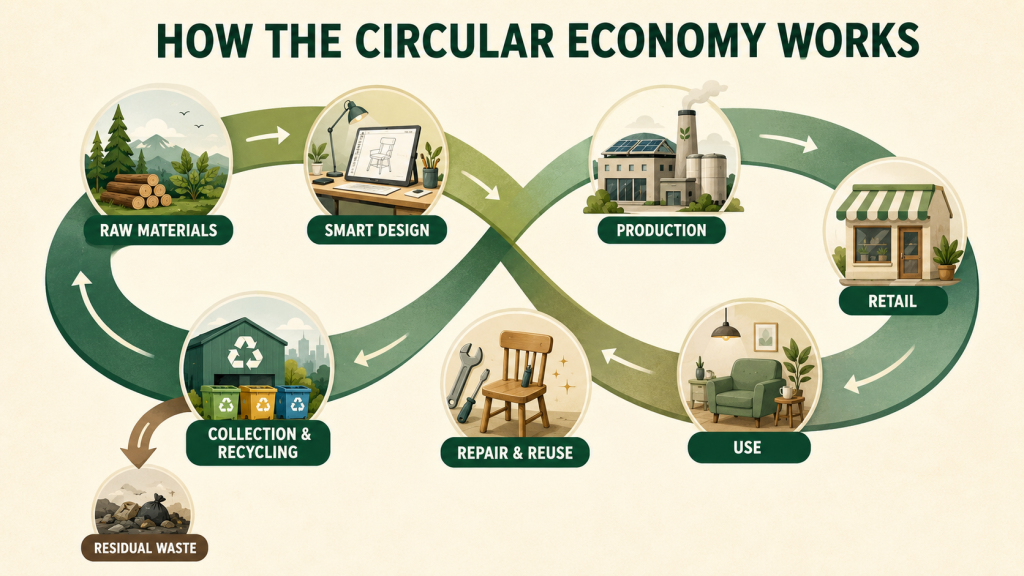
A circular economy tries to slow that cycle down. It keeps products in use through sharing, repairing, reusing, refurbishing, remanufacturing, composting, and, finally, recycling.
The aim goes beyond handling waste after it appears; it is to prevent unnecessary waste from being created at all. The better goal is to create less waste to begin with.
The Three Main Principles of a Circular Economy
According to the Ellen MacArthur Foundation, a circular economy rests on three connected ideas: prevent waste and pollution by design, keep products and materials useful for as long as possible, and support the restoration of natural systems. Read its detailed circular economy overview for a deeper explanation.
1. Design Out Waste and Pollution
Waste is often treated as unavoidable. However, many waste problems begin much earlier, during product design.
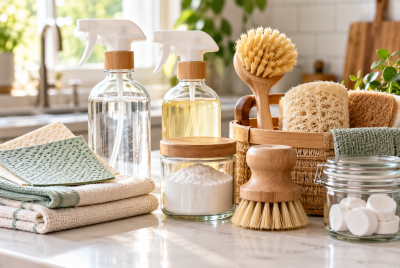
A reusable coffee cup, for instance, avoids the need for hundreds of disposable cups. A refillable cleaning bottle can cut down on plastic packaging. Products made with fewer mixed materials are also easier to repair or recycle.
Good design considers the entire life of an item, not just how it looks on a store shelf.
2. Keep Products and Materials in Use
This is the part most people recognize. Instead of throwing things away, we use them longer or pass them on.
That might include:
- Repairing a toaster or pair of shoes
- Buying secondhand clothing
- Renting tools you only need once
- Donating usable household goods
- Choosing refillable products
- Upcycling jars, furniture, or fabric scraps
Recycling still matters, but it should come later in the process. Repairing or reusing a product usually keeps more of its value intact.
3. Regenerate Natural Systems
A circular economy also looks beyond manufactured products. It asks whether our choices help restore the systems that provide food, clean water, healthy soil, and biodiversity.
Composting food scraps is a simple example. Instead of sending organic waste to landfill, compost returns nutrients to the soil. Regenerative farming practices, such as cover cropping and reducing soil disturbance, work on a larger scale to support healthier land.
How Does the Circular Economy Show Up in Daily Life?
You do not need to join a complicated program to take part. Many ordinary habits already fit the model.
A family might use cloth napkins, repair a vacuum, sell outgrown kids’ clothes, compost vegetable scraps, and buy groceries in refillable containers. A business might offer spare parts, take back old products, or use recycled materials in new packaging.
Here are a few easy examples:
- A local library lends books, reducing the need for every person to buy the same title.
- A clothing resale platform extends the life of garments.
- A phone company provides replacement batteries and repair manuals.
- A refill shop lets customers reuse containers for soap or pantry staples.
- A furniture maker uses reclaimed wood or designs pieces with replaceable parts.
Even simple habits, like choosing from these practical reusable items for reducing household waste, can help you move away from everyday disposables.
Why the Circular Economy Matters
Our current consumption habits put pressure on natural resources and create huge amounts of waste. The circular economy offers a practical framework for reducing that pressure while helping products stay useful longer.
It can support:
Less Waste
When products are durable, repairable, refillable, and reusable, fewer items head to landfill or incineration.
Better Use of Resources
Making new products requires raw materials, energy, water, and transport. Keeping an existing product in use often avoids some of that demand.
Lower Costs Over Time
A quality item may cost more upfront, but it can save money when it lasts for years. Repairing, borrowing, buying used, and refilling can also be cheaper than constantly replacing things.
More Thoughtful Innovation
Circular design pushes companies to rethink how products are made. That can lead to modular electronics, refill systems, repair services, resale programs, and packaging-free shopping options.
Still, circularity is not a magic fix. Recycling alone cannot solve overconsumption, and not every reused product automatically creates an environmental benefit. The most meaningful progress comes from buying less when possible, using what you own longer, and choosing products built to last.

How to Support the Circular Economy as a Consumer
Your everyday decisions matter, but you do not need to overhaul your life overnight. Start with the items you buy most often.
Before adding something to your cart, pause and consider:
- Do I actually need to own this?
- Could I borrow it, rent it, or find a pre-owned version instead?
- Is it durable and repairable?
- Does the brand offer refills, spare parts, or a take-back program?
- Can I reuse or recycle the packaging locally?
It also helps to avoid being swayed by vague “green” labels. Look for clear information about materials, durability, repair options, packaging, and end-of-life instructions.
For more easy home-based ideas, explore these zero-waste lifestyle habits that reduce daily waste. Small swaps are useful because they make sustainable choices feel normal rather than inconvenient.
Recommended Products That Support Circular Habits
These products will not create a circular economy on their own. However, they can replace single-use purchases or help you make better use of what you already have.
1. Reusable Stainless Steel Water Bottle
A durable bottle can replace countless disposable plastic bottles over time. Look for one with replaceable lids or seals when possible.
2. Reusable Silicone Food Storage Bags
Silicone storage bags can replace many single-use sandwich and freezer bags. Choose a sturdy, dishwasher-safe option for the best chance of using it for years.
3. Rechargeable Batteries and Charger
Rechargeable batteries are especially useful for remotes, toys, flashlights, and small home devices. They reduce the steady stream of disposable batteries leaving your home.
4. Countertop Compost Bin
A compact compost bin makes it easier to collect fruit peels, coffee grounds, and vegetable scraps before adding them to a compost pile or local collection service.
5. Basic Household Repair Kit
A small repair kit can help you tighten loose furniture, fix hardware, replace simple parts, and keep useful items from being discarded too soon.
What Research Says About Circular Economy
Circular economy thinking has strong potential, but researchers also stress the need to measure results carefully. A systematic review in the Journal of Environmental Management examined how circular economy performance connects with sustainable development and highlighted its relevance to several UN Sustainable Development Goals.
Another systematic review of circular economy practices and business sustainability reviewed 104 empirical studies. It found that circular practices can support sustainability performance, while also showing that real outcomes depend on how those practices are designed and implemented.
In plain terms: reuse, recycling, and resale are promising, but they work best alongside durable design, responsible production, and lower overall consumption.
Conclusion
The circular economy is not about chasing a zero-waste ideal. It is about treating materials, products, and natural resources with more care. Use what you have. Repair what still works. Choose durable products when you need something new. Share, donate, refill, and recycle when appropriate. Those choices may feel small, but together they help move us away from a throwaway culture and toward a more practical, sustainable future.
FAQs
What is the circular economy in simple words?
It is an economic system that keeps products and materials in use for as long as possible through reuse, repair, sharing, refurbishment, composting, and recycling.
Is recycling the same as a circular economy?
No. Recycling is one part of it. A circular economy gives priority to reducing waste, reusing items, and repairing products before recycling materials.
Which products fit into a circular economy?
Refillable cleaning products, repairable electronics, reusable food containers, secondhand furniture, compostable food waste, and clothing resale programs are common examples.
How can businesses participate in a circular economy?
Businesses can make longer-lasting products, offer repairs and spare parts, reduce packaging, use recycled materials, create take-back programs, and sell refurbished goods.
Can individual choices make a real difference?
Yes, especially when everyday choices become habits. Buying less, using products longer, repairing what you can, and choosing reusables all help reduce demand for disposable goods.