The Best Eco Kitchen Sponges & Alternatives
We may earn a commission for purchases made using our links. Please see our disclosure to learn more.
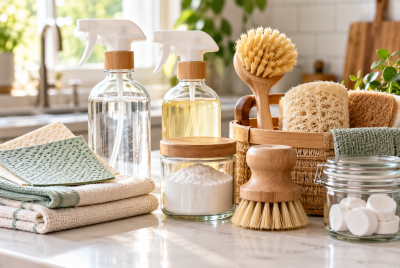
Conventional kitchen sponges often contain plastic-based foam and synthetic scrubbing fibers. As they wear down, they need replacing, adding to household waste. Eco kitchen sponges made from cellulose, loofah, and other natural fibers offer alternatives for everyday dishwashing.
The right choice depends on what you clean, how often you wash dishes, and whether you can reuse or compost the product. Here are five options to consider, along with specific products and practical buying tips.
What to Look for in Eco Kitchen Sponges
Before buying, check these three things:
- Materials: Look for cellulose, natural loofah, coconut coir, or other plant-based fibers. Check whether the sponge also contains plastic foam, synthetic bristles, or adhesives.
- Durability: Choosing a durable sponge can mean buying fewer replacements over time.
- Disposal: Biodegradable doesn’t automatically mean home-compostable. Check the manufacturer’s instructions and your local composting options.
5 Eco-Friendly Kitchen Sponge Alternatives
1. Cellulose Sponges
Cellulose sponges are made from plant-derived fibers, often sourced from wood pulp. They absorb water well, create plenty of suds, and work for everyday tasks such as washing plates, glasses, and countertops.
Choose a sponge made entirely from cellulose if you want to avoid synthetic scrubbing layers.
Best for: Daily dishwashing and general kitchen cleaning.
Keep in mind: Some cellulose sponges include plastic backing or other synthetic materials. Review the product’s listed materials and features before making a purchase.
2. Natural Loofah Sponges
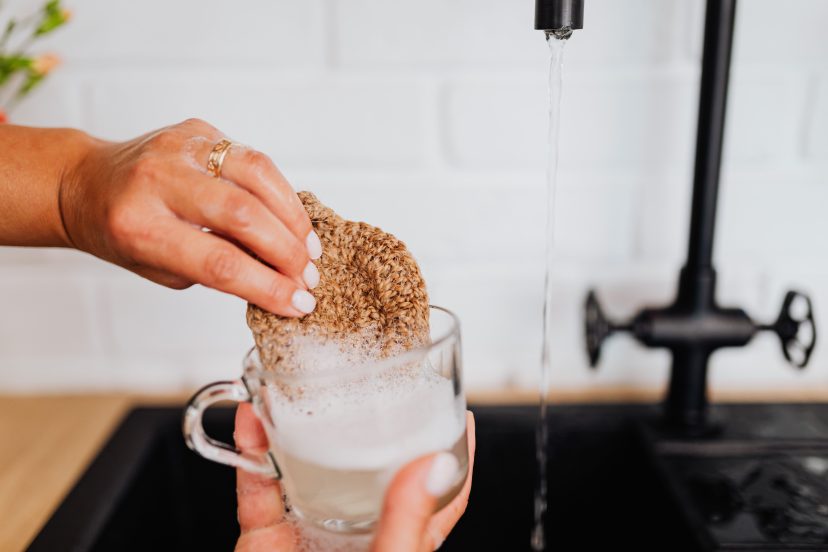
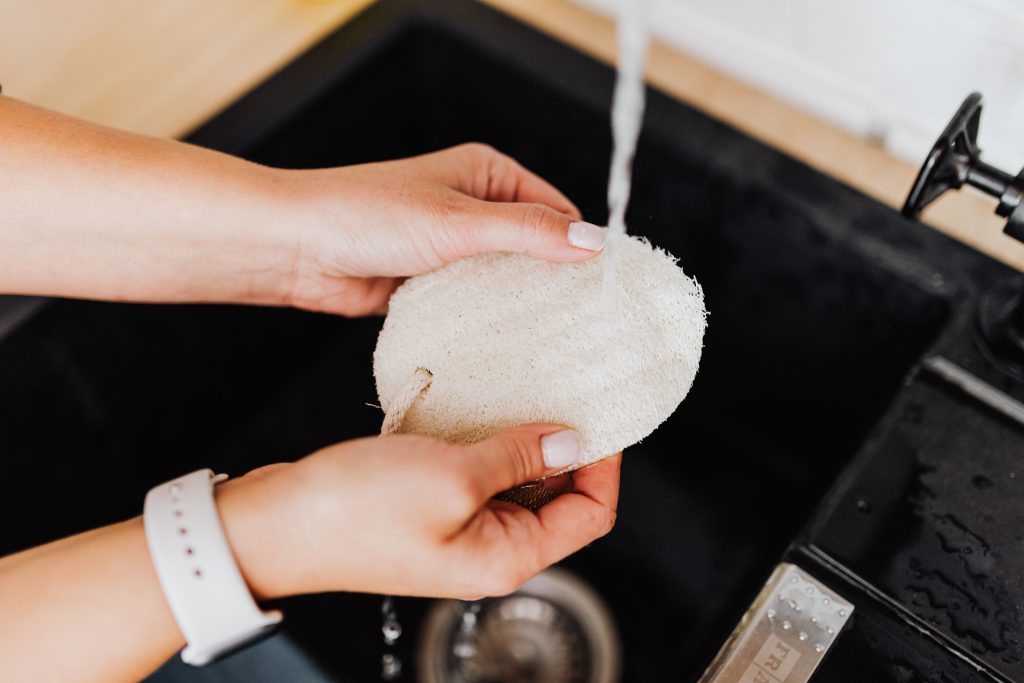
Natural loofah is made from the dried, net-like fibers inside a mature gourd. Its rough texture helps remove food residue from sturdy cookware and other washable surfaces.
You can cut a larger loofah into smaller pieces to make several scrubbers. Rinse each piece after use and let it dry completely between washes.
Best for: Scrubbing pots, pans, and dishes that can handle a textured surface.
Keep in mind: Avoid using loofah on nonstick coatings or delicate finishes because it may scratch them.
3. Coconut Coir Scrubbers
Coconut coir comes from the fibrous husk of coconuts. Manufacturers use it to make firm scrub pads that help remove stuck-on food and grease.
Coir works well when a soft sponge doesn’t provide enough scrubbing power. Some products combine it with cellulose for better absorption.
Best for: Heavy-duty cleaning on durable cookware.
Keep in mind: Check for synthetic backing, binders, and adhesives. A natural outer layer doesn’t guarantee that the entire product is plastic-free.
4. Bamboo Dish Brushes
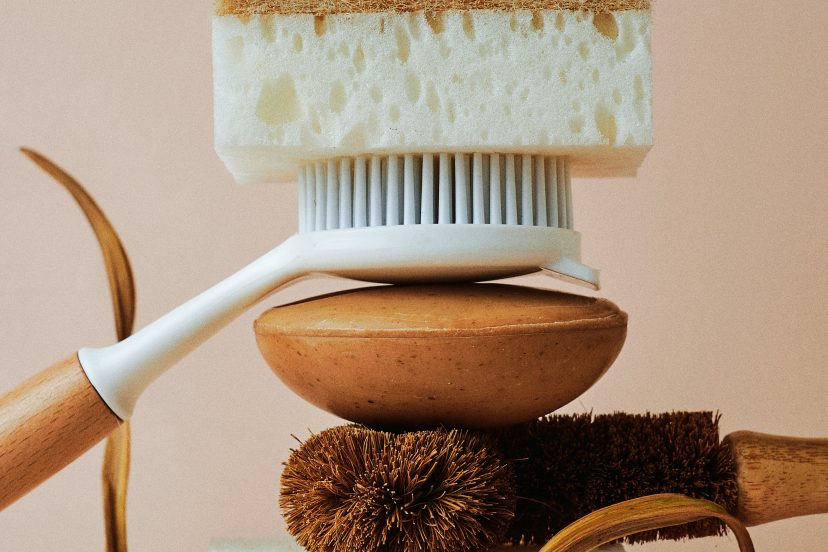
A bamboo dish brush can replace a sponge for many washing tasks. Brushes with natural sisal or other plant-based bristles remove food residue from plates, bowls, and pans.
The open design allows water to drain more easily than it does from a thick sponge. Models with replaceable heads can also reduce the need to discard the entire brush.
Best for: Scrubbing dishes, cleaning cookware, and reaching corners.
Keep in mind: Check the bristles and handle finish. Keep the wooden handle as dry as possible between uses.
5. Reusable Cotton Dishcloths
Washable cotton dishcloths are useful for wiping counters, washing dishes, and cleaning up spills. Instead of throwing them away after a short period, you can wash and reuse them.
Keep several cloths on hand so you can switch to a clean one regularly.
Best for: Everyday wiping, light dishwashing, and reducing disposable cleaning waste.
Keep in mind: Cotton production and repeated washing also use resources. Choose durable cloths and use them for as long as they remain in good condition.
What Research Says About Kitchen Sponges
A 2026 study published in Environmental Advances examined microplastic release from kitchen sponges during use. Researchers found that plastic-containing sponges released microplastics as their materials wore down. The tested sponge with a lower plastic content released less microplastic than the alternatives in the study.
The research also found that water use during manual dishwashing contributed more to the modeled ecosystem damage than sponge production or abrasion. This highlights two practical considerations: choose cleaning tools with fewer synthetic materials when possible, and avoid leaving the tap running while scrubbing.
Read the study on microplastic release from kitchen sponges for its methods and findings.
Disposal matters, too. The U.S. Environmental Protection Agency explains that composting depends on the materials being processed and the conditions in the composting system. A product labeled biodegradable may not break down effectively in a home compost pile.
Before composting a used sponge, check its material composition and the manufacturer’s instructions. The EPA’s guide to composting at home explains the basics.
For more ways to reduce household waste, explore these plastic-free kitchen swaps.
How to Make Your Kitchen Sponges Last Longer
You don’t need to replace your entire collection of cleaning tools to make a difference. Start by caring for the ones you already own.
- Rinse thoroughly: Rinse away any leftover food and detergent after using your sponge.
- Let them dry: Store sponges in a well-ventilated holder rather than leaving them in standing water.
- Use the right tool: Save abrasive scrubbers for durable cookware and use soft sponges on delicate dishes.
- Replace worn-out sponges: Discard them when they develop persistent odors, break apart, or stop cleaning effectively.
- Use less running water: Turn off the tap while scrubbing and rinse dishes together when practical.
Conclusion
The best eco kitchen sponges depend on your cleaning habits. Cellulose works well for everyday washing, loofah and coconut coir offer more scrubbing power, and bamboo brushes and cotton dishcloths provide reusable alternatives. Check the materials, expected lifespan, and disposal instructions before buying. A durable cleaning tool that suits your routine can help you reduce waste without making dishwashing more complicated.
FAQs
1. Are eco kitchen sponges better for the environment?
They can be, especially when they contain fewer synthetic materials and last a long time. Their overall impact also depends on manufacturing, transportation, water use, and disposal.
2. What is the best alternative to a regular kitchen sponge?
Cellulose sponges suit everyday dishwashing, while coconut coir and loofah work well for tougher residue. Reusable dishcloths are useful for wiping surfaces and light cleaning.
3. Are natural kitchen sponges compostable?
Some sponges made entirely from suitable plant-based materials may be compostable. However, synthetic fibers, adhesives, and other additives can prevent proper decomposition. Check the product label and your composting facility’s requirements.
4. When should you replace an eco-friendly sponge?
Replace it when it develops a persistent odor, starts breaking apart, or no longer cleans effectively. Regular rinsing and proper drying can help extend its useful life.
5. Do eco-friendly sponges clean as well as regular sponges?
Many do. Cellulose absorbs water well, while loofah and coconut coir provide extra scrubbing power. Choose the material according to the surface you’re cleaning to avoid scratches.