12 Zero-Waste Pantry Organization Ideas
We may earn a commission for purchases made using our links. Please see our disclosure to learn more.
Zero-Waste Pantry Organization helps you waste less food, avoid duplicate purchases, and keep your kitchen easier to manage. When your pantry is organized with intention, it becomes much easier to see what you already have, use ingredients before they go bad, and make smarter shopping decisions. With a few simple changes, you can reduce clutter, improve storage, and create a pantry that supports a more practical and sustainable home.
1. Start with a shelf-by-shelf reset
Do not pull everything out and turn this into a five-hour kitchen project unless you genuinely enjoy that. Instead, reset one shelf at a time. Check dates, combine duplicates, wipe surfaces, and notice what you keep buying but rarely use. That gives you a clearer view of your habits, which is the real goal. A zero-waste pantry should reflect real life, not fantasy cooking.
Working in small sections also helps you make better decisions. Just as importantly, it keeps you from buying organizers before you know what actually needs organizing.
2. Group foods by how you actually cook
A pantry works best when it matches your routine. Instead of sorting everything by package type, group foods by use. Keep baking ingredients together. Store pasta, grains, and canned tomatoes near each other. Create separate zones for breakfast staples, lunchbox snacks, and quick dinners.
This makes meal prep easier, but it also keeps ingredients visible in context. You are far more likely to use chickpeas when they sit near the grains and spices you cook with, not when they are buried beside crackers and tea.
3. Use refillable containers where they help most
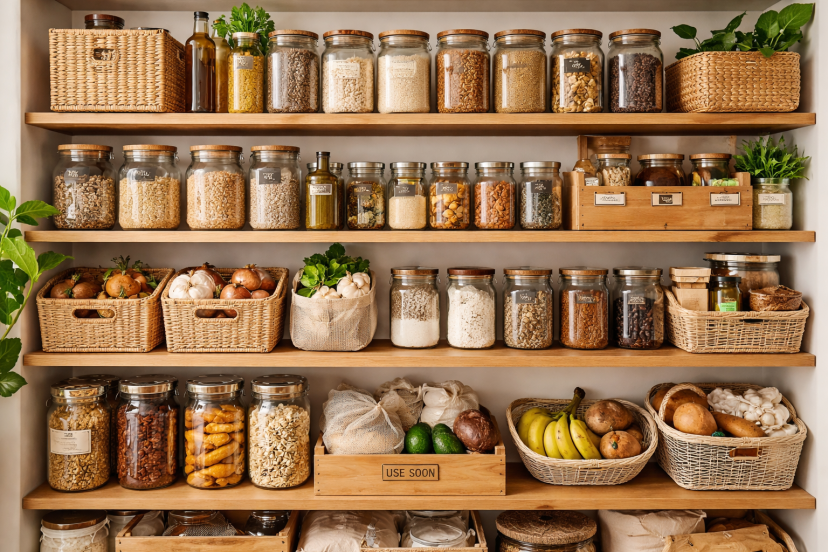
You do not need to decant every single item. Focus on foods you buy often and use steadily, like rice, oats, flour, sugar, pasta, lentils, nuts, and seeds. Clear refillable containers make it easier to see what you have left, which helps prevent surprise shortages and duplicate purchases.
Glass is a popular option because it is durable, reusable, and easy to clean. Still, function matters more than looks. If repurposed jars work for you, they count. Zero-waste living gets easier when you stop chasing perfection and choose systems you can actually maintain.
4. Keep labels simple and useful
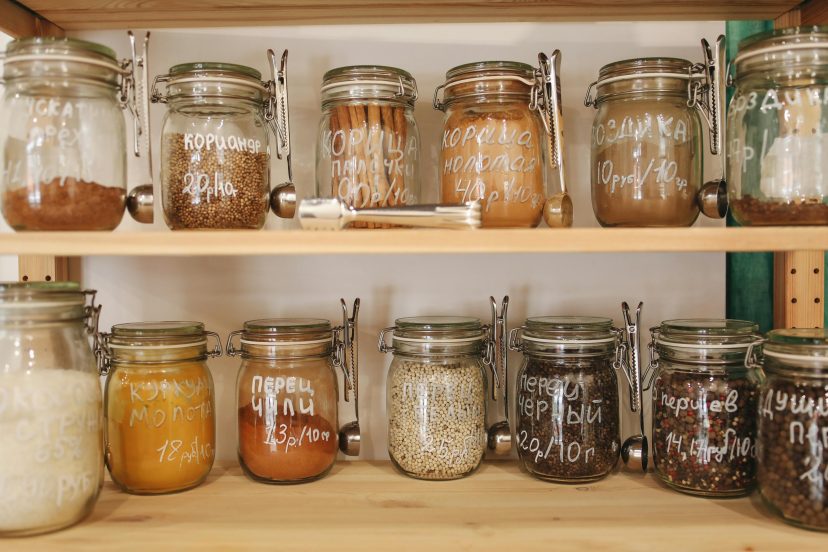
A pretty label only helps if it tells you something useful. Clearly name the item, then add the purchase or refill date if that helps you rotate food better. For flours, grains, or snacks that look similar in jars, labels matter even more.
Keep it practical. “Brown rice – opened April 2026” is much more useful than a decorative label that only says “Rice.” Your pantry does not need to look fancy. It needs to save you from confusion later.
5. Create a first-in, first-out zone
This is a small change, but it makes a big difference. When you bring home a new bag of oats or jar of peanut butter, put the older one in front and the newer one behind it. That simple first-in, first-out method helps you use older food first.
It works well for canned goods, boxed items, snacks, grains, and baking staples. Once it becomes a habit, your pantry feels less waste-prone without feeling overly strict.
6. Break bulk buys into realistic portions
Buying in bulk can reduce packaging, save money, and support a lower-waste kitchen, but only if you can actually use what you buy. If you bring home a large bag of rice, divide it into smaller refill containers. If you stock up on nuts, seeds, or dried fruit, portion them into amounts that feel manageable and stay fresher longer.
That matters because buying a lot is not the same as using a lot. A smart zero-waste pantry respects your real habits instead of assuming you cook at restaurant scale.
7. Give snacks and grab-and-go foods a real home
Snacks create more pantry chaos than they should. They spill, multiply, and somehow end up scattered across several shelves. The fix is simple: give them one defined zone. Use a bin, basket, or shelf section for snack bars, crackers, dried fruit, nuts, or whatever your household reaches for most.
This keeps everyday foods visible and stops half-open packages from drifting all over the pantry. It also helps you see what needs to be finished before you buy more.
8. Use jars for dry goods and bags for awkward items
Not everything belongs in a rigid container. Dry goods like beans, oats, flour, pasta, and seeds do well in jars or canisters. But awkward items like onions, garlic, potatoes, and bread products often do better in breathable bags or baskets.
This is where zero-waste pantry organization becomes truly practical. You are not forcing one storage method onto every ingredient. You are choosing what fits the food best, and that makes the whole pantry easier to use.

9. Build a low-waste produce corner
Even in a pantry, produce needs a plan. Set aside one area for pantry-friendly produce like onions, garlic, potatoes, squash, or bananas. Use breathable bins or cotton storage bags when needed, and avoid overcrowding the space. Good airflow matters.
Most importantly, keep this area visible. When fresh ingredients hide too well, they spoil before they ever make it into a meal. A zero-waste pantry should make perishable foods easier to notice, not easier to forget.
10. Add a “use soon” basket at eye level
This is one of the easiest ideas to put into practice, and it works quickly. Use one basket or shallow bin for foods that need attention soon. That could include half-used pasta, nearly empty crackers, forgotten beans, or baking ingredients close to losing quality.
Place the basket where you will see it often. Then shop from it before opening something new. It turns leftovers into a visible plan and cuts down on those “I forgot we already opened one” moments.
11. Make scooping and measuring easy
Sometimes food gets wasted for a simple reason: it feels annoying to use. If flour requires moving three containers and a rogue bag clip, you are less likely to reach for it. If rice is hard to pour, convenience foods start to look more appealing. Good pantry systems remove friction.
Use wide-mouth jars, simple scoops, funnels, and measuring tools that make cooking easier. The easier food is to use, the more likely it is to get eaten.
12. Leave breathing room on every shelf
A packed pantry feels efficient for about five minutes. After that, it becomes a jumble where things disappear behind other things. Leaving a little open space on each shelf makes it easier to rotate food, spot low items, and avoid crushing packages into awkward corners.
This is one of the most overlooked zero-waste pantry organization ideas because empty space can seem unproductive. In reality, that breathing room is what keeps the whole system functional.
Why Better Pantry Habits Can Help Reduce Food Waste
A zero-waste pantry is not just about neat shelves or matching jars. It can also support better daily habits around food use. Researchers found that food waste at home is often shaped by everyday routines such as planning, storing, organizing, and managing food. In other words, waste usually happens long before food reaches the trash.
That is exactly why zero-waste pantry organization matters. When you can clearly see what you have, group foods by use, and rotate older items to the front, you make it easier to use ingredients before they are forgotten. Simple systems like labeled jars, “use soon” baskets, and first-in, first-out storage do more than make a pantry look better. They help turn good intentions into practical habits.
It also suggests that reducing waste depends on changing normal household routines, not just telling people to waste less.
So if your pantry setup helps you shop more carefully, notice what needs to be used, and avoid buying duplicates, it is already doing important work.
Products That Support A Zero-Waste Pantry
Here are five practical products worth considering for this kind of setup:
- Glass Food Storage Containers – A solid option for dry goods like flour, rice, sugar, and pasta because the set includes multiple jar sizes plus labels.
- Glass Spice Jars with Bamboo Lids – Useful if your spice shelf is chaos right now. This set includes glass jars, shaker lids, labels, and a funnel, which makes it easier to create a cleaner refill system.
- Reusable Produce Bags – These washable cotton mesh bags can help replace disposable produce bags and work well for pantry produce or grocery runs.
- Bamboo Lazy Susan Organizer – A rotating organizer can make oils, sauces, spices, or baking extras easier to reach, especially in deep shelves where items usually vanish.
- Vegetable Storage Bags – If root vegetables tend to sprout or get forgotten, breathable storage bags can give them a dedicated home and cut visual clutter.
Final thoughts
Zero-Waste Pantry Organization is really about making your kitchen work better while wasting less. When food is easy to see, store, and use, you make fewer duplicate purchases and throw away less. Small changes can go a long way, and over time, they help create a pantry that feels cleaner, simpler, and more sustainable. If you are building more low-waste habits beyond the kitchen, you might also enjoy this guide to sustainable backpacks.
FAQs
1. What is zero-waste pantry organization?
Zero-waste pantry organization is a way of setting up your pantry so food is easier to see, store, and use before it goes bad. It focuses on reducing waste, reusing containers, and buying more intentionally.
2. Do I need to buy matching jars for a zero-waste pantry?
No. Matching jars can look nice, but they are not required. Reused glass jars, old containers, and simple bins can work just as well if they make your pantry easier to manage.
3. What foods should I decant into containers first?
Start with foods you buy often and use regularly, like rice, pasta, oats, flour, sugar, beans, nuts, and seeds. These items are easier to store and track in refillable containers.
4. How do I stop pantry food from expiring before I use it?
Use a first-in, first-out system, keep a visible “use soon” basket, and avoid buying bulk amounts you cannot finish. Visibility and rotation are the biggest helpers.
5. Is zero-waste pantry organization expensive?
It does not have to be. You can start with containers you already own, repurpose jars, label with masking tape, and build the system slowly. The goal is less waste, not more shopping.