Everything You Should Include In Your Zero Waste Cleaning Kit
We may earn a commission for purchases made using our links. Please see our disclosure to learn more.
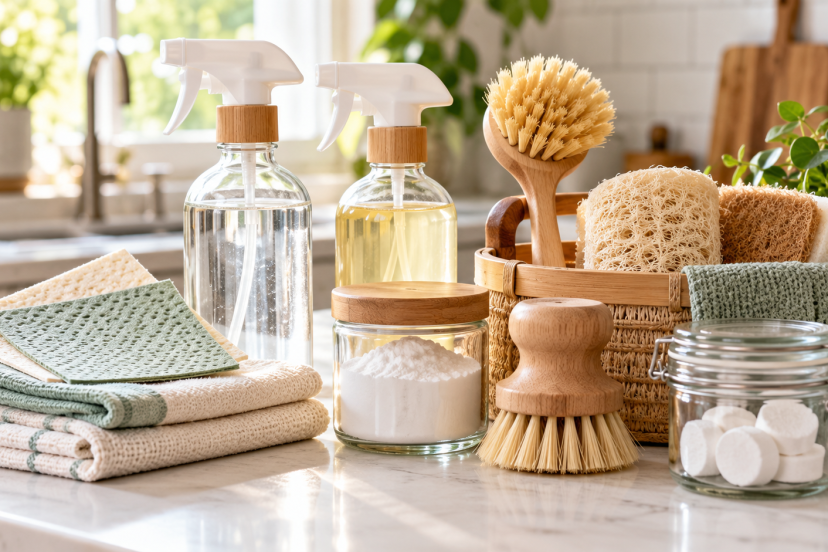
Take a look under the average kitchen sink and you will probably find half-used sprays, worn sponges, disposable wipes, and more plastic bottles than anyone remembers buying. A zero waste cleaning kit offers a simpler approach by focusing on reusable tools, refillable products, and durable supplies that can handle everyday cleaning without creating as much household waste. That does not mean throwing out everything you already own and starting over. It means making smarter replacements over time. In this guide, you will learn which cleaning essentials are worth keeping on hand, how to choose lower-waste alternatives, and which products can make a more sustainable cleaning routine easier to maintain.
What Makes a Cleaning Kit Zero Waste?
A zero-waste cleaning kit focuses on reducing products designed to be thrown away after one or only a few uses.
That usually means choosing washable cloths instead of paper towels, refillable containers instead of constantly buying new spray bottles, and cleaning tools with replaceable parts rather than entire disposable units.
This idea closely follows the principles explained in this guide to how a circular economy works: keeping useful products and materials in service for longer is usually more effective than constantly replacing them.
There is no need to replace all the plastic in your home at once. Keeping a plastic spray bottle for several years may make more sense than throwing it away simply to buy a new glass one.
Reusable Cleaning Cloths
Reusable cloths are one of the easiest additions to a zero waste cleaning kit because they can replace disposable paper towels during most everyday cleaning jobs.
Old cotton T-shirts can be cut into rags for free. Microfiber cloths are effective for dust and glass, although synthetic microfiber can release tiny fibers during washing.
Cotton dishcloths and cellulose-based Swedish dishcloths are another option. Swedish dishcloths are particularly useful for counters, sinks, tables, and spills because they absorb moisture while remaining easy to rinse and dry.
Keep several cloths available so you can rotate dirty ones into the laundry instead of reaching for paper towels.
Refillable Spray Bottles
You rarely need a new bottle every time you buy cleaner.
A couple of sturdy refillable spray bottles can handle many routine cleaning jobs. You can refill them with concentrates, tablets, or suitable homemade solutions rather than repeatedly buying ready-to-use products in new containers.
Glass bottles resist odors and look tidy, while durable plastic bottles are lighter and less likely to break. Either can be a sensible zero-waste option when used for years.
Label each bottle clearly, especially if you mix or refill cleaning products.
Never combine cleaning chemicals unless the product directions specifically say it is safe. Mixing bleach with ammonia-containing cleaners, for example, can create dangerous gases.
Concentrated or Refillable Cleaning Products
Cleaning products themselves deserve just as much attention as the tools.
Concentrates and tablets can reduce packaging because you add water at home rather than buying another bottle filled mostly with liquid. Refill stations and large refill containers can also help reduce the number of packages entering your home.
However, do not assume that words such as natural, eco, or green automatically make a cleaner safer.
The U.S. Environmental Protection Agency evaluates ingredients in products carrying its Safer Choice label against human-health and environmental criteria while also requiring products to meet performance standards.
When possible, look beyond front-label marketing and check ingredients, certifications, packaging, and refill options.
Durable Cleaning Brushes
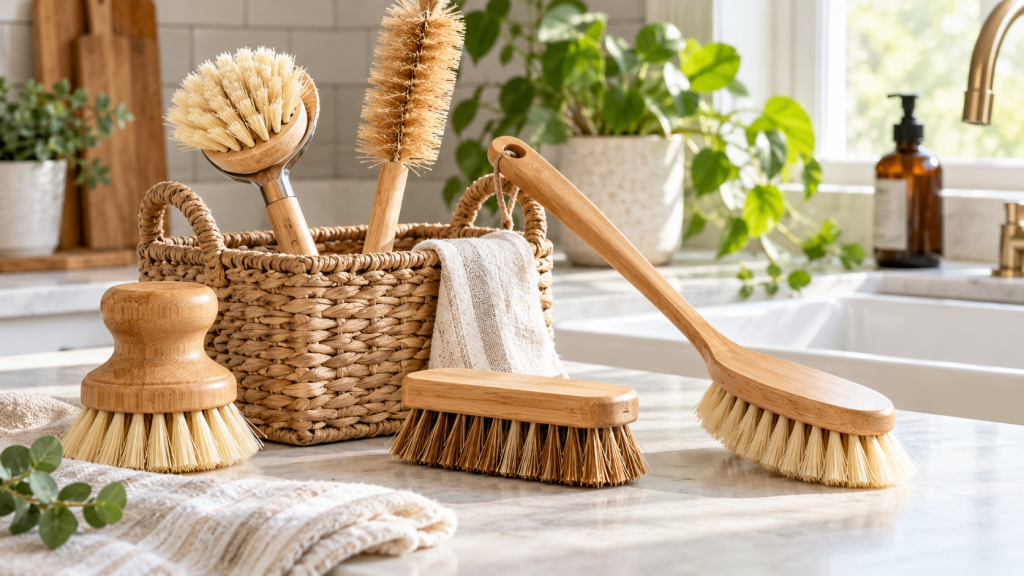
Disposable scrubbers wear out quickly, so a durable brush deserves a permanent spot in your cleaning kit.
A long-handled dish brush works well around sinks, dishes, tile, and harder-to-reach corners. Look for models with replaceable heads so you can keep the handle instead of replacing the whole brush.
A separate stiff brush can handle tougher bathroom or utility-room jobs.
Keep brushes for toilets and heavily soiled areas separate from general kitchen-cleaning tools.
Natural Scrubbing Tools
Not every cleaning job requires a synthetic sponge.
Plant-based scrubbers made from materials such as coconut fiber, loofah, cellulose, or wood fiber can work well for many household tasks.
A washable loofah pad, for example, can scrub sinks and dishes before being rinsed and dried for reuse.
You can also keep baking soda on hand as a mild abrasive for appropriate surfaces. Test it in an inconspicuous area first because abrasive cleaners can scratch delicate finishes.
Reusable Gloves and a Cleaning Caddy
A long-lasting pair of household gloves can protect your hands when working with cleaning solutions or messy jobs.
Choose a sturdy pair and rinse them after use rather than relying on disposable gloves for routine household cleaning.
A simple caddy, basket, or old container keeps everything together. There is no reason to purchase a brand-new organizer if you already own something suitable.
That principle applies throughout zero-waste living: reuse comes before replacement.
Even outside cleaning, simple reusable swaps can gradually reduce household disposables. This guide to using beeswax wraps instead of disposable plastic wrap offers another example of making that shift without completely redesigning your routine.
Best Products for a Zero Waste Cleaning Kit
You do not need every sustainable cleaning product you see online. A few versatile items will cover most routine cleaning jobs.
1. Swedish Dishcloths
These cellulose-and-cotton cloths provide a reusable alternative to disposable paper towels for wiping counters, cleaning spills, and washing surfaces.
Best for: Everyday kitchen cleaning.
2. Blueland Multi-Surface Cleaner Tablets
Blueland’s tablets dissolve in water, allowing you to refill a reusable bottle instead of purchasing another bottle of liquid cleaner each time.
The brand’s refill system and water-free cleaning tablets as a way to reduce dependence on single-use cleaning bottles.
Best for: Refillable everyday surface cleaning.
3. Full Circle Cleaning Brush
Full Circle offers cleaning tools designed around reusable handles and, on selected models, replaceable cleaning heads.
A long-lasting brush is particularly useful for bottles, dishes, sinks, and corners where a cloth cannot provide enough scrubbing power.
Best for: Scrubbing and detailed cleaning.
4. Reusable Non-Paper Towels
Washable fabric towels are handy when you need something larger than a dishcloth for spills, appliances, countertops, and general household wiping.
Choose a set that can go through repeated washing rather than treating reusable towels like delicate specialty products.
Best for: Replacing everyday paper-towel use.
5. Refillable Glass Spray Bottles With Silicone Sleeves
Glass spray bottles give concentrates and cleaning tablets a permanent container. A protective silicone sleeve adds grip and helps protect the bottle from everyday bumps.
If you already own functional plastic spray bottles, however, keep using them first.
Best for: Cleaner concentrates and refill tablets.

Build Your Kit Gradually
The easiest mistake is buying a complete collection of new “eco-friendly” products when perfectly useful cleaning supplies are already sitting at home.
Start by taking inventory.
Use your remaining paper towels, cleaners, brushes, and sponges. When something runs out or wears out, ask whether a washable, refillable, repairable, or lower-packaging alternative could replace it.
This method spreads out the cost and prevents usable products from becoming unnecessary waste.
Your final kit might contain only two spray bottles, several cloths, one dish brush, one heavy-duty scrubber, gloves, a refill cleaner, and a basket.
That is enough for a surprising amount of household cleaning.
Make Reusable Supplies Last Longer
Reusable products only reduce waste effectively when you actually reuse them.
After tackling a dirty task, rinse the cloth thoroughly and follow the care directions provided for washing. Let brushes and sponges dry thoroughly between uses, since constantly damp tools can develop odors and become unpleasant.
Do not use the same cloth everywhere, either. Keeping separate cloths for bathrooms, kitchens, and general dusting makes cleaning more hygienic.
Finally, replace individual parts whenever possible. If a brush head wears out but its handle remains perfectly usable, change the head rather than buying another complete brush.
Conclusion
Creating a lower-waste cleaning routine is less about owning a perfectly curated set of eco-friendly products and more about changing how you use and replace everyday supplies. A practical zero waste cleaning kit can be built gradually with washable cloths, refillable bottles, durable brushes, concentrated cleaners, and other items designed for repeated use. Start with what is already in your home, replace worn-out products thoughtfully, and focus on choices that genuinely reduce waste rather than simply looking sustainable. Over time, those small decisions can turn ordinary cleaning into a routine that is easier on your budget, your home, and the amount of rubbish you throw away.
FAQs
What should be in a zero-waste cleaning kit?
A basic kit can include reusable cloths, refillable spray bottles, durable brushes, plant-based scrubbers, reusable gloves, concentrated cleaners, and a storage caddy.
Are homemade cleaners always better for the environment?
No. Homemade does not automatically mean safer or more effective. Use proven recipes, understand the ingredients, and never mix cleaning chemicals without knowing they are compatible.
Are glass spray bottles better than plastic ones?
Glass is durable and easy to reuse, but an existing plastic bottle that you refill for years can also be a sensible low-waste choice.
Can I completely replace paper towels?
For most routine cleaning, yes. Washable cloths and Swedish dishcloths can handle spills, counters, dust, and many other tasks. You may still prefer disposable products for certain contaminated messes.
How do I start zero-waste cleaning without spending much?
Begin with what you already own. Turn worn cotton clothing into cleaning rags, refill existing bottles, and replace disposable tools with reusable alternatives only when the originals wear out.