Easy Ways to Use Beeswax Wraps at Home
We may earn a commission for purchases made using our links. Please see our disclosure to learn more.
Plastic wrap is convenient, but using a fresh sheet every time you cover half an onion or pack a sandwich creates a surprising amount of waste. Beeswax wraps offer a simple reusable alternative that fits easily into an everyday kitchen.
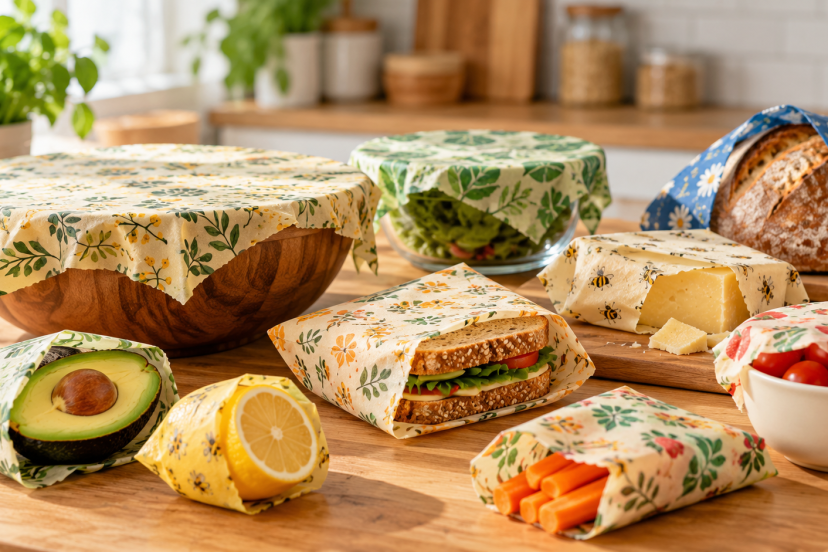
They are flexible pieces of fabric coated with beeswax and, depending on the brand, ingredients such as plant oils and tree resin. Your body heat makes the wax coating more flexible, allowing you to press and shape the wrap around produce, dishes, jars, and storage containers.
They won’t replace every type of food storage, but that’s not really the point. Used in the right situations, they can replace a lot of disposable plastic without making your kitchen routine more complicated.
What Are Beeswax Wraps?
Most beeswax wraps start with cotton or another fabric coated with beeswax. Manufacturers may add jojoba oil, plant oils, or tree resin to make the material softer and slightly tacky.
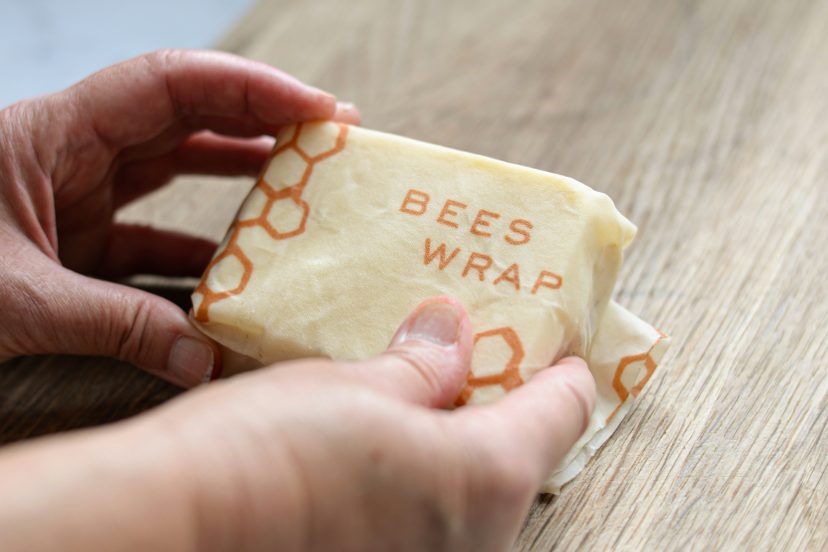
Warm a wrap between your hands for a few seconds and it becomes easier to shape. Press the edges together or around a container, and the material holds its position as it cools.
That makes beeswax wraps useful anywhere you might normally reach for plastic wrap or a small disposable food bag.
Research into beeswax-containing food packaging also supports one reason wax works well for this purpose. A scientific review of beeswax films and coatings for food preservation found that adding beeswax can improve hydrophobicity and resistance to water-vapor transfer.
Why Use Beeswax Wraps at Home?
The biggest attraction is reusability. Instead of tearing off another piece of plastic film each time you store food, you wash the wrap and use it again.
That makes wraps particularly useful for households trying to reduce everyday disposable products. They fit nicely alongside other reusable items that help reduce household waste.
They are also easy to store. Fold them flat in a drawer, roll larger pieces loosely, or keep them in a small basket near your food containers.
Wrap Cut Fruits and Vegetables
One of the easiest places to start is with partially used produce.
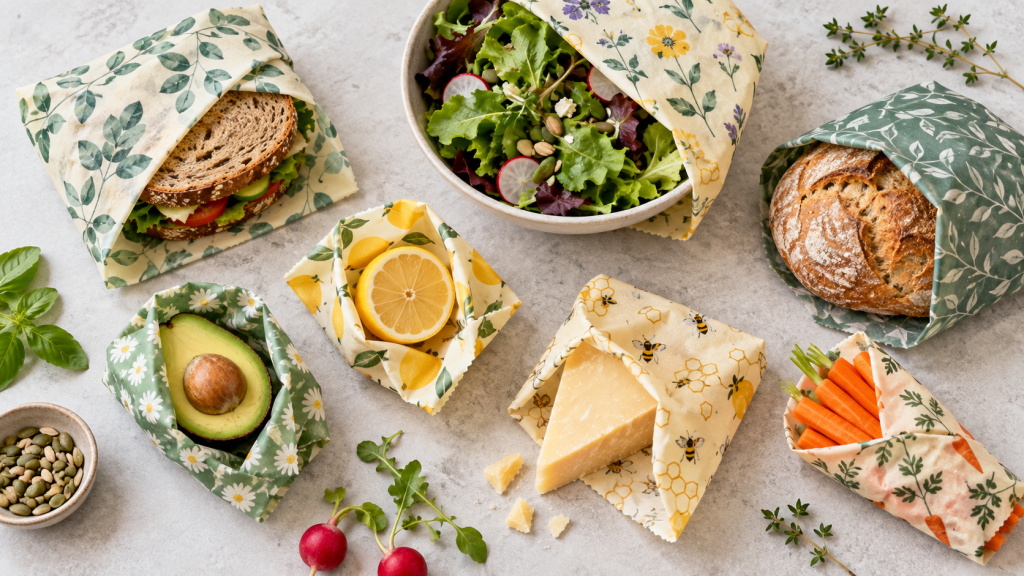
Fold a small wrap around half an apple, lemon, bell pepper, cucumber, avocado, or onion. Gently press the material around the exposed surface so it stays in place.
Hands-on testing by Serious Eats found that pliable wax wraps performed well when storing halved avocados and other produce. Wraps that molded tightly around food generally performed better than very stiff ones.
For very juicy produce, however, a sealed glass container may still be more practical.
Keep Cheese Fresh
Cheese is another excellent match for beeswax wraps.
Put the cheese in the center of the wrap, fold the sides inward, and use the warmth of your fingers to secure the overlapping edges. Medium-sized wraps work well for blocks of cheddar, Parmesan, Gouda, and similar cheeses.
Unlike disposable plastic, a reusable wrap can simply be cleaned and prepared for the next block once the cheese is gone.
If your kitchen is moving toward reusable storage in general, these wraps also complement many other eco-friendly kitchen ideas.
Cover Bowls and Containers
Missing a lid? Beeswax wraps can save the day.
Choose a piece several inches wider than the bowl. Place it across the top, press the material over the rim, and hold it there briefly with warm hands.
You can use this method for bowls containing cut fruit, salad ingredients, grated cheese, snacks, or other cool foods.
Wax wraps do not create the same airtight seal as a locking container, so use a fitted container when a strong seal matters.
Pack Sandwiches and Snacks
A larger wrap can double as reusable lunch packaging.
Put your sandwich in the center, fold opposite sides inward, and then fold the remaining edges over the top. The warmth from your fingers helps everything stay closed.
Smaller wraps are handy for crackers, nuts, sliced vegetables, cookies, and other relatively dry snacks.
Some brands even sell dedicated sandwich-size wraps designed to fold into small reusable pouches.
Wrap Bread and Baked Goods
Large sheets or rolls work especially well for bread.
Wrap homemade bread, rolls, muffins, cookies, or other baked goods once they have completely cooled. Using a wrap instead of a disposable bag makes sense when you regularly bake at home.
Beeswax rolls can be especially useful here because you can cut the exact size required for a baguette, sourdough loaf, or unusually shaped baked item.
Avoid wrapping anything while it is still warm. High temperatures can alter the wrap’s waxy surface and reduce how well it works.
Use Beeswax Wraps During Food Prep
Beeswax wraps are useful before food even reaches the refrigerator.
Cover a bowl of chopped vegetables while preparing another part of dinner. Wrap a block of cheese after grating only what you need. Cover leftover ingredients while you finish a recipe.
You can also use them to temporarily cover a jar or container with a missing lid.
Once you start keeping wraps within reach, they become less of a special sustainability product and more of a normal kitchen tool.
Foods and Items That Aren’t a Good Fit for Beeswax Wraps
Beeswax wraps have some important limits.
Avoid using them with raw meat, poultry, or seafood. These foods can contain harmful microorganisms, while beeswax wraps generally need to be washed with cool water rather than the high temperatures commonly used to sanitize food-contact items.
Serious Eats specifically advises against wrapping raw meat and fish for this reason.
You should also avoid hot food, microwaves, ovens, and dishwashers. Too much warmth may break down the coating, making the wrap less effective over time.
Very oily, messy, or sticky foods may also be better stored in washable glass or stainless-steel containers.
How to Wash and Care for Beeswax Wraps
Proper cleaning makes a huge difference to lifespan.
For routine cleaning, lightly rinse the wrap in cool water with a touch of gentle soap, then set it aside to dry. Gently wipe away crumbs or residue rather than aggressively scrubbing the surface.
Then hang or lay the wrap flat until completely dry.
Never use hot water. Heat gradually removes the wax and oils responsible for the wrap’s flexible, tacky texture. Independent product testing also found cool washing important for maintaining the coating.
Store clean wraps somewhere cool and dry, away from direct sunlight and heat-producing appliances.
How Long Do Beeswax Wraps Last?
Lifespan varies with the product and how often you use it, but a quality set can often serve your kitchen for many months.
Serious Eats notes that reusable beeswax wraps generally last around a year, although individual brands make different lifespan claims.
You’ll know a wrap is nearing retirement when it becomes badly cracked, no longer molds around containers, or loses most of its tackiness.
Some worn natural-fiber wraps can later become cleaning cloths or, when the manufacturer confirms the materials are suitable, enter a home composting system.
5 Recommended Beeswax Wrap Products
If you’re shopping for your first set, these five options have appeared in hands-on testing and are available through Amazon. Availability and pricing can change, so check the current listing before buying.
1. Trifecta Living Co. Beeswax Wraps
This seven-piece set includes several sizes, making it useful for produce, cheese, bowls, and everyday leftovers. In testing, the wraps remained flexible and adhesive even after washing.
Best for: An all-purpose starter set.
2. Original Beeswax Food Storage Wrap
These wraps are slightly firmer at first but soften with the warmth of your hands. Testers found that they molded securely around bowls and food.
Best for: Everyday produce and food storage.
3. Akeeko Reusable Food Wraps With Beeswax
This nine-piece assortment offers several small, medium, and large wraps. The variety makes it useful when you’re trying to replace disposable wrap across several kitchen tasks.
Best for: Households that want plenty of sizes.
4. Bee’s Wrap Reusable Beeswax Food Wrap Roll
Rather than relying on precut sheets, this roll lets you cut exactly the amount you need. That’s particularly handy for bread, large bowls, and oddly shaped foods.
Best for: Custom sizing.
5. Meli Wraps Reusable Beeswax Wrap Roll
Made with cotton, Hawaiian beeswax, tree resin, and plant oils, this roll can also be trimmed to fit different foods and containers. Independent testing found that it became more pliable after initial use.
Best for: Large or unusual food-storage jobs.
Are Beeswax Wraps Really Sustainable?
They can be a useful sustainability swap, but their environmental value depends on how you use them.
Buying several sets that sit unused in a drawer achieves very little. Replacing plastic wrap you genuinely use every week makes much more sense.
Longevity matters too. Washing each wrap correctly and using it dozens of times spreads its manufacturing impact over many uses.
It is also worth buying from reputable manufacturers that clearly identify their materials. A 2026 study examining 26 new and used wraps detected varying levels of chlorinated paraffins and suggested that both manufacturing inputs and environmental exposure may contribute to contamination. The research doesn’t mean all beeswax wraps are unsafe, but it reinforces the value of transparent materials and responsible storage.
In other words, choose well, take care of what you buy, and actually use it.
Conclusion
Beeswax wraps work best as a practical replacement for some of the plastic wrap you already use rather than as an all-purpose food-storage solution. Use them for cheese, cut produce, sandwiches, snacks, bread, bowls, and everyday food prep. Keep them away from raw meat and heat, wash them gently in cool water, and a good set can become part of your kitchen routine for months. Sustainable living tends to work better when the changes are simple enough to stick with. Reaching for a reusable wrap instead of another disposable sheet is exactly that kind of small, repeatable habit.
FAQs
How well do beeswax wraps preserve freshness?
They can help protect foods such as cheese, bread, cut produce, and sandwiches. For foods that require a completely airtight seal, use a suitable sealed container instead.
How should beeswax wraps be cleaned?
Rinse and clean them by hand using cool water and a little gentle dish soap, then leave them out to dry completely. Skip the dishwasher and very warm water, since high temperatures can wear away the waxy finish.
Are beeswax wraps suitable for storing uncooked meat?
Are beeswax wraps microwave-safe?
No. Beeswax wraps should stay away from microwaves, ovens, hot pans, and other strong heat sources because the wax coating can soften or melt.
Are beeswax wraps suitable for storing raw or uncooked meat?
No. Avoid wrapping raw meat, poultry, or seafood because the wraps cannot normally withstand the hot washing or sanitizing that may be needed after contact with raw animal products.
Are beeswax wraps better than plastic wrap?
They are especially useful when your goal is reducing disposable plastic. They are reusable and versatile, but they don’t provide the same airtight seal or work safely with every food. A combination of beeswax wraps, glass containers, and other reusable storage usually works best.