Top 10 Best Rechargeable Batteries
We may earn a commission for purchases made using our links. Please see our disclosure to learn more.
Disposable batteries are convenient, but replacing them over and over gets expensive fast. The best rechargeable batteries give you a practical alternative for everything from TV remotes and wireless mice to cameras, gaming controllers, toys, flashlights, and smart-home devices.
The right choice depends on more than capacity. Battery chemistry, voltage, self-discharge, charging method, and the device you’re powering all matter. We compared 10 strong options covering dependable NiMH batteries, higher-output lithium models, bulk packs, and convenient charging kits.
Our Top Picks
| Product | Best For | Key Feature | Rating |
| Panasonic eneloop AA 8-Pack | Best Overall | Low-self-discharge NiMH cells | ★★★★★ |
| Energizer Power Plus AA 8-Pack | Everyday Household Use | 2300mAh NiMH capacity | ★★★★★ |
| Panasonic eneloop pro AA 8-Pack | High-Drain Devices | Up to 2500mAh capacity | ★★★★★ |
| Mupoer Lithium AA 8-Pack with Charger | Smart Devices | Constant 1.5V output | ★★★★⯪ |
| RayHom Lithium AA 12-Pack with Charger | Cameras & Large Sets | 12-slot charging system | ★★★★⯪ |
| Amazon Basics Rechargeable AAA 16-Pack | Best Bulk AAA Pack | Low-self-discharge design | ★★★★⯪ |
| POWEROWL Rechargeable AA 16-Pack | Best Value AA Pack | 2800mAh capacity | ★★★★⯪ |
| EBL AA & AAA Rechargeable Battery Combo | Mixed Battery Sizes | AA and AAA batteries included | ★★★★⯪ |
| Duracell Rechargeable AA 4-Pack | Small Households | Trusted pre-charged NiMH option | ★★★★⯪ |
| WENJOOP Rechargeable AAA 16-Pack | High-Capacity AAA | 1100mAh AAA capacity | ★★★★⯪ |
10 Best Rechargeable Batteries
1. Panasonic eneloop AA 8-Pack

Panasonic eneloop batteries are an easy recommendation for households that want dependable AA rechargeables without overthinking the purchase. These NiMH batteries arrive pre-charged and use a low-self-discharge design, making them particularly useful for devices that may sit unused between uses.
They work well in remotes, toys, wireless accessories, flashlights, game controllers, and other common AA-powered products. The standard eneloop line also prioritizes recharge longevity rather than chasing the highest possible capacity.
Key features: Pre-charged NiMH batteries, low self-discharge, 1.2V output, eight AA cells.
Best for: Households wanting dependable rechargeable batteries for everyday electronics.
Pros: Excellent all-around versatility; reputable battery line; good charge retention; suitable for frequent reuse.
Cons: Lower capacity than high-drain eneloop pro batteries; charger is not included.
Why we recommend it: It strikes one of the best balances between longevity, reliability, and everyday usability.
2. Energizer Power Plus Rechargeable AA 8-Pack

Energizer’s Power Plus batteries are a practical choice when you need several rechargeable AAs from a familiar brand. The eight-pack gives families enough batteries to rotate between toys, controllers, flashlights, remotes, and other household electronics.
These are 1.2V NiMH cells with a 2300mAh capacity, making them a good middle ground between basic low-capacity rechargeables and more specialized high-drain batteries.
Key features: Eight AA batteries, 2300mAh capacity, NiMH chemistry, rechargeable design.
Best for: Everyday household devices that regularly go through AA batteries.
Pros: Useful eight-pack; established brand; versatile capacity; suitable for frequently used electronics.
Cons: Requires a compatible charger; 1.2V output may not suit devices specifically designed around constant 1.5V power.
Why we recommend it: It’s a straightforward, dependable option for replacing disposable AAs across several devices.
3. Panasonic eneloop pro AA 8-Pack

The eneloop pro line is better suited to power-hungry electronics. With capacity reaching roughly 2500mAh, these batteries make sense for camera flashes, gaming gear, wireless equipment, toys, and other devices where standard rechargeables can run down quickly.
That added capacity comes with a tradeoff: standard eneloops are generally the better choice when maximum recharge-cycle longevity matters more than runtime per charge.
Key features: High-capacity NiMH chemistry, up to 2500mAh, pre-charged, eight AA batteries.
Best for: Cameras, flashes, gaming equipment, and other high-drain electronics.
Pros: Higher capacity; strong choice for demanding devices; reputable eneloop technology; arrives ready for use.
Cons: More expensive than basic rechargeables; designed more for runtime than maximum lifetime recharge cycles.
Why we recommend it: It gives demanding AA-powered devices more breathing room between charges.
4. Mupoer Lithium AA 8-Pack with Charger

Mupoer’s rechargeable lithium batteries solve a common issue with standard NiMH cells: voltage. Instead of operating around 1.2V, these batteries provide regulated 1.5V output, which can work better in electronics that are sensitive to voltage drops.
The kit includes eight 3000mWh batteries and an integrated Type-C charging and storage box with status indicators. That makes it particularly convenient for cameras, controllers, smart-home accessories, and similar devices.
Key features: Eight lithium AA batteries, 1.5V output, 3000mWh capacity, Type-C charging case.
Best for: Smart devices and electronics that benefit from steady 1.5V output.
Pros: Charger included; constant voltage; portable storage case; convenient charge indicators.
Cons: More expensive than conventional NiMH batteries; requires its dedicated charging system.
Why we recommend it: The combination of constant 1.5V power and an integrated charging case makes it especially convenient for demanding electronics.
5. RayHom Lithium AA 12-Pack with Charger

Homes with several cameras or other battery-hungry electronics can quickly run through eight rechargeable cells. This RayHom set expands the setup to 12 rechargeable lithium AAs and includes a matching 12-slot charger.
The batteries deliver constant 1.5V output and 3700mWh capacity, while the charger uses independent slots so you can manage a larger rotation from one place.
Key features: Twelve rechargeable AA lithium batteries, 3700mWh capacity, constant 1.5V output, 12-slot charger.
Best for: Cameras, smart-home equipment, and households running many AA devices.
Pros: Large complete kit; charger included; constant output; convenient for battery rotation.
Cons: Bigger upfront investment; dedicated lithium charging system adds another accessory to store.
Why we recommend it: It gives heavy battery users a complete system instead of requiring separate batteries and chargers.
6. Amazon Basics Rechargeable AAA 16-Pack

For AAA-heavy households, buying rechargeables in bulk can be much more convenient than constantly opening new disposable packs. This Amazon Basics set includes 16 pre-charged NiMH AAA batteries rated at 800mAh.
Their low-self-discharge design makes them useful for remotes, wireless mice, clocks, toys, small flashlights, and other devices where batteries may remain installed for long periods.
Key features: Sixteen AAA batteries, 800mAh capacity, 1.2V NiMH chemistry, low self-discharge.
Best for: Households with several AAA-powered devices.
Pros: Large pack; convenient for battery rotation; pre-charged; strong value for multiple devices.
Cons: AAA size only; lower capacity than some high-capacity alternatives.
Why we recommend it: It’s an affordable way to build a reusable AAA battery supply for an entire household.
7. POWEROWL Rechargeable AA 16-Pack
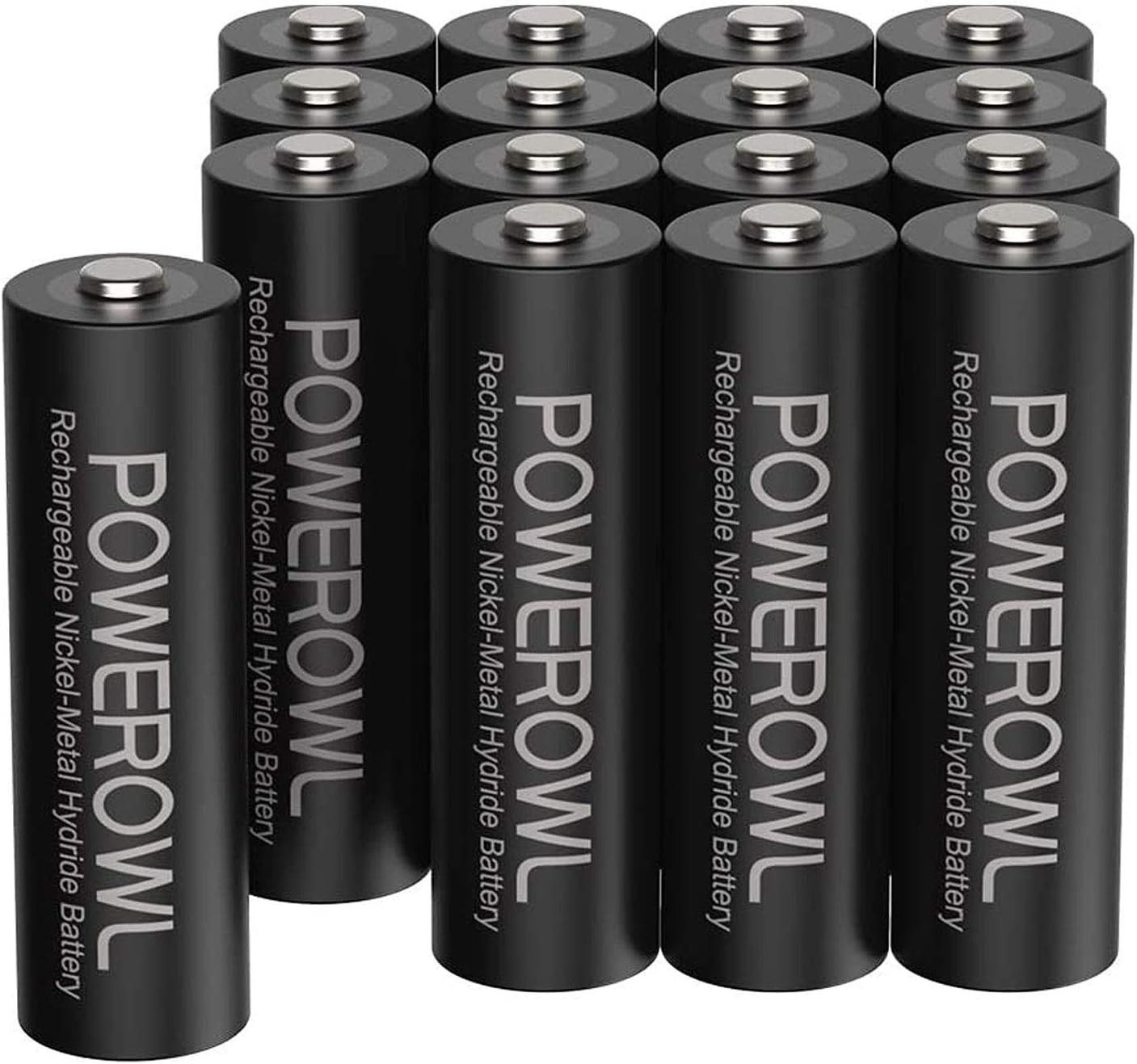
POWEROWL’s 16-pack is aimed at people who need lots of rechargeable AAs without buying several smaller packs. Each battery offers a claimed 2800mAh capacity, making the set attractive for toys, gaming controllers, flashlights, radios, and other regularly used electronics.
A bulk pack also makes battery rotation easier. One group can power your devices while another waits for its turn in the charger.
Key features: Sixteen AA NiMH batteries, 2800mAh capacity, low-self-discharge design.
Best for: Families and households using AA batteries across many devices.
Pros: Large pack; high stated capacity; useful for battery rotation; versatile AA format.
Cons: Charger is not included; storing 16 loose cells takes some organization.
Why we recommend it: The combination of capacity and quantity makes it appealing when you want to replace disposable AAs across the house.
8. EBL AA & AAA Rechargeable Battery Combo
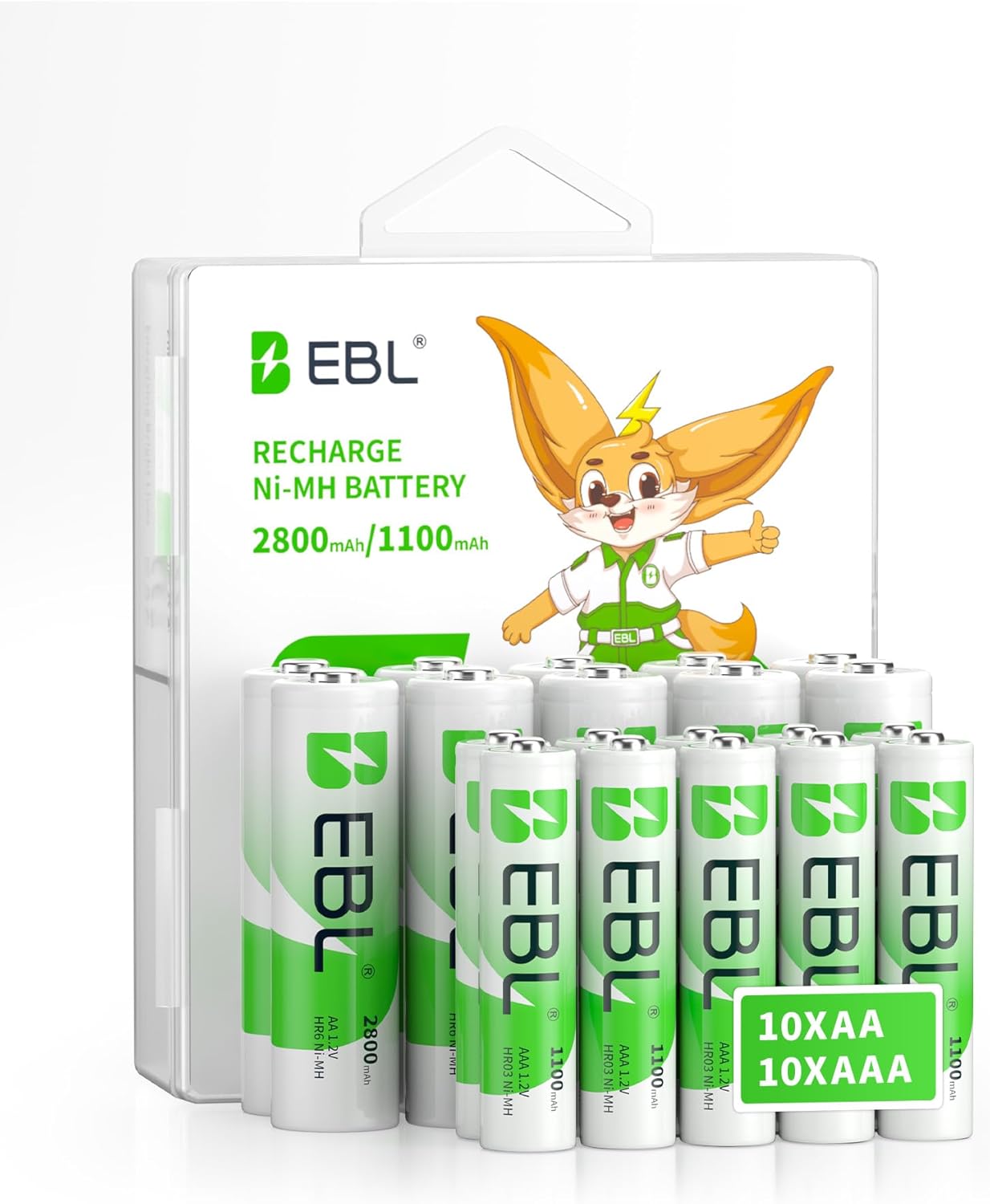
Not every household runs on one battery size. This EBL combo includes 10 AA batteries rated at 2800mAh and 10 AAA batteries rated at 1100mAh, covering two of the most common sizes in one purchase.
The included organizer is another useful touch. Instead of scattering spare batteries across drawers, you can keep charged and waiting cells together in one place.
Key features: Ten AA batteries, ten AAA batteries, high-capacity NiMH cells, storage organizer.
Best for: Homes that regularly use both AA and AAA batteries.
Pros: Two sizes included; 20 batteries total; storage box included; practical for whole-home use.
Cons: No charger included; large set may be unnecessary for light users.
Why we recommend it: It saves you from buying separate AA and AAA multipacks while giving you an organized battery supply.
9. Duracell Rechargeable AA 4-Pack

Not everyone needs a drawer full of batteries. Duracell’s four-pack is better suited to someone who wants a small set for a controller, wireless mouse, camera, toy, or another frequently used device.
These pre-charged NiMH batteries have a 2500mAh capacity and come from one of the most recognizable names in household batteries.
Key features: Four rechargeable AA batteries, 2500mAh capacity, NiMH chemistry, pre-charged.
Best for: Smaller households or buyers who only need a few rechargeable AAs.
Pros: Familiar brand; high capacity; manageable four-pack; versatile household use.
Cons: Less economical for homes needing many batteries; charger sold separately.
Why we recommend it: It’s a simple entry point for anyone who wants to start replacing disposables without buying a large battery set.
10. WENJOOP Rechargeable AAA 16-Pack
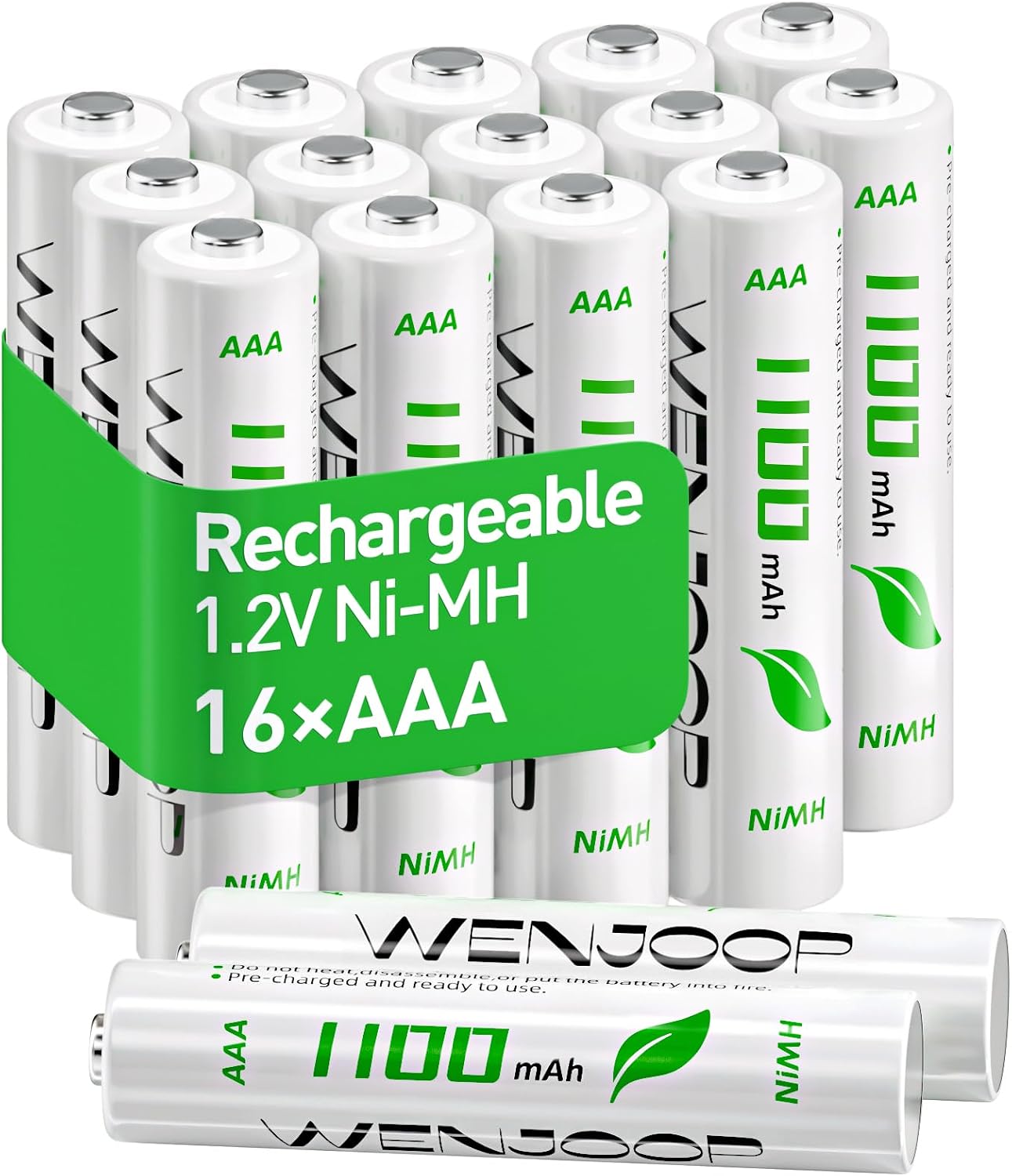
WENJOOP targets devices that use AAA batteries but could benefit from more capacity than basic rechargeable cells provide. The set includes 16 NiMH AAA batteries rated at 1100mAh.
That combination works well for toys, wireless accessories, flashlights, clocks, remotes, and similar electronics. A large pack also means you can keep several charged spares ready instead of waiting for the same four batteries to recharge.
Key features: Sixteen AAA batteries, 1100mAh capacity, 1.2V NiMH chemistry, low-self-discharge design.
Best for: High-use AAA devices and households needing plenty of spare cells.
Pros: High stated AAA capacity; 16-pack; useful for multiple devices; pre-charged design.
Cons: Charger not included; unnecessary quantity for occasional AAA users.
Why we recommend it: It’s a practical bulk choice for anyone who regularly replaces AAA batteries across several devices.
Final Thoughts
The best rechargeable batteries depend on what you plan to power. Panasonic eneloop is our strongest all-around pick for everyday AA use, while eneloop pro makes more sense for high-drain electronics. Mupoer and RayHom are worth considering when a constant 1.5V lithium setup better matches your device, while Amazon Basics, POWEROWL, EBL, and WENJOOP make stocking multiple devices easier. Rechargeables can also fit naturally into a broader effort to replace short-lived products with reusable alternatives; our guide to sustainable swaps that reduce household waste covers more simple changes you can make.
FAQs
Are rechargeable batteries actually worth buying?
Yes, especially for devices that use batteries regularly. Rechargeable batteries cost more upfront, but you can recharge them repeatedly instead of purchasing a new disposable battery every time one runs out.
Which rechargeable batteries last the longest?
It depends on what “longest” means. Higher-capacity batteries can provide longer runtime per charge, while other models prioritize a larger number of recharge cycles. For high-drain electronics, high-capacity batteries such as eneloop pro can be particularly useful.
Is NiMH or lithium better for rechargeable AA batteries?
NiMH batteries are widely compatible, affordable, and easy to charge with standard NiMH chargers. Rechargeable lithium AA batteries can provide regulated 1.5V output, making them useful for certain voltage-sensitive or high-drain devices. Always check device compatibility first.
Can I use 1.2V rechargeable batteries instead of 1.5V alkaline batteries?
Many household devices work perfectly well with 1.2V NiMH batteries, but not every device does. Electronics with strict voltage requirements may show a low-battery warning early or perform better with regulated 1.5V rechargeable batteries.
Do rechargeable batteries need a special charger?
Yes. Use a charger made for the battery chemistry you’re charging. NiMH batteries require a compatible NiMH charger, while rechargeable lithium AA batteries often use their own dedicated charging system. Avoid mixing battery types with incompatible chargers.