Top 10 Natural Fiber Rugs
We may earn a commission for purchases made using our links. Please see our disclosure to learn more.
Natural fiber rugs bring warmth and texture to a room without relying on busy patterns or bold colors. Materials such as jute, seagrass, cotton, sisal, and wool can make a space feel more relaxed while pairing easily with wood furniture, neutral upholstery, and earthy decor.
The challenge is finding the right rug for the right room. Some natural fiber rugs feel soft enough for bedrooms, while others work better beneath dining tables or in high-traffic spaces. We compared 10 options with different materials, textures, and care requirements to help you narrow down the choices.
Our Top Picks
| Product | Best For | Key Feature | Rating |
| SAFAVIEH Natural Fiber NF114A Seagrass Rug | Best Overall | Seagrass with cotton border | ★★★★☆ |
| SAFAVIEH Natural Fiber NF143C Sisal Rug | Dining Rooms | Low-pile sisal construction | ★★★★☆ |
| SAFAVIEH Natural Fiber NF447A Jute Rug | Chunky Texture | Thick knotted jute | ★★★★☆ |
| RUSVILLA Natural Jute & Wool Area Rug | Softer Natural Texture | Jute-and-wool handwoven blend | ★★★★☆ |
| Shatex Braided Jute Rug | Rustic Spaces | Braided natural jute construction | ★★★★☆ |
| KEMA Jute Cotton Area Rug | Reversible Design | Jute-and-cotton handwoven blend | ★★★★☆ |
| SAFAVIEH Natural Fiber NF141B Sisal Rug | High-Traffic Rooms | Textured sisal with border | ★★★★⯪ |
| CAMILSON Easy Jute Rug | Indoor/Outdoor Spaces | Easy-clean woven design | ★★★★⯪ |
| SAFAVIEH Natural Fiber NF467A Jute Rug | Boho Style | Handmade jute with tassels | ★★★★⯪ |
| Scandilivin Homes Wool Popcorn Rug | Plush Texture | Wool-and-cotton chunky weave | ★★★⯪☆ |
Top 10 Natural Fiber Rugs
1. SAFAVIEH Natural Fiber NF114A Seagrass Area Rug

The SAFAVIEH NF114A is a strong all-around choice if you want natural texture without a busy pattern. Its woven seagrass surface has a firm feel, while the cotton border gives the rug a cleaner, more finished appearance.
It works particularly well beneath a dining table, in a home office, or as a neutral base for a living room.
Key features: Natural seagrass construction, cotton border, woven surface, neutral coloring.
Best for: Living rooms, dining areas, offices, and coastal-inspired interiors.
Pros: Natural texture; understated design; easy to coordinate; works well in larger spaces.
Cons: Firmer than cotton or wool; should be kept away from excessive moisture.
Why we recommend it: It brings noticeable natural texture into a room without competing with furniture, artwork, or other decor.
2. SAFAVIEH Natural Fiber NF143C Sisal Rug

This SAFAVIEH rug uses sisal to create a tighter and flatter surface than chunkier jute styles. That makes it useful beneath dining chairs, desks, and furniture where an overly thick pile can become inconvenient.
Its marble and beige palette also works with modern, farmhouse, coastal, and transitional interiors.
Key features: Sisal construction, low pile, neutral border, flat woven appearance.
Best for: Dining rooms and furniture-heavy spaces.
Pros: Low profile; clean natural appearance; neutral design; easy to place beneath furniture.
Cons: Sisal feels firm underfoot; not suitable for consistently damp rooms.
Why we recommend it: The flatter construction is practical when you want natural texture without adding bulk beneath chairs or other furniture.
3. SAFAVIEH Natural Fiber NF447A Jute Rug

The NF447A takes a more textured approach with chunky jute loops that give the rug a noticeable handcrafted look. It works especially well in rooms where the rug should add visual interest instead of simply blending into the floor.
The natural jute coloring also pairs easily with wood, linen, leather, and other earthy materials.
Key features: Natural jute fibers, chunky knotted weave, thick texture, neutral finish.
Best for: Rustic, coastal, cottage, and bohemian rooms.
Pros: Strong texture; warm natural tone; attractive handmade look; works well in layered interiors.
Cons: Thick loops can collect debris; less convenient where a smooth surface is important.
Why we recommend it: It adds plenty of texture without relying on bright colors or decorative patterns.
4. RUSVILLA Natural Jute & Wool Area Rug

RUSVILLA combines jute with wool to create a natural fiber rug that feels more inviting than many traditional all-jute designs. The mini-check handwoven pattern and wide border give it enough detail to stand out without making the room feel busy.
Key features: 75% jute and 25% wool, handwoven construction, mini-check pattern, 4-inch border, approximately 0.6-inch pile.
Best for: Living rooms, dining rooms, bedrooms, and farmhouse or boho interiors.
Pros: Wool adds softness; substantial natural texture; attractive border; versatile neutral appearance.
Cons: Not water resistant; spills should be cleaned quickly; thick natural fibers require careful vacuuming.
Why we recommend it: The wool component makes this rug a good choice for shoppers who like the appearance of jute but want something a little softer and more comfortable.
5. Shatex Braided Jute Rug

The Shatex Braided Jute Rug keeps things simple with a rustic woven appearance that works particularly well in farmhouse and casual interiors. Its natural jute construction adds plenty of texture while the braided design gives the rug a sturdy, traditional look.
Key features: Natural jute fibers, braided construction, rustic styling, textured surface.
Best for: Farmhouse interiors, entryways, living rooms, and casual spaces.
Pros: Strong natural texture; simple neutral color; rustic appearance; works in several rooms.
Cons: Some shedding can occur; jute requires gentler cleaning than synthetic rugs; moisture should be avoided.
Why we recommend it: It is a straightforward choice for anyone who wants the unmistakable texture of genuine jute without decorative patterns or bright colors.
6. KEMA Jute Cotton Area Rug

The KEMA Jute Cotton Area Rug combines the durability of jute with the softer character of cotton. Its handwoven construction works naturally with farmhouse, bohemian, coastal, and rustic rooms without making the floor look overly formal.
Key features: 60% jute and 40% cotton, handwoven construction, reversible design, natural coloring.
Best for: Bedrooms, living rooms, kitchens, and relaxed farmhouse interiors.
Pros: Reversible; cotton adds softness; natural appearance; works with several decorating styles.
Cons: Should not be machine washed; natural fibers can show small variations; requires quick attention to spills.
Why we recommend it: The jute-and-cotton combination gives you plenty of natural texture while feeling less rugged than a traditional 100% jute rug.
7. SAFAVIEH Natural Fiber NF141B Sisal Rug

The SAFAVIEH NF141B is a good fit for rooms where you want natural texture but need a relatively structured surface. Its maize-and-linen color combination keeps the look neutral, while the bordered design gives the rug a more tailored finish.
Key features: Sisal-textured construction, maize and linen coloring, bordered design, approximately half-inch pile.
Best for: High-traffic living spaces, dining rooms, and home offices.
Pros: Neutral design; structured surface; works beneath furniture; established SAFAVIEH collection.
Cons: Firmer than wool or cotton; textured fibers may not suit shoppers looking for a plush rug.
Why we recommend it: It balances natural-looking texture with a cleaner, more polished design, making it easy to use in both casual and more traditional rooms.
8. CAMILSON Easy Jute Rug
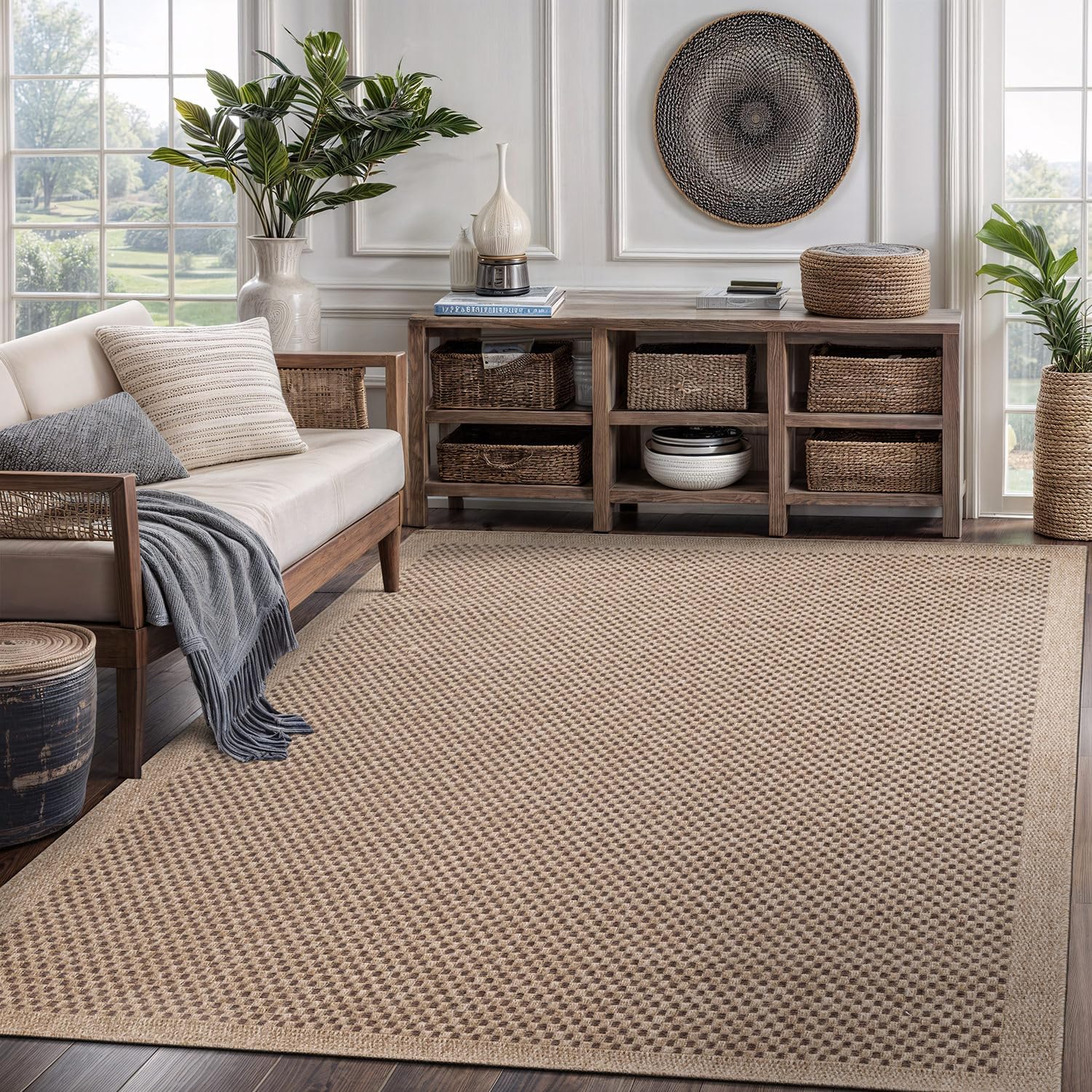
The CAMILSON Easy Jute Rug is designed for shoppers who like the appearance of natural woven rugs but want something more practical for everyday use. Its textured surface works with modern, farmhouse, and casual interiors without making the room feel overly formal.
It can be a useful choice for dining areas, kitchens, patios, or other spaces where simple maintenance matters.
Key features: Jute-inspired woven appearance, easy-clean construction, neutral styling, versatile placement.
Best for: Busy households and casual indoor or outdoor spaces.
Pros: Easy to maintain; versatile look; suitable for high-use spaces; neutral appearance.
Cons: Shoppers who specifically want traditional jute should confirm the current fiber composition before buying.
Why we recommend it: It gives you the relaxed look of a natural woven rug with fewer maintenance concerns in busy areas.
9. SAFAVIEH Natural Fiber NF467A Handmade Jute Rug

The SAFAVIEH NF467A brings a more decorative look to natural jute with handmade construction and tassel detailing. Its warm natural color makes it easy to use with wood furniture, linen fabrics, woven baskets, and other earthy decor.
Key features: Natural jute, handmade construction, tassel detailing, substantial woven texture.
Best for: Bohemian, farmhouse, coastal, and relaxed living spaces.
Pros: Genuine jute construction; decorative tassels; warm neutral color; noticeable handcrafted texture.
Cons: Natural jute can shed; tassels may require occasional straightening; not suited to consistently damp rooms.
Why we recommend it: It gives shoppers a little more decorative character than a plain jute rug while keeping the colors natural and easy to coordinate.
10. Scandilivin Homes Wool Cotton Hand Woven Popcorn Rug

This wool-and-cotton rug takes a softer approach than jute, sisal, or seagrass. Its chunky popcorn texture gives bedrooms and living rooms a cozy appearance while making the rug a noticeable part of the overall decor.
The thicker construction works best where softness and comfort matter more than keeping the floor completely flat.
Key features: Wool-and-cotton construction, handmade weave, chunky texture, plush surface.
Best for: Bedrooms, reading areas, and cozy living rooms.
Pros: Soft feel; thick texture; handmade appearance; adds warmth to neutral rooms.
Cons: Wool can shed initially; spot cleaning is usually more practical; thick texture is less convenient beneath dining chairs.
Why we recommend it: It is a useful option for shoppers who like natural fibers but want something softer and more inviting than jute or sisal.
Final Thoughts
The best natural fiber rugs depend on where you plan to use them and how you want the room to feel. Seagrass and sisal work well when you prefer a flatter, firmer surface, while jute adds warm organic texture and cotton or wool can provide a softer feel underfoot. Before buying, think about foot traffic, moisture, furniture placement, and cleaning needs rather than choosing on appearance alone. For more help comparing materials, see our guide to eco-friendly rugs.
FAQs
What is the best natural fiber for an area rug?
Jute is one of the most popular choices because it offers warm texture and a relaxed appearance. Wool works better when softness is the priority, while sisal and seagrass are useful when you want a firmer, flatter surface.
Are natural fiber rugs easy to clean?
It depends on the material. Jute, sisal, and seagrass usually need gentle vacuuming and spot cleaning rather than soaking. Cotton can be easier to wash, while wool generally requires more careful stain treatment.
Are natural fiber rugs good for living rooms?
Yes. Jute, wool, cotton, sisal, and seagrass can all work in living rooms. The best choice depends on how much foot traffic the room receives and whether you want a soft or firm surface.
Can natural fiber rugs be used in bathrooms?
Traditional jute, sisal, and seagrass are usually poor choices for consistently damp rooms because the fibers can absorb moisture. A washable cotton rug is generally more practical in a bathroom.
Do natural fiber rugs need a rug pad?
A rug pad is helpful for many natural fiber rugs. It can reduce slipping, add cushioning, protect the flooring underneath, and reduce friction that may cause premature wear.