How To Spot Greenwashing
We may earn a commission for purchases made using our links. Please see our disclosure to learn more.
Shopping sustainably shouldn’t mean second-guessing every label in the grocery aisle. Yet with everything from laundry detergent to clothing marketed as eco-friendly, separating genuine environmental efforts from clever advertising is becoming increasingly difficult. Some brands make meaningful changes, while others simply package familiar products in greener language. Knowing how to spot greenwashing helps you see beyond these marketing tactics, recognize misleading claims, and spend your money in ways that genuinely reflect your environmental values.
What Is Greenwashing?
Greenwashing happens when a business presents its products, services, or operations as more environmentally responsible than they really are.
It can be as obvious as an unsupported environmental claim or as subtle as a clothing brand promoting its recycled collection while encouraging customers to buy a new wardrobe every season.
The tricky part? A greenwashed product may actually have some environmental benefits. Companies often take one positive feature and use it to create a much greener impression of the entire product.
There’s a difference between making an environmental improvement and being an environmentally responsible business.
Why Do Companies Use Greenwashing?
Most of us want to feel good about what we buy. If two products serve the same purpose, choosing the one that appears less harmful to the environment feels like a small but meaningful win.
Businesses understand this.
Unfortunately, redesigning packaging or launching a sustainability campaign can be considerably easier than improving manufacturing practices, reducing waste, or changing suppliers.
Greenwashing turns environmental concerns into a marketing advantage. It also makes life harder for genuinely responsible businesses that invest in meaningful changes rather than attractive promises.

How To Spot Greenwashing: 8 Common Warning Signs
1. Vague Claims That Sound Good but Say Little
“Earth-friendly.” “Naturally green.” “Kind to nature.”
These phrases might make you feel better about a purchase, but what do they actually tell you?
The Federal Trade Commission’s Green Guides advise businesses to support environmental claims with specific details rather than sweeping promises.
Instead of accepting a vague promise, look for something measurable. A bottle containing 75% post-consumer recycled plastic offers a specific piece of information you can evaluate.
2. Packaging That Looks More Sustainable Than It Is
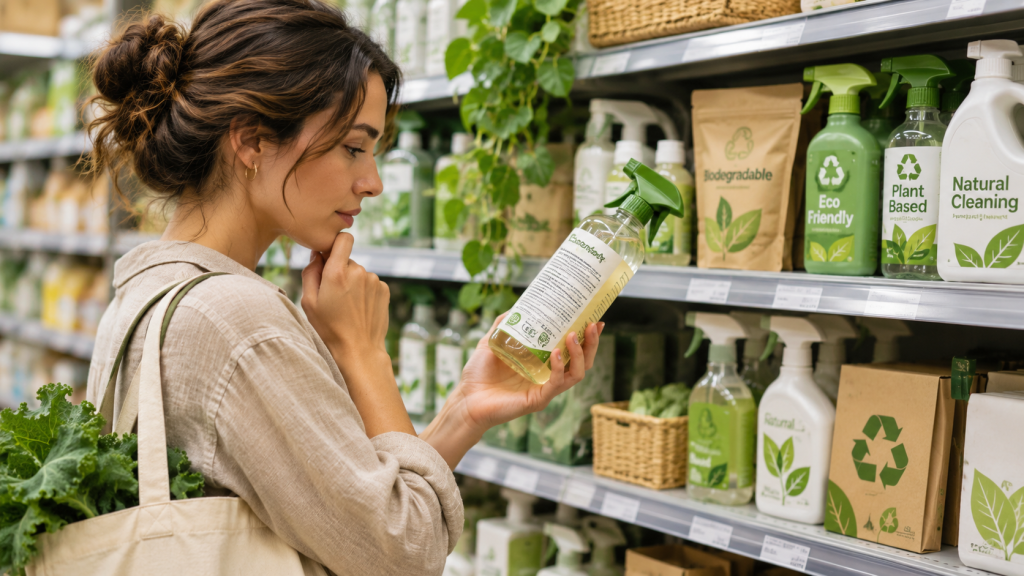
A cardboard box, a muted green label, and a little illustration of a tree can make an ordinary household product look remarkably eco-conscious.
But nature-inspired design isn’t evidence of environmental responsibility.
Turn the package around. Read the material information, ingredients, and disposal instructions. Those details matter far more than the forest pictured on the front.
3. Questionable Environmental Certifications
Not every green seal on a product represents an independent certification. Some are simply graphics designed by the company selling it.
Look for established certifications such as FSC, ENERGY STAR, GOTS, and the EU Ecolabel. Each evaluates specific environmental or sustainability criteria rather than guaranteeing that a product has no environmental impact.
Learning what different eco labels actually mean can help you recognize legitimate certifications and avoid paying extra for decorative badges.
4. One Small Improvement Overshadows a Bigger Problem
Imagine a fast-fashion retailer celebrating a new T-shirt made with recycled fibers. That’s a positive change, but what about the garment’s durability, manufacturing process, and the sheer volume of clothing the company produces?
Environmental improvements deserve recognition. They also deserve context.
A single sustainable feature doesn’t automatically cancel out the other environmental costs associated with a product.
5. Environmental Claims With No Evidence
If a company claims its manufacturing process uses less water, less energy, or produces fewer emissions, look for supporting information.
Less than what? Measured over which period? Verified by whom?
The European Commission’s work on environmental claims highlights concerns surrounding vague, misleading, and inadequately substantiated sustainability statements.
A transparent company should be able to explain the basis of its claims without leaving customers to fill in the blanks.
6. Misleading Biodegradable and Compostable Labels
Buying compostable packaging feels like a sensible way to reduce plastic waste. However, some materials require the controlled temperatures and conditions found in industrial composting facilities.
That takeaway container might not break down in your backyard compost bin.
Check the disposal requirements before buying. If your community lacks suitable composting facilities, the product may offer fewer practical benefits than you expect.
7. Promoting Benefits That Aren’t Particularly Meaningful
Some brands advertise the absence of chemicals that are already prohibited or rarely used in that type of product.
Technically, the claim might be accurate. Environmentally, it may offer no meaningful advantage over competing products.
Before letting a “free from” label influence your decision, consider whether it represents a genuine improvement or simply a clever selling point.
8. Big Promises With Little Visible Progress
A commitment to net-zero emissions by 2050 sounds encouraging. But what is the company doing this year?
Look for short-term targets, published progress, and measurable changes in business operations.
A modest environmental improvement that has already happened can tell you more than an ambitious promise that remains decades away.
Common Greenwashing Examples in Everyday Products
Once you start paying attention, you’ll notice how frequently environmental language appears in everyday shopping.
| Product | Marketing Claim | What to Check |
| Clothing | Sustainable collection | Materials, durability, and production practices |
| Cleaning products | All-natural formula | Ingredients and independent certifications |
| Food packaging | Biodegradable | Required decomposition conditions |
| Skincare | Green beauty | Sourcing, ingredients, and packaging |
| Electronics | Eco-friendly technology | Energy efficiency and repairability |
| Household goods | Recycled materials | Actual recycled content percentage |
These claims aren’t necessarily dishonest. The important thing is understanding what they mean before allowing them to influence your purchase.
How To Verify a Company’s Sustainability Claims
You probably don’t have time to investigate the supply chain behind every item in your shopping basket. That’s understandable.
For larger purchases or products you buy regularly, however, spending a few minutes checking the following can be worthwhile:
- Specific information: Does the company provide measurable environmental benefits?
- Independent verification: Can you confirm its certifications through the issuing organization?
- Transparency: Does the business acknowledge areas where it still needs to improve?
- Product lifespan: Will the item last, or will you need to replace it frequently?
- Environmental progress: Has the company demonstrated meaningful improvements?
Pay particular attention to businesses that explain their limitations. Sustainability involves complicated trade-offs, and acknowledging them can be more informative than claiming everything is perfectly green.
How To Avoid Greenwashing When Shopping
Here’s something that doesn’t get nearly enough attention in sustainable living: you don’t need to buy something new to become more environmentally conscious.
That collection of glass jars in your kitchen can store leftovers. Your old backpack might only need a repaired zipper. The reusable shopping bag you’ve owned for years doesn’t need replacing with a fashionable organic cotton version.
When you genuinely need something new, prioritize durability, usefulness, repairability, and responsible sourcing.
Sustainable living isn’t about filling your home with eco-friendly products. It’s about being more thoughtful about what comes into your home and what eventually leaves it as waste.
Recommended Products for More Mindful Living
If you genuinely need to replace something or want to reduce everyday waste, consider these practical options. Their value comes from how you use them, not from how environmentally friendly they look.
- Stainless Steel Water Bottle – A refillable bottle for reducing dependence on disposable plastic water bottles.
- Reusable Silicone Food Storage Bags – Washable bags for packing lunches, storing leftovers, and reducing disposable food packaging.
- Travel Sewing Kit – Handy for repairing loose buttons, torn seams, and minor clothing damage.
- The Conscious Closet by Elizabeth L. Cline – An insightful book about responsible fashion choices, clothing care, and the environmental impact of our wardrobes.
- Reusable Shopping Bag – A foldable shopping bag that’s easy to carry during everyday errands.
Before adding anything to your cart, check whether you already own something that serves the same purpose.
Conclusion
Learning how to spot greenwashing changes the way you shop. Suddenly, green packaging becomes less convincing, sustainability promises invite more questions, and durability matters more than trendy environmental labels. Making environmentally responsible choices doesn’t require perfection. Focus on buying less, using things longer, and supporting businesses that demonstrate genuine environmental progress. After all, a greener lifestyle should leave you with less waste, not simply more things with green labels.
FAQs
What is the biggest warning sign of greenwashing?
Vague environmental claims without supporting evidence are a major red flag. Look for measurable benefits, clear explanations, and independent verification.
Is greenwashing illegal?
Misleading environmental advertising can violate consumer protection laws. Regulations and enforcement vary depending on the country.
What industries are most associated with greenwashing?
Fashion, beauty, energy, transportation, food packaging, and household products frequently use environmental marketing claims that deserve closer scrutiny.
Does recyclable packaging mean a product is sustainable?
Not necessarily. Recyclable packaging addresses only one aspect of a product’s environmental footprint. Manufacturing, transportation, durability, and local recycling availability also matter.
How can I make sustainable purchases on a budget?
Buy fewer unnecessary items, shop secondhand, repair damaged belongings, and make better use of what you already own. Sustainable habits can often reduce household expenses rather than increase them.