How To Read Eco Labels and Certifications Correctly
We may earn a commission for purchases made using our links. Please see our disclosure to learn more.
Sustainable shopping can be confusing when product packaging is filled with claims like “green,” “natural,” or “eco-friendly.” Some of these claims are backed by clear standards, while others are simply marketing language. Understanding eco labels helps you see what has actually been verified and whether a certification is worth trusting. This guide explains common certifications, what they cover, and how to spot weak or misleading environmental claims before you buy.
What Eco Labels Actually Tell You
An eco label usually indicates that a product, material, manufacturing process, or supply chain meets a defined environmental standard.
What it does not necessarily mean is that the entire product has zero environmental impact.
A certification might focus on one specific issue, such as:
- Energy efficiency
- Chemical ingredients
- Organic agricultural production
- Responsible forestry
- Recycled materials
- Worker protections
- Water consumption
- Product life-cycle impacts
That distinction matters. A responsibly sourced paper product, for example, may carry a forestry certification without making claims about every other environmental impact associated with manufacturing or transportation.
Think of a credible label as evidence for a particular claim, not a universal stamp saying, “This product is sustainable in every possible way.”
Certification vs. Environmental Marketing Claims
One of the easiest ways to shop more critically is to separate certifications from broad marketing language.
Words such as green, earth-friendly, eco-conscious, and planet-friendly may sound reassuring, but they do not automatically represent independently verified standards.
The U.S. Federal Trade Commission’s guidance on environmental marketing specifically warns businesses against broad, unqualified claims such as “green” or “eco-friendly” because they can imply environmental benefits that are difficult to substantiate.
A clear, specific claim gives you something you can actually verify.
“Made with recycled material” is more useful than “earth-friendly.” Better still is “made with 80% post-consumer recycled material,” because you know exactly what is being claimed.
How to Read an Eco Label Step by Step
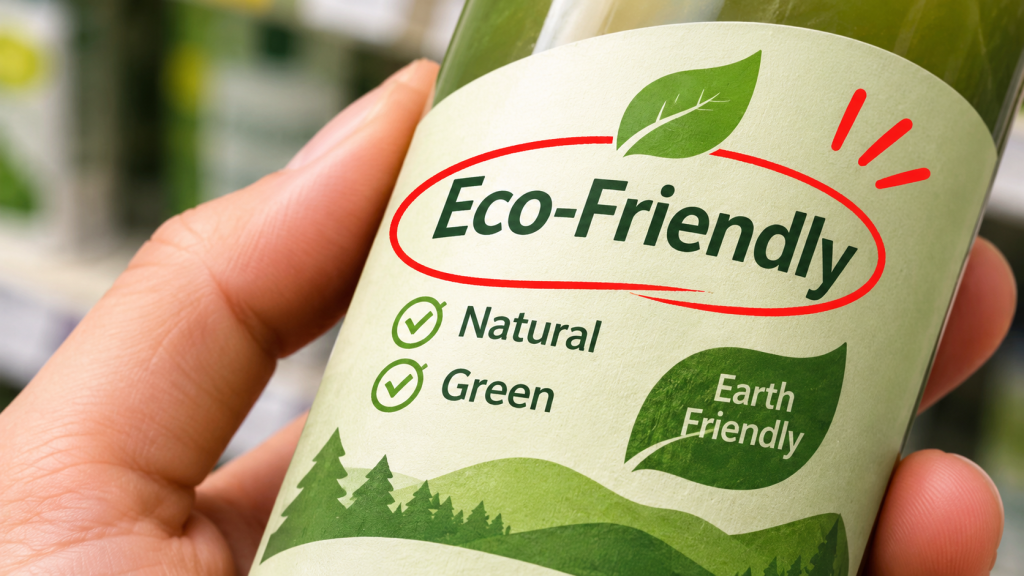
You do not need to memorize dozens of certification logos. A quick four-part check can tell you a lot.
1. Identify Who Issued It
Look for the organization behind the certification.
Government agencies, established standards organizations, and independent certification bodies generally publish their criteria publicly. If you cannot determine who created a seal, treat it cautiously.
2. Find Out What It Certifies
Ask a simple question: What exactly has been evaluated?
It could be the ingredients, raw material, factory, farm, energy use, packaging, supply chain, or finished product.
Never assume a certification covers more than its stated scope.
3. Look for Specific Standards
Credible programs normally have measurable requirements rather than vague promises.
For example, the USDA states that products labeled “organic” generally must contain at least 95% certified organic ingredients, excluding water and salt. Products described as “made with organic” must contain at least 70% certified organic ingredients, but they are not allowed to use the USDA Organic seal.
That is much more meaningful than a package simply describing itself as “naturally grown.”
4. Verify It When Necessary
For expensive purchases or unfamiliar certifications, search the certifying organization’s official website.
Some programs offer databases where certificates, companies, products, or license numbers can be checked. Spending an extra minute verifying an unfamiliar seal can help you avoid greenwashing.
Common Eco Labels Worth Knowing
You will encounter different certifications depending on what you are buying.
USDA Organic
The USDA Organic seal applies to agricultural products produced and handled according to federal organic standards.
For products carrying the standard “Organic” designation, at least 95% of qualifying ingredients must be certified organic. USDA standards also regulate production practices and restrict certain substances and methods.
It is mainly an agricultural production standard, so do not interpret it as a measurement of every environmental factor associated with the product.
EPA Safer Choice
EPA Safer Choice appears on household and commercial products that meet the program’s chemical ingredient and performance requirements.
The EPA evaluates product ingredients against health and environmental criteria while also requiring qualifying products to meet performance standards. Packaging, volatile organic compounds, and other factors are considered as part of the program.
This label can be particularly useful when comparing cleaning products.
Forest Stewardship Council
FSC certification applies to forest-based materials such as paper, cardboard, and wood.
FSC labels can appear as FSC 100%, FSC Recycled, or FSC Mix, and each one refers to a different type of material sourcing. FSC 100% uses material from FSC-certified forests, while FSC Recycled uses recycled material. FSC Mix can contain a combination of certified, recycled, and controlled material.
Read the wording beneath the logo rather than stopping at the FSC initials.
ENERGY STAR
ENERGY STAR focuses primarily on energy efficiency.
When buying appliances or electronics, it can help you compare products that meet program-specific energy-performance requirements. Remember that energy efficiency is one environmental characteristic; it does not automatically tell you about recyclability, material sourcing, or product lifespan.
Fairtrade
Fairtrade certification combines environmental concerns with economic and social standards.
Its standards address issues including sustainable production, working conditions, and trading relationships. Compliance is checked through independent audits, with FLOCERT serving as the primary independent certification provider.
This certification is especially common on products such as coffee, chocolate, tea, bananas, and cotton.
EU Ecolabel
The EU Ecolabel takes a broader life-cycle approach.
Its criteria consider significant environmental impacts throughout a product’s life cycle and can include issues such as hazardous substances, durability, recyclability, recycled content, and overall product performance.
That makes it particularly useful when comparing eligible products sold in European markets.
Watch for Vague Green Claims
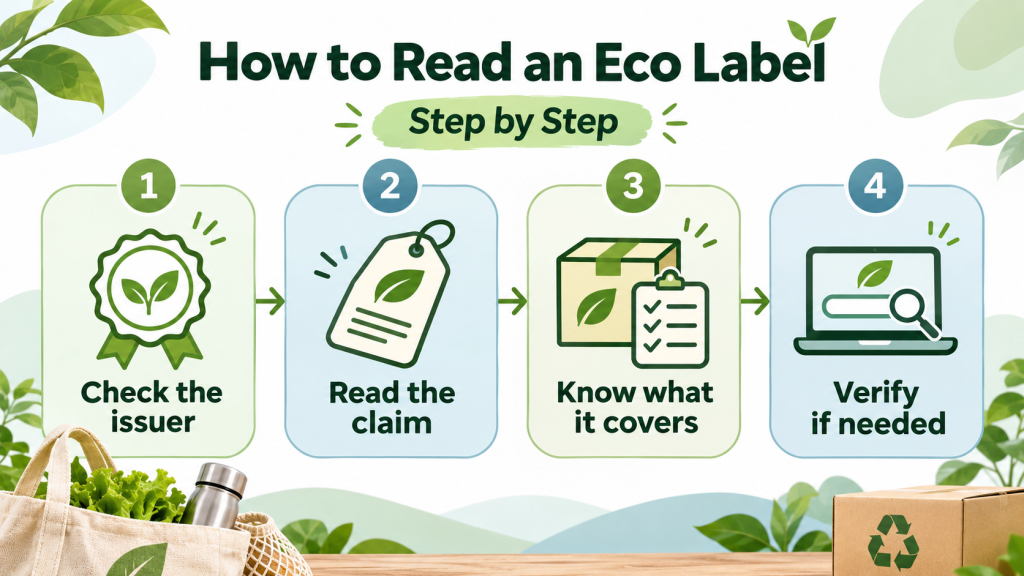
A green leaf icon is not necessarily an eco label.
Packaging designers can use plants, earthy colors, recycling imagery, and environmental language without participating in an independent certification program.
Pay extra attention to claims such as:
- “All natural”
- “Eco-conscious”
- “Better for the planet”
- “Environmentally friendly”
- “Sustainable choice”
- “Biodegradable”
These statements are not automatically false, but they need context.
“Biodegradable,” for example, sounds straightforward until disposal conditions are considered. The FTC notes that decomposition can be dramatically different in landfills, where sunlight, air, and moisture are limited.
Specific claims are easier to check and compare than broad environmental statements.
Check What the Certification Actually Covers
Another common mistake is assuming that one certified product means the entire brand is certified.
That is not necessarily true.
FSC specifically notes that certification does not mean every product made by a certified company contains FSC-certified material. Consumers still need to look for the FSC label on the individual product.
The same careful thinking applies elsewhere. Check the exact item, material, flavor, size, or product variation you are buying.
This approach is also useful when choosing reusable alternatives. The goal is not to replace everything you own just because something newer carries an environmental claim. Durable items that you already use may remain the more sensible choice. For practical examples, see these reusable eco-friendly food storage options.
Why Eco Labels Can Influence Shopping Decisions
Good labels reduce some of the research shoppers would otherwise have to do themselves.
A 2024 randomized controlled trial involving an experimental online supermarket found that environmental impact labels shifted purchases toward products with lower environmental impact scores.
Still, simply placing a logo on a package is not enough. Research found that many shoppers paid little attention to ecolabels during real-world purchasing, highlighting the importance of understanding what the labels mean rather than merely recognizing them.
That is why label literacy matters. A certification becomes much more useful once you know what standard sits behind it.
Our Eco-Friendly Picks
If you want to shop more sustainably, these products are good examples of what to look for when checking eco labels, certifications, and material claims.
Simple Ecology Organic Cotton Reusable Produce Bags – Made with GOTS-certified organic cotton, these reusable produce bags are a practical alternative to disposable plastic produce bags.
ECOS Free & Clear Laundry Detergent – This fragrance-free laundry detergent carries the EPA Safer Choice label, making it a solid option for shoppers looking for products that meet specific ingredient and performance standards.
Amazon Basics Multifold Paper Towels – These paper towels feature FSC certification, which helps indicate that the fiber comes from
Bee’s Wrap Beeswax Food Wrap – Bee’s Wrap offers a reusable alternative to disposable plastic wrap and works well for covering bowls, wrapping snacks, and storing certain foods.
Seventh Generation Recycled Bathroom Tissue – Made with recycled paper, this bathroom tissue is a simple option for reducing reliance on virgin paper in everyday household products.
Conclusion
Eco labels are useful when you know what they verify. Check who issued the label, what standards it covers, and whether the claim applies to the whole product or only part of it. Trusted certifications can help you compare products and avoid vague green claims. When a label is unfamiliar, verify it before buying. The key is simple: do not buy the green-looking package—buy the product with a clear, verifiable claim.
FAQs
What are Eco Labels?
Eco labels are marks or certifications that indicate a product, material, process, or supply chain meets defined environmental or sustainability-related criteria. The standards vary by certification.
Are all eco labels independently certified?
No. Some labels come from government agencies or independent certification bodies, while others are company-created environmental claims. Always identify who operates the program.
Does “eco-friendly” mean a product is certified?
Not necessarily. “Eco-friendly” is a broad marketing term rather than a single recognized certification. Look for specific claims and supporting standards.
How is FSC certification different from recycled content?
FSC certification addresses responsible sourcing and chain-of-custody requirements for forest-based materials. A recycled-content claim tells you that some or all material came from recovered sources. FSC also has a specific FSC Recycled label.
How can I tell whether an environmental certification is legitimate?
Look up the organization behind it, review its published criteria, and check for independent auditing or verification. Be cautious if you cannot find standards, certification requirements, or information about who issued the label.