Eco Friendly Crafts That Turn Trash Into Something Useful
We may earn a commission for purchases made using our links. Please see our disclosure to learn more.
That empty glass jar, cardboard box, old T-shirt, or tin can sitting in your recycling pile may not look like much. But with a little creativity, it can become something you actually use. Eco friendly crafts give ordinary household waste a second life instead of sending it straight to the trash. They can turn discarded materials into planters, organizers, decorations, storage containers, and even thoughtful gifts. Best of all, you do not need expensive supplies or advanced crafting skills to get started. Upcycling also fits naturally into a more sustainable lifestyle. The goal is not to make your home perfectly zero-waste overnight. It is simply to find useful ways to keep materials in circulation for longer.
What Makes a Craft Eco-Friendly?
Not every DIY project automatically qualifies as an eco-friendly craft. A project becomes more sustainable when it helps reduce unnecessary consumption or extends the useful life of something you already own.
For example, turning an old T-shirt into cleaning cloths is more environmentally friendly than buying new fabric specifically for the project. Similarly, decorating an empty food jar gives an existing container another purpose.
This follows an important principle in waste management: reduce and reuse before recycling. The U.S. Environmental Protection Agency explains that source reduction and reuse are preferred because they can conserve resources, save energy, and reduce the amount of waste that needs recycling or disposal.
So before buying craft materials, look around your home. You may already have most of what you need.
Easy Eco Friendly Crafts to Try at Home
1. Turn Tin Cans Into Planters
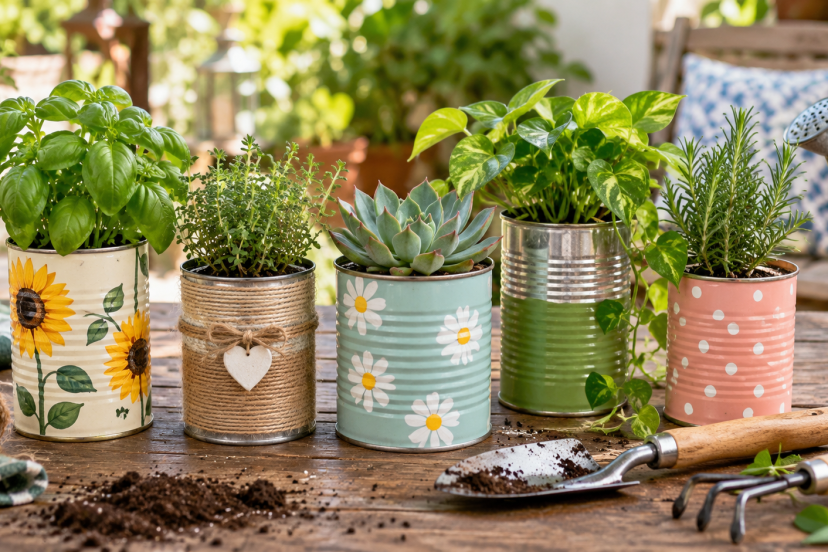
Empty food cans make surprisingly useful little planters.
Wash the can thoroughly and remove any sharp edges. If you want to decorate it, wrap it with scrap fabric, leftover paper, or natural twine. You can also leave the metal exposed for a simple industrial look.
Add a few drainage holes to the bottom before filling it with soil and a small plant. Herbs, succulents, and other compact plants work particularly well.
If you have several cans, turn them into a small windowsill herb garden. Label each one using scraps of cardboard from old packaging.
2. Make Glass Jar Organizers
Before recycling an empty pasta sauce, jam, or pickle jar, consider whether you can reuse it.
Glass jars make excellent containers for buttons, beads, craft supplies, rubber bands, spices, or small household items. You can also decorate the outside with leftover ribbon, fabric scraps, or paper.
For a simple look, keep the glass clear and add a handwritten label. This works especially well when you want practical storage without buying another plastic organizer.
We also explored simple ways to reduce household waste in our guide to a zero-waste lifestyle, including reusable containers and everyday swaps.
3. Create Storage Boxes From Cardboard
Shipping boxes and cereal boxes can become useful storage rather than clutter.
Cut the cardboard to the size you need, reinforce weak areas with leftover cardboard strips, and cover the outside with old wrapping paper, newspaper, or fabric scraps.
These homemade boxes work well for:
- Cables and chargers
- Children’s toys
- Office supplies
- Craft materials
- Receipts and documents
- Small household accessories
You can even stack several boxes together to create a simple drawer-style organizer.
The key is to make the box useful enough that you will keep using it. A craft that gets thrown away a few weeks later does not offer much environmental value.
4. Turn Old T-Shirts Into Reusable Cloths
Got a shirt that is too worn to donate?
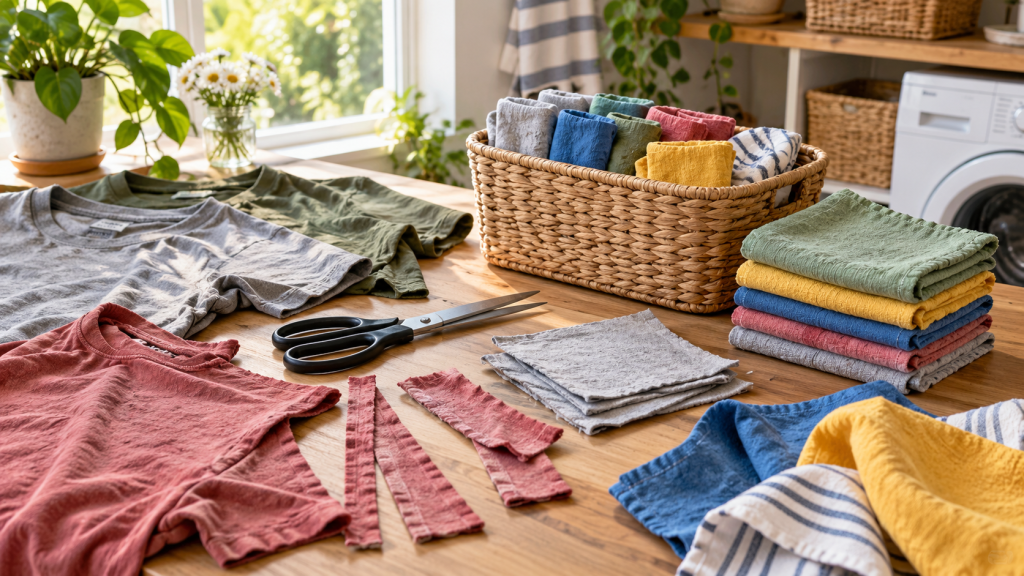
Instead of throwing it away, cut it into smaller pieces and use the fabric as cleaning cloths. Cotton T-shirts work particularly well because they are soft and washable.
You can also sew several pieces together to make reusable kitchen towels, produce bags, or simple storage pouches if you have basic sewing skills.
This type of upcycling is especially practical because it replaces something you might otherwise purchase.
A 2026 life-cycle assessment of textile upcycling found that the upcycled accessories studied had, on average, 87% lower environmental impacts than comparable newly manufactured accessories. The researchers also emphasized that durability matters: an upcycled item creates greater environmental value when it stays useful for a long time.
5. Weave a Basket From Old Newspapers
Old newspapers and magazines can become surprisingly sturdy baskets when rolled tightly into strips.
Cut or tear the paper into long sections, roll each section around a thin stick or skewer, and secure the end with glue. Once you have enough paper tubes, weave them together to create a small basket.
Use your finished basket for lightweight items such as remote controls, mail, craft supplies, or toiletries.
This project takes more time than a simple jar organizer, but it is a great option when you want an eco-friendly craft that also develops a useful skill.
6. Make a Plastic Bottle Planter
Empty plastic bottles can become hanging planters, seed starters, or small herb containers.
Cut the bottle carefully, add drainage holes, and decorate it with materials you already have. You can hang several from a wall or balcony to create a small vertical garden.
However, choose projects that genuinely extend the bottle’s useful life. If the container becomes damaged quickly, it is better to send it through the appropriate recycling system rather than continually replacing it.
How to Make Your Upcycled Crafts More Sustainable
The easiest way to accidentally defeat the purpose of an eco-friendly craft is to buy a pile of new materials for something you could have made from things you already own.
Try these simple rules:
Start With Waste You Already Have
Build the project around the material instead of shopping for the material first.
An empty jar can become a container. A cardboard box can become an organizer. A worn-out T-shirt can be repurposed into a reusable rag for household cleaning.
Choose Durable Projects
Think about how long the finished item will last.
A sturdy organizer that you use for years is a better choice than a decorative project that falls apart after a few weeks. Durability was also an important factor in the 2026 upcycling life-cycle study.
Use Leftover Craft Supplies
If you already have glue, paint, string, scissors, or fabric scraps, use them before buying something new.
When you do need supplies, choose reusable tools and materials that can support multiple projects.
Avoid Unnecessary Decoration
You do not need to cover every recycled object in paint, glitter, plastic gems, and other new materials.
Sometimes the original material looks better. A clean glass jar with a simple label can be more attractive than an elaborate makeover.
Think About the End of the Product’s Life
Consider what will happen when your finished craft is no longer useful.
Whenever possible, avoid combining materials that cannot be separated. A cardboard box covered with several layers of plastic, for example, becomes harder to recycle.
The best eco friendly crafts often keep the original material easy to reuse, repair, or recycle later.
Recommended Products for Eco Friendly Crafts
You can complete many upcycling projects with materials already sitting around your home. However, a few reusable craft supplies can make projects easier.
1. Recycled or Kraft Paper
Useful for decorating cardboard boxes, making labels, cards, and other paper crafts. Choose recycled paper when possible.
2. Natural Jute Twine
Jute twine works well for wrapping jars, hanging planters, tying labels, and adding a natural finish to upcycled projects.
3. Reusable Glass Jars
If you need additional containers, choose sturdy glass jars that you can wash and reuse repeatedly rather than disposable craft containers.
4. Non-Toxic Craft Paint
For projects that genuinely need color, look for paints with clear ingredient and safety information. Use only what you need rather than coating every surface.
5. Quality Reusable Scissors
A durable pair of craft scissors can last through years of paper, cardboard, fabric, and packaging projects. Buying one good tool is often better than repeatedly replacing cheap ones.
Conclusion
Eco friendly crafts are a simple way to rethink what we normally call trash. An empty container, worn-out shirt, or cardboard box may still have plenty of useful life left. The trick is to focus on practical projects, use materials you already have, and create items that will last. You do not need a perfect zero-waste home to make a difference. Start with one piece of household waste today. Give it a second purpose, use it for as long as possible, and let that small habit lead to the next one.
FAQs
1. What are eco friendly crafts?
Eco friendly crafts are DIY projects that reduce waste by reusing, repurposing, or upcycling materials. They often turn items such as jars, cardboard, fabric, cans, and bottles into useful objects.
2. What is the easiest eco-friendly craft for beginners?
Repurposing glass jars is one of the easiest options. Simply clean the jar and use it to organize small items, store supplies, or hold plants.
3. Is upcycling better than recycling?
Not always, but upcycling can keep an item useful without breaking it down and processing it into a new material. The EPA’s waste hierarchy places source reduction and reuse ahead of recycling because they can avoid some of the resources and energy required for new production.
4. What household items can I use for eco-friendly crafts?
Look for clean jars, cardboard boxes, tin cans, old clothing, newspapers, magazines, fabric scraps, paper packaging, and plastic containers. Always clean materials properly before using them.
5. How can I make my crafts more eco-friendly?
Use materials you already own, avoid unnecessary purchases, choose durable designs, limit new decorative materials, and think about whether the finished project can eventually be reused or recycled.