Best Non Toxic Cutting Boards in 2026 (Safe & Eco-Friendly)
We may earn a commission for purchases made using our links. Please see our disclosure to learn more.
Every time you chop vegetables, slice fruit, or prepare meat, your cutting board comes into direct contact with your food. That’s why many home cooks are starting to pay closer attention to the materials they use. Non toxic cutting boards are designed to avoid harmful chemicals and questionable plastics while offering a safer surface for everyday food prep. In this guide, you’ll learn which materials are considered safest, what to look for when buying one, and some of the best non toxic cutting boards available today.
What Makes a Cutting Board Non Toxic?
A non toxic cutting board is not just “not plastic.” It usually checks a few boxes:
- It uses food-safe materials.
- It avoids harsh chemical finishes.
- It keeps direct food contact simple and clean.
- It does not shed easily under normal kitchen use.
- It can be maintained without complicated products.
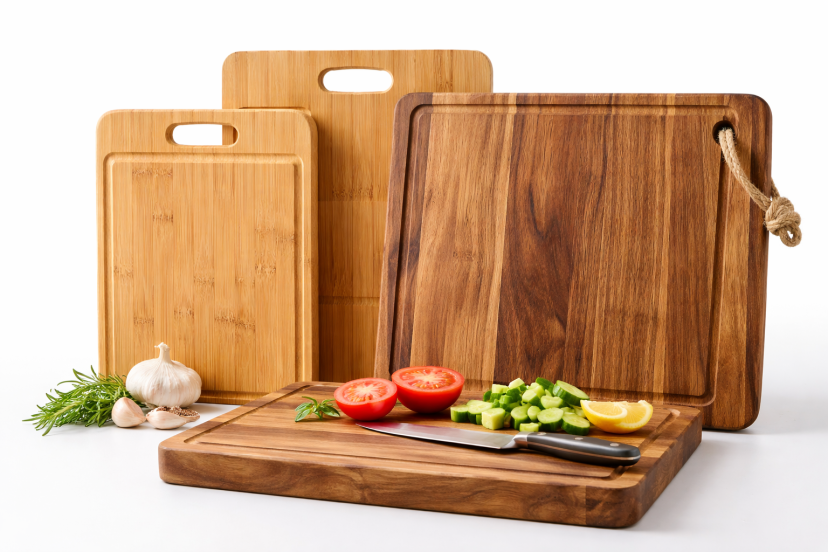
In practical terms, the safest mainstream options tend to be solid hardwood boards, simpler bamboo boards, and certain food-safe paper composite boards.
On the other hand, glass and stone may sound clean, but they are rough on knives. Plastic is convenient, but once it gets deeply scarred, replacement becomes important.
USDA says wood or nonporous cutting boards are safe to use. However, boards with cracks or deep grooves should be replaced. Separate boards also help prevent cross-contamination.
Why Hardwood Cutting Boards May Be Safer Than You Think
Many people assume plastic cutting boards are the most hygienic choice. However, research suggests that hardwood cutting boards may perform just as well—or even better—when it comes to food safety.
A well-known study published in the Journal of Food Protection compared bacteria on plastic and wooden cutting boards. Researchers found that bacteria were recovered more frequently from plastic surfaces than from wood, suggesting hardwood boards may naturally limit bacterial survival under certain conditions.
More recent research supports similar conclusions. A hygienic evaluation of wooden cutting boards found that wood surfaces can show bactericidal properties, meaning they may help reduce microbial survival when cleaned and dried properly.
Overall, these findings suggest that well-maintained wood cutting boards can be both safe and practical, especially when paired with proper kitchen hygiene and regular cleaning.
How to Choose the Best Non Toxic Cutting Board
Before you click “add to cart,” look for these details.
Material
Maple is a classic for good reason. It is durable, trusted, and widely used in premium boards. John Boos, for example, builds boards from Northern Hard Rock Maple and positions them as renewable, sustainable hardwood products.
Teak is another strong option. It is attractive, durable, and popular for people who want a board that doubles as a serving piece.
Bamboo is technically a grass, not a hardwood, but it remains popular because it is renewable, lightweight, and usually more affordable.
Paper composite boards are worth a look too. Epicurean’s boards use paper composite material, are dishwasher-safe, and the brand’s material is presented as NSF-certified for food contact.
Finish and adhesives
Keep it simple. You want food-safe oil or wax, not mystery coatings. With bamboo especially, look for brands that clearly describe the surface and construction rather than vague “eco” language.
Size and thickness
If you prep a lot of vegetables or batch cook, go larger. Thin boards save storage space, but thicker boards feel more stable and usually last longer.
Maintenance
Be honest with yourself. If you know you will not oil a wood board regularly, a lower-maintenance composite board may fit your life better.
5 Best Non Toxic Cutting Boards in 2026
Here are five strong, eco-friendly cutting board options to choose from:
1. John Boos Maple R-Board
This is the premium pick. It is made from maple, reversible, thick, and widely trusted by serious home cooks. Food & Wine recently spotlighted the Boos maple R-Board, noting its long-lasting reputation and knife-friendly surface. It costs more up front, but it is the kind of board people keep for years.
Best for: Cooks who want one excellent board and plan to keep it for a long time.
2. Greener Chef FSC-Certified Bamboo Cutting Board
This one works well for sustainability enthusiasts because the brand leans hard into bamboo, food-safe use, and eco positioning. It highlights FSC-certified bamboo and a non-toxic setup, and the brand’s own collection emphasizes chemical-free bamboo boards.
Best for: Eco-conscious shoppers who want a lighter board with a natural look.
3. Sonder Los Angeles Teak Edge Grain Cutting Board
Sonder LA’s teak boards have a beautiful finish, generous size options, and the kind of design that looks good left out on the counter. This cutting board is teak, sustainably sourced, and highlights teak construction and reversible use.
Best for: People who want a gift-worthy board that also performs.
4. Epicurean Kitchen Series Paper Composite Board
This is the practical pick. Epicurean boards are made from paper composite, lightweight, and easy to maintain. They are especially appealing if you want something food-safe and dishwasher-safe without choosing plastic. Good Housekeeping also gave an Epicurean board a 2026 Kitchen Award, praising its design and performance.
Best for: Busy kitchens that want easy cleanup and low maintenance.
5. Hiware Extra Large Bamboo Cutting Board
Hiware is the budget-friendly crowd favorite. Food & Wine called out its popularity and noted features like FSC-certified bamboo, juice grooves, and built-in handles. For many buyers, this is the easiest entry point into non toxic cutting boards because it is accessible, simple, and widely available.
Best for: Everyday home cooks who want value without going cheap-cheap.
How to Care for a Non Toxic Cutting Board
Good care makes a bigger difference than people expect.
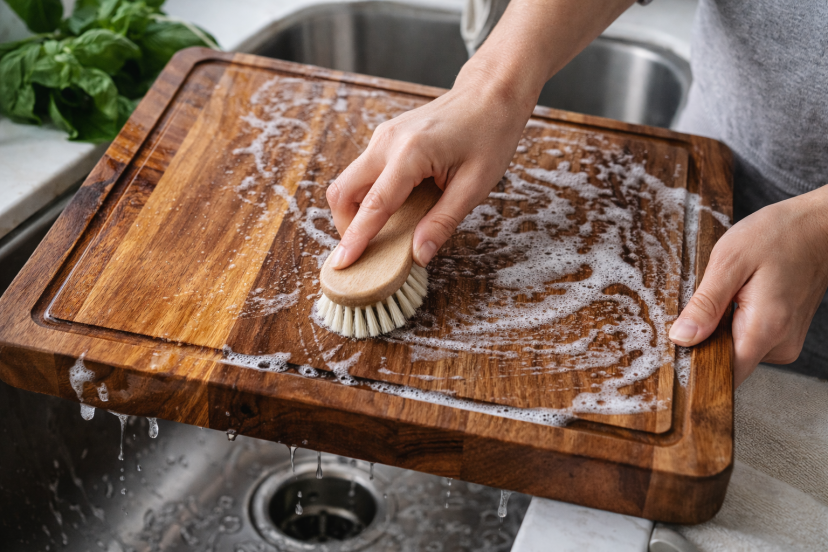
- Wash wood and bamboo boards by hand with warm, soapy water.
- Dry them right away.
- Oil wood boards regularly with a food-safe mineral oil or board wax.
- Use one board for raw meat and another for produce or bread.
- Replace any board with deep grooves, cracks, or stubborn odor.
Composite boards are usually easier. Many are dishwasher-safe, but check the brand directions first. Epicurean, for example, specifically markets dishwasher-safe composite boards.
Final Thoughts
A cutting board is one of the most used tools in any kitchen, so the material you choose matters. Non toxic cutting boards provide a safer surface for preparing food while supporting a more sustainable kitchen. By choosing durable materials like wood, bamboo, or composite boards, you invest in both food safety and long-term quality.
FAQs
1. What is the safest material for a non toxic cutting board?
Solid hardwoods like maple are among the safest and most trusted options. Bamboo and food-safe paper composite boards are also popular choices, depending on your budget and maintenance preference.
2. Are bamboo cutting boards really non toxic?
They can be. Look for brands that clearly state food-safe finishes and responsible sourcing. FSC-certified bamboo products are often a better sign than vague marketing claims.
3. Are wood cutting boards more hygienic than plastic?
Research does not support the idea that wood is less safe by default. Some studies found lower bacterial recovery from wood, but proper cleaning and replacing worn boards still matter most.
4. When should I replace my cutting board?
Replace it when it develops deep grooves, cracks, stains that will not lift, or lingering smells. Public food-safety guidance also recommends replacing heavily worn boards.
5. Can a wood cutting board be cleaned in the dishwasher?
No. Dishwashers can expose wood to excessive heat and moisture, which may cause the board to warp, crack, or dry out over time. Hand washing is the safer option.