10 Money-Saving Sustainable Development Ideas
We may earn a commission for purchases made using our links. Please see our disclosure to learn more.
Sustainable Development Ideas are sometimes confused with costly renovations or big projects. In fact, most are practical approaches that can be applied every day – they waste less, save money on utility bills, and boost financial stability over time. When you take energy efficiency, resource conservation and smarter purchasing decisions into account, you get cumulative savings. This article explores realistic, money-saving Sustainable Development Ideas that are easy to implement and designed to benefit both your budget and the environment.
Why Smart Sustainability Choices Save Real Money
It’s easy to assume sustainability is just about the environment. However, strong research shows it’s also about financial efficiency.
1. Waste Less, Spend Less
A 2023 review in Environmental Chemistry Letters examined circular economy strategies like reusing, repairing, and designing longer-lasting products. The findings were clear: reducing material waste lowers environmental pressure and improves resource efficiency.
For families, these changes often result in noticeable financial benefits. When you buy durable items and reduce replacements, you cut recurring costs. When materials stay in circulation longer, supply chains become more efficient—and waste management expenses drop.
2. Energy Efficiency Lowers Bills and Improves Comfort
A 2022 systematic review published on PubMed Central explored how home energy-saving measures affect health and living conditions. The study found that better insulation, improved heating systems, and energy upgrades often reduce financial strain while improving indoor comfort.
The researchers also noted that proper ventilation is essential when improving airtightness. When done correctly, energy efficiency delivers both cost savings and healthier homes.
Both studies reinforce a simple idea: using energy and materials more efficiently protects the environment and strengthens household budgets at the same time.
1. Start with Energy Efficiency at Home
Energy bills quietly drain budgets. Fortunately, simple adjustments make a difference.
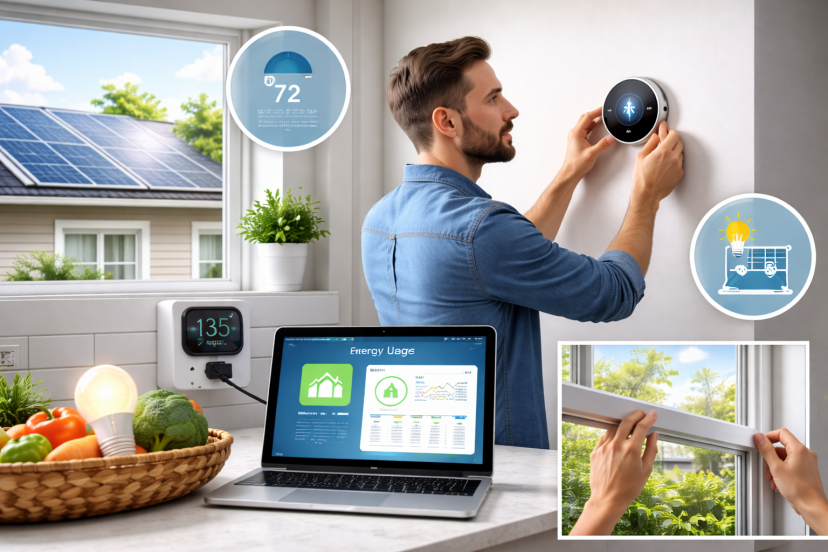
Replace incandescent bulbs with LEDs. Install smart thermostats. Seal window gaps. These changes reduce electricity usage immediately.
The U.S. Department of Energy reports that LED bulbs consume roughly 75% less electricity than standard incandescent lights and can last up to 25 times longer. That’s not just eco-friendly — it’s financially smart.
Additionally, unplug idle electronics. Phantom energy consumption adds up faster than most people realize.
2. Grow Your Own Food (Even in Small Spaces)
You don’t need a farm. A balcony or kitchen windowsill works.
Herbs, lettuce, tomatoes, and peppers thrive in small containers. Over time, this reduces grocery costs and cuts packaging waste.
If you make plant-based milk at home, consider using a reusable nut milk bag. It replaces disposable strainers and store-bought cartons.
Growing food also reduces transportation emissions and preserves nutrients. Plus, it reconnects you with what you eat.
3. Switch to Reusable Kitchen Essentials
Single-use products seem cheap. However, recurring purchases cost more over time.
Swap paper towels for washable cloths. Use glass containers instead of plastic wrap. Invest in stainless steel water bottles.
These changes cut monthly expenses while reducing landfill waste. Furthermore, they create healthier indoor environments.
Over a year, the savings from reusable kitchen swaps often exceed hundreds of dollars.
4. Reduce Water Waste Strategically
Water conservation lowers utility bills immediately.
Install low-flow showerheads. Fix leaking faucets. Collect rainwater for plants. Make sure your dishwasher and washing machine are fully loaded before starting a cycle to maximize efficiency.
The Environmental Protection Agency estimates that even one slow, leaking faucet can waste more than 3,000 gallons of water each year. That wasted water equals wasted money.
Simple awareness pays off.
5. Choose Long-Lasting Products Over Cheap Replacements
Fast, low-quality products cost more in the long run.
Instead, prioritize durability. Buy once, use for years. This applies to clothing, tools, appliances, and furniture.
High-quality items reduce landfill waste and replacement costs. Although the upfront price may be higher, lifetime savings outweigh initial spending.
In sustainable development thinking, this approach supports resource efficiency and financial stability.

6. Embrace Second-Hand and Circular Economy Shopping
The circular economy keeps materials in use longer.
Buy refurbished electronics. Shop thrift stores. Sell unused items online.
Not only does this reduce waste, but it also lowers purchase costs significantly.
Studies from the Ellen MacArthur Foundation highlight how circular models reduce material demand while supporting economic resilience. In short, reuse strengthens both budgets and the planet.
7. Compost to Cut Waste and Save on Fertilizer
Food scraps don’t belong in landfills.
Composting transforms food scraps and yard waste into rich, fertile soil. This reduces garbage volume and eliminates the need for store-bought fertilizers.
Additionally, composting lowers methane emissions from landfills. That’s an environmental win with financial benefits.
Compact compost bins designed for countertops make composting practical, even in small apartments.
8. Rethink Transportation Costs
Transportation often ranks among the largest household expenses.
Walk or bike short distances. Combine errands into one trip. Use public transit when possible. Carpool with coworkers.
If feasible, electric or hybrid vehicles reduce long-term fuel costs. However, even small behavior changes produce noticeable savings.
Moreover, less driving reduces vehicle wear and maintenance expenses.

9. Upgrade to Smart Home Monitoring
Smart plugs and energy monitors track real-time usage.
Once you see where energy drains occur, you can adjust habits immediately. Behavioral shifts often reduce consumption by 5–15%.
That percentage may sound small. Yet over years, it compounds significantly.
Data-driven decisions support both sustainability and financial planning.
10. Support Local and Reduce Hidden Costs
Local goods travel shorter distances. That reduces fuel use and supports local economies.
Local farmers’ markets frequently offer fresh, seasonal produce at prices that rival grocery stores. Additionally, buying local reduces packaging waste.
When communities strengthen, economic resilience improves. Sustainable development goes beyond protecting the environment; it also supports social and economic well-being.
Sustainable Products
Here are five practical Amazon products that support Sustainable Development Ideas and help cut long-term costs:
- Philips LED Light Bulbs (Energy Efficient) – Reduce electricity usage instantly.
- Etekcity Smart Plug Energy Monitor – Track energy consumption in real time.
- Brondell Low-Flow Showerhead – Lower water bills without sacrificing pressure.
- EPICA Countertop Compost Bin – Compact, odor-resistant composting solution.
- Stainless Steel Reusable Water Bottle – Eliminate bottled water expenses.
These tools aren’t luxury items. They are strategic investments.
Final Thoughts
Sustainable Development Ideas are not about perfection. They’re about progress. You don’t need to transform everything overnight. Instead, start with one change. Then build momentum. Over time, these habits reduce expenses, increase resilience, and create a healthier living environment. The real secret? Sustainability rewards patience. The longer you practice it, the more it pays back. So choose one idea today. Track your savings. Watch the results grow.
FAQs
1. What are Sustainable Development Ideas in simple terms?
They are practical actions that balance environmental protection, economic savings, and long-term resource use.
2. Do sustainable changes really save money?
Yes. Energy efficiency, water conservation, and reusable products lower recurring monthly costs.
3. Is sustainable living expensive to start?
Not necessarily. Many Sustainable Development Ideas require behavior changes rather than large investments.
4. How quickly can I see savings?
Some changes, like switching to LED bulbs or reducing water use, lower bills immediately.
5. Which sustainable habit is the simplest one to begin with?
Begin with energy efficiency. Replace old bulbs and unplug unused electronics for instant impact.