Eco-Friendly Nut Milk Bag Picks for Home Use
We may earn a commission for purchases made using our links. Please see our disclosure to learn more.
If you want to reduce waste in your kitchen, a nut milk bag is a simple place to start. It lets you make fresh almond, oat, or cashew milk at home without buying packaged cartons or disposable filters. Instead of relying on store-bought options with plastic caps and layered packaging, you blend, strain, and reuse — all with one washable bag. In this guide, you’ll learn what to look for in a high-quality nut milk bag, why it supports a more sustainable kitchen, and which options are worth using at home.
Why a Nut Milk Bag Belongs in a Sustainable Kitchen
At first glance, a nut milk bag looks basic. However, its benefits go beyond straining almonds.
You can use it for:
- Homemade almond, cashew, oat, and soy milk
- Cold brew coffee
- Straining yogurt or kefir
- Sprouting seeds
- Juicing soft produce
Because it’s reusable, you eliminate the need for disposable cheesecloth or single-use filters. Over time, that adds up.
Even better, research published in Sustainability highlights how reducing single-use packaging significantly lowers household waste footprints. Making your own plant milk instead of buying cartons supports that shift directly.
What to Look for in a High-Quality Nut Milk Bag
Not all nut milk bags are created equal. Some tear quickly. Others leave pulp in your milk. A few even shrink after washing.
Here’s what actually matters:
Material
Organic cotton or food-grade nylon works best. Cotton is biodegradable and plastic-free. Nylon tends to strain more finely and dries faster.
Mesh Size
Fine mesh prevents gritty milk. However, ultra-fine bags may take longer to strain.
Durability
Double-stitched seams last longer. Reinforced corners prevent splitting when squeezing.
Easy Cleaning
Wide openings turn inside out easily. That makes rinsing simple and prevents buildup.
When you choose wisely, one nut milk bag can last years.
Top 5 Eco-Friendly Nut Milk Bag Picks
Below are five reliable, well-reviewed options that sustainability enthusiasts consistently love.
1. Ellie’s Best Pro Quality Nut Milk Bag (Organic Cotton)
Why it stands out:
This bag uses certified organic cotton and features rounded corners to prevent pulp buildup.
Best for:
Beginners who want a plastic-free option.
Key Features:
- Organic cotton
- Strong triple-stitched seams
- BPA-free
- Large opening
Pros:
Durable, biodegradable, easy to clean.
Cons:
Dries slower than nylon.
2. SCENGCLOS Ultra Fine Nylon Nut Milk Bag (2-Pack)
Why it stands out:
Its ultra-fine mesh produces extremely smooth milk.
Best for:
Oat and almond milk lovers who hate pulp.
Key Features:
- Food-grade nylon
- Drawstring closure
- Reusable and quick-drying
Pros:
Very smooth straining, dries quickly.
Cons:
Not biodegradable.
3. Pro Quality Nut Milk Bag by Simple Ecology (Organic Cotton)
Why it stands out:
Ethically made and highly durable.
Best for:
Zero-waste households.
Key Features:
- Unbleached organic cotton
- Rounded corners
- Fair trade production
Pros:
Plastic-free, sustainable brand ethos.
Cons:
Requires proper drying to avoid mildew.
4. Cotton Farm Commercial Grade Nut Milk Bag
Why it stands out:
Designed with commercial-grade strength and seamless construction, this unbleached cotton nut milk bag is built for durability and repeated use.
Best for:
Frequent batch makers and zero-waste households that prefer plastic-free materials.
Key Features:
- 100% unbleached cotton
- Seamless design for smoother straining
- Reinforced stitching for added durability
- Large capacity for bigger batches
Pros:
Strong, reusable, plastic-free, and suitable for heavy use.
Cons:
Takes longer to dry compared to nylon options.
5. Bellamei Commercial Grade Nut Milk Bag (3-Pack)
Why it stands out:
High durability at an affordable price.
Best for:
Frequent batch makers.
Key Features:
- Strong reinforced stitching
- Large 12″x12″ size
- Multi-use
Pros:
Long lifespan, value pack.
Cons:
Synthetic material.
Why Homemade Nut Milk Is Worth It
You might wonder: is it really worth the effort?
Absolutely.
A review in the Journal of Food Science and Technology emphasizes that homemade plant milks allow control over sugar content, additives, and nutrient fortification. Many packaged plant milks contain added thickeners such as carrageenan or various gums to improve texture and shelf life.
When you make your own, you get:
- Cleaner ingredients
- Better taste
- Lower cost per serving
- Reduced packaging waste
Plus, the leftover pulp doesn’t go to waste. You can bake it into muffins, add it to smoothies, or compost it.
If you’re exploring sustainable living more broadly, you might also enjoy these thoughtful zero-waste gift ideas that complement a low-waste kitchen lifestyle.
How to Use a Nut Milk Bag Properly
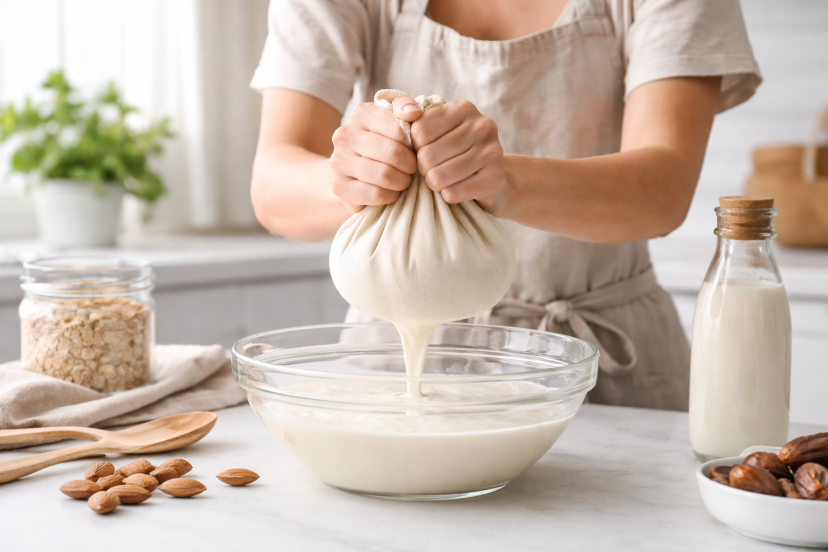
A nut milk bag is simple to use and requires no special equipment.
- Soak nuts overnight.
- Blend with fresh water.
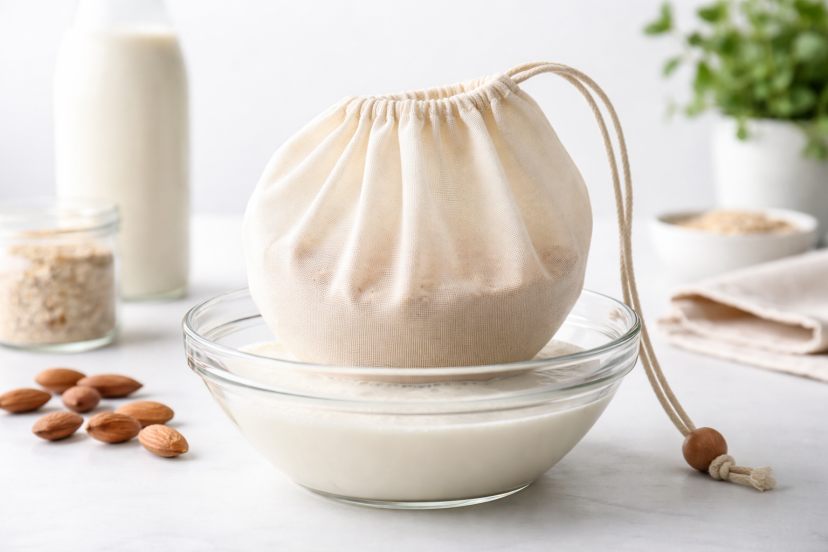
- Transfer the blended mixture into the bag and hold it over a bowl to strain.
- Squeeze gently until liquid drains.
That’s it.
However, avoid twisting too aggressively. Instead, press and squeeze gradually to extend the bag’s lifespan.
Cleaning and Care Tips
Proper care extends durability.
- Clean it right after you finish using it.
- Clean it carefully using a gentle, fragrance-free soap.
- Let it dry fully in open air before storing.
- Skip high-heat drying, as it can weaken the fibers over time.
If using cotton, hang in sunlight occasionally to naturally disinfect.
With good care, your nut milk bag may last two to three years.
Environmental Impact: Small Change, Big Difference
Every carton of plant milk typically includes:
- Plastic caps
- Multi-layered packaging
- Transportation emissions
When multiplied across households, that adds up.
While plant-based milks already have a lighter footprint than dairy, a comprehensive review on plant-based milks and planetary health found that production methods, transportation, and packaging still influence their overall environmental impact. In other words, even sustainable swaps come with layers of resource use.
Another large review analyzing life cycle assessments of animal and plant milks confirmed that plant-based options generally produce lower greenhouse gas emissions than dairy. However, it also noted that crop choice, processing, and supply chains still matter. The more steps involved before that carton reaches your fridge, the larger the footprint becomes.
That’s where homemade versions make a difference.
When you blend soaked almonds or oats at home and strain them with a reusable straining bag, you eliminate packaging waste entirely. You also skip transportation emissions tied to large-scale distribution. Even better, sustainability research consistently shows that reusable kitchen tools reduce cumulative waste over time compared to single-use packaging.
A nut milk bag may seem small. Yet it represents intentional consumption — fewer cartons, fewer caps, and fewer hidden environmental costs.
Nut Milk Bag vs. Cheesecloth
In most cases, a nut milk bag comes out ahead.
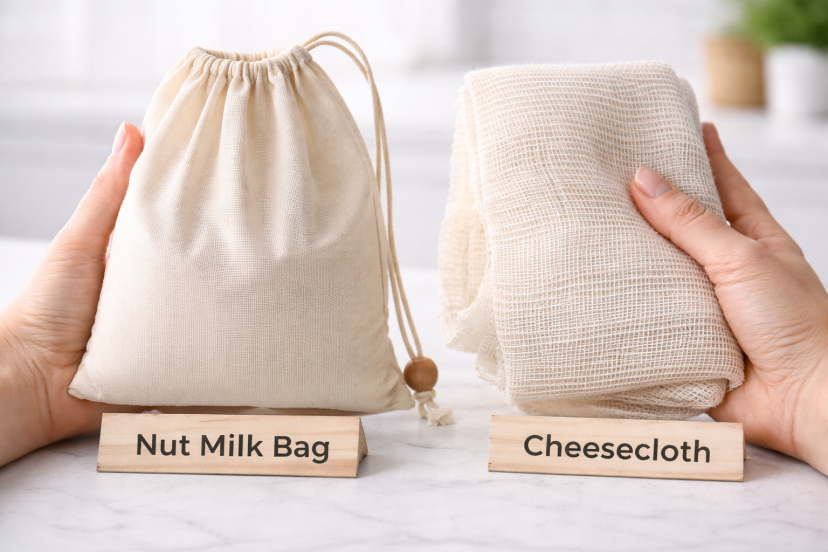
Cheesecloth might seem like a quick fix, but it tears easily and often needs to be layered several times to strain properly. It can shed small fibers and usually ends up in the trash after a few uses. Over time, that means more waste and more repeat purchases.
A quality nut milk straining bag is thicker, stronger, and designed for repeated use. It strains more efficiently, handles pressure better, and lasts far longer. Instead of buying disposable cloth again and again, you invest once and reuse it for years.
Safety also matters. Nut milk bags are safe when made from food-grade materials. Look for BPA-free labeling if the bag includes synthetic parts. If you prefer cotton, choose organic, unbleached options with food-safe dyes. Reputable brands clearly state what their products are made from.
The bottom line is simple: reusable wins. A well-made straining bag supports your health, saves money, and reduces waste — all at the same time.
Who might benefit from using a nut milk bag?
This tool is ideal for:
- Sustainability enthusiasts
- Plant-based eaters
- Zero-waste beginners
- DIY kitchen lovers
If you care about ingredient transparency and waste reduction, it’s a no-brainer.
Conclusion
A nut milk bag may look simple, but it supports a more sustainable kitchen in practical ways. It reduces packaging waste, cuts down on single-use products, and gives you full control over what goes into your food. Instead of relying on store-bought cartons, you make fresh plant milk at home with one reusable tool. Over time, that small habit lowers waste and saves money. Choose a durable, food-safe option, take care of it, and you’ll have a reliable kitchen staple that supports both your health and the planet.
FAQs
1. What is the typical lifespan of a nut milk bag?
With proper care, a quality nut milk bag can last 2–3 years.
2. Is a nut milk bag suitable for making oat milk?
Yes. However, strain gently to avoid sliminess caused by over-blending oats.
3. Are organic cotton nut milk bags better?
They’re plastic-free and biodegradable, making them more eco-friendly than synthetic options.
4. Do nut milk bags remove all pulp?
Ultra-fine mesh versions remove nearly all pulp, producing smoother milk.
5. Can I wash a nut milk bag in the dishwasher?
Hand washing is recommended. High heat can weaken fibers.